
Lieferung heute & morgen

Qualitätsgarantie

Willkommens-Angebote freischalten: KOSTENLOSE Lieferung | Bis zu 80 % RABATT | Kostenlose 30-Tage-JoyPlus-Testphase
App herunterladen
A smart LED recessed spotlight can give you flexible control over lighting in living rooms, hallways, kitchens, offices and retail spaces. You can adjust brightness, colour temperature and, in some cases, colours via an app, voice command or automation. However, models differ considerably in terms of connection, installation dimensions, IP rating and smart home compatibility.
If you focus only on wattage or a wide choice of colours, you may encounter practical problems later on. The following points will help you assess marketing claims and choose a suitable LED downlight for your rooms.
A recessed spotlight will not automatically fit an existing opening. The key factors are the cut-out diameter, installation depth and spring-clip fixing. With the models presented, the required openings range from approximately 100 to 110 mm to 200 to 220 mm, for example.
Before ordering, you should therefore:
With a smart LED spotlight, brightness is often adjusted via the app or a compatible gateway. This does not mean that the light can be used with a conventional leading-edge or trailing-edge dimmer. For example, the Aigostar Smart LED Recessed Spotlight 18W explicitly states that an external wall dimmer is not intended.
If you want to use an existing light switch, you must therefore check whether the light fitting is designed for this. Otherwise, app control, voice control or a suitable smart home system are the intended ways to operate it.
A CCT LED ceiling spotlight changes the colour temperature between warm and cool white, for example from 2700 K to 6500 K. RGBW or RGB+CCT models also offer coloured light. This can be useful for scenes, decorative lighting or retail spaces, but it is not automatically necessary for every application.
For functional general lighting, luminous flux, beam angle and colour rendering are usually more important than the number of available colours.
Wattage initially describes electrical power consumption, not brightness directly. Luminous flux in lumens (lm) is more meaningful. According to the product data, a 6 W model from the selection delivers 600 lm, while an 18 W downlight achieves approximately 1500 to 1800 lm, depending on the version.
When planning several lights, you should consider the size of the room, ceiling height, desired lighting effect and beam angle. A wide angle of, for example, 120 degrees distributes light across a large area, while a more directional light fitting may be suitable for accent lighting.
Colour temperature is measured in kelvins:
A CRI or Ra value of at least 80 is specified for several Aigostar models. This value describes how naturally colours appear under the light. Higher colour rendering can be important in retail spaces, work areas or rooms with colourful furnishings; check the specific product details before buying.
The level of protection is specified using the IP code. IP20 is intended for dry indoor areas and offers no protection against water. Models with this rating should not be installed in showers, outdoor areas or rooms with increased condensation.
The Hama Smart LED ceiling light is specified as IP54 and is therefore protected against splashing water. Nevertheless, the IP rating does not replace proper installation and does not mean that the light fitting may be submerged. Other product categories are available for outdoor areas, such as the solar-powered Aigostar Smart Solar Ground Recessed Spotlight with IP67. This is designed as a ground light for gardens, paths and patios, not as a ceiling light for indoor spaces.
Bluetooth Mesh lighting can connect several lights to one another. With some models, a gateway is required for remote access, voice control or operation beyond the direct Bluetooth range. This should be included in the total cost.
Wi-Fi lights, on the other hand, connect directly to the router or the manufacturer’s app. The Hama light also supports Matter and, according to the product description, can be connected to Apple Home, Google Home, Samsung SmartThings, Amazon Alexa, Home Assistant and Smart Life. Before buying, it is advisable to check compatibility with your existing smart home system and the Wi-Fi frequency band you use.
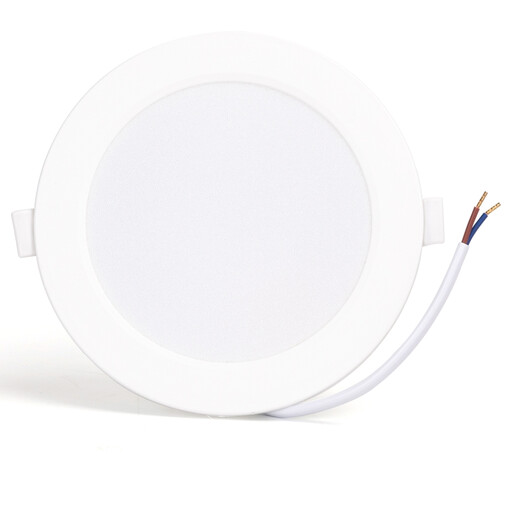
Why this product suits the profile: The 6 W model is suitable for hallways, smaller rooms and installations with several lights. It offers 600 lm, a 120-degree beam angle and an adjustable colour temperature from 2700 K to 6500 K.
The clearly stated dimensions of 115 × 43.5 mm and the 100 to 110 mm opening make installation planning easier. As an IP20 model, the light is explicitly intended for dry indoor areas.
CCT adjustment, dimming via a Bluetooth Mesh system and a stated service life of up to 30,000 hours according to the product data.
Why this product suits the profile: This ceiling light is ideal for users looking for a direct Wi-Fi connection, RGBW, stepless dimming and integration with various smart home platforms.
Matter compatibility and the supported systems are clearly specified. This allows you to check in advance whether the light fits your existing home automation system.
Up to 1800 lm, 2700 to 6500 K, RGBW, IP54 and app and voice control via compatible systems.
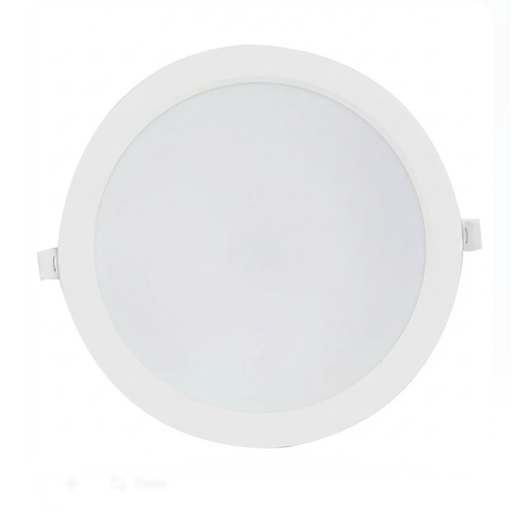
Why this product suits the profile: With approximately 1500 to 1800 lm, this downlight is designed for larger rooms, open-plan kitchens, living areas and offices where stronger general lighting is required.
The product data specifies a cut-out of approximately 200 to 210 mm, IP20 and the need for app-based control. This allows you to check the installation location and control method in advance.
CCT from 3000 to 6500 K, Bluetooth Mesh, grouping via the app and a housing made from aluminium and PBT plastic, according to the product description.
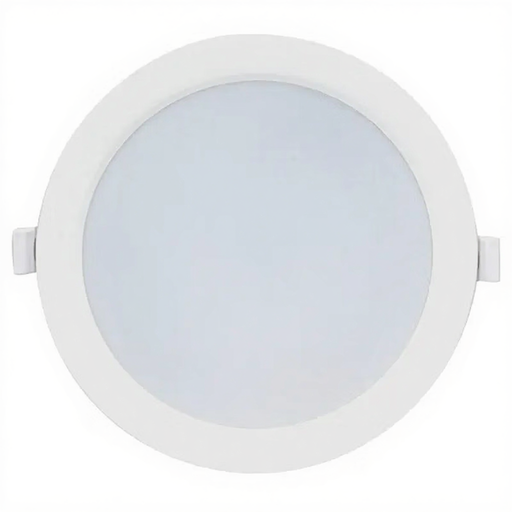
Why this product suits the profile: This RGBW 5-in-1 model is aimed at users who want to combine CCT white light and colourful scenes in hallways, rooms or commercial spaces.
The product description explicitly states that it is intended for indoor use and has an IP20 rating. A different IP rating is therefore required for damp rooms.
Bluetooth and Wi-Fi control via the Haodeng app, dimming through the app or voice control, plus 2700 to 6500 K and RGBW colour selection.
We have put together a complete, regularly updated list of products that fully meet these strict selection criteria and the safety regulations applicable in the EU.
Connection to 220 to 240 V should be carried out in Germany by a qualified electrician or an appropriately authorised person. The circuit must be switched off at the fuse box before installation, cleaning or maintenance. With recessed lights, you must also ensure adequate ventilation and maintain sufficient distance from insulating materials.
In terms of running costs, a 6 W light used for four hours a day consumes approximately 8.76 kWh per year based on a calculation. An 18 W model used under the same conditions consumes around 26.28 kWh. Actual costs depend on the electricity tariff and duration of use. Standby consumption can also be relevant for connected lights; the Aigostar models mentioned specify a maximum of 0.5 W.
No. Depending on the model, local control may be possible via Bluetooth. However, remote access, voice control or certain automations often require a compatible gateway. Before buying, check which functions are available without a hub.
Several of the Aigostar lights presented specify a service life of up to 30,000 hours according to the product details. This is a manufacturer parameter and depends, among other things, on temperature, mains quality, switching frequency and installation conditions. A stated service life does not guarantee a specific period of use in an individual case.
An IP20 model may be suitable for dry areas. In kitchens, bathrooms or cellars, you should consider possible moisture and exposure to splashing water. The appropriate IP rating is crucial. You must also check the installation depth, heat dissipation and professional installation.