
Lieferung heute & morgen

Qualitätsgarantie

Willkommens-Angebote freischalten: KOSTENLOSE Lieferung | Bis zu 80 % RABATT | Kostenlose 30-Tage-JoyPlus-Testphase
App herunterladen
A smart LED recessed spotlight lets you adjust the colour temperature, brightness and switching times flexibly via an app or voice control. However, to ensure your new ceiling lighting is genuinely suitable for everyday use, you should look beyond RGB functions or a stated lifespan. The key factors are installation dimensions, IP rating, power supply and actual compatibility with your existing smart home system.
With an LED ceiling spotlight, at least three measurements are relevant: overall diameter, installation height and cut-out size. A spotlight with a diameter of 145 mm will not automatically fit an existing 145 mm opening. The decisive measurement is the cut-out specified by the manufacturer, for example 120–130 mm or 200–210 mm.
Measure the existing opening before placing your order. If you live in rented accommodation, you should also check whether you are allowed to alter the existing cut-out at all.
A Bluetooth Mesh recessed spotlight can connect multiple lights to one another. However, for control from outside the home or integration with voice assistants, many models require a compatible gateway or hub. Without this additional accessory, control may be limited to a direct app or Bluetooth connection.
Buyers should therefore check:
An RGB+CCT ceiling spotlight can produce coloured light and also switch between warm and cool white tones. This makes it versatile, but on its own it says nothing about whether it is suitable as the main light source. For this assessment, luminous flux in lumens, power consumption in watts, beam angle and colour rendering index are more important.
For example, a model with 780 lm is suitable for smaller rooms, hallways or several lights used together. A more powerful 18 W spotlight with up to 1,760 lm is more suitable for larger ceiling areas or central lighting.
A slim LED recessed spotlight is practical for suspended ceilings or shallow cavities. Even so, there must be enough space behind the light for the connection and heat dissipation. The specified installation height and ceiling cut-out should therefore be checked against the existing ceiling before installation.
Examples from the selection:
A 220–240 V LED spotlight is operated directly from the standard household AC mains, provided the manufacturer expressly states that this is suitable. A 12–24 V model, on the other hand, requires a suitable transformer. The 4 W model in this selection must explicitly not be connected directly to 220–240 V.
Work on mains electrical installations should be carried out by a qualified electrician or a suitably competent person. Before installation, cleaning or maintenance, disconnect the power supply at the consumer unit.
The level of protection is indicated by the IP code. IP20 is intended for dry indoor areas such as bedrooms, hallways, living rooms or offices. Lights of this type should not be used in areas exposed to splashing water or heavy condensation.
An IP44 LED recessed spotlight offers greater protection against solid foreign objects and splashing water. However, this does not automatically mean that every bathroom installation is permitted. The installation location, bathroom zones and applicable electrical regulations must also be taken into account.
A dimmable LED recessed spotlight with CCT functionality allows you to adjust the colour temperature, for example from warm white light to a cooler white. This can be useful in living rooms, kitchens or offices where different lighting conditions are desired.
The difference between the following should be noted:
Not every smart light is compatible with an external wall dimmer. With several Aigostar models, dimming is carried out exclusively via the app or voice control.
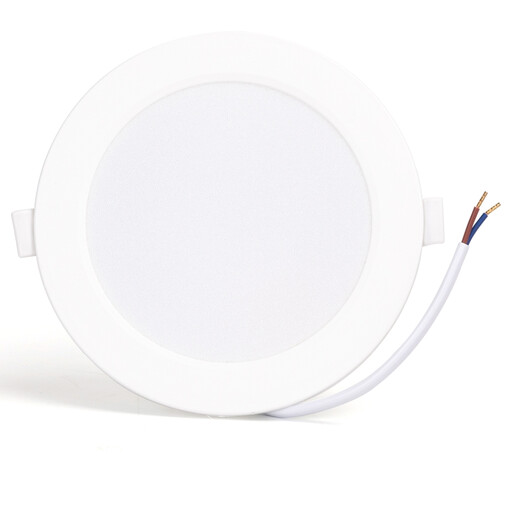
Why this product suits this profile: With 6 W, 600 lm and a cut-out of 100–110 mm, this model is suitable for smaller rooms, hallways or several evenly spaced lights.
The key technical specifications clearly state the lumens, cut-out size, Bluetooth Mesh connectivity and IP20 rating. This makes it easier to compare your requirements with the conditions at the installation site before buying.
CCT adjustment from 2700–6500 K, app-controlled dimming and a stated standby consumption of no more than 0.5 W.
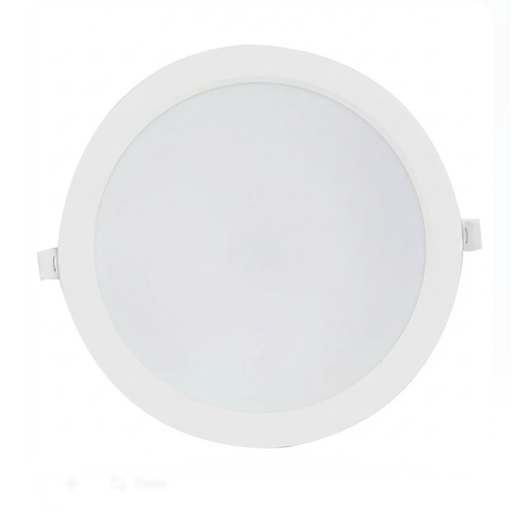
Why this product suits this profile: According to the product specifications, the 18 W spotlight provides 1500–1800 lm, CCT control and an installation height of 26.5 mm, making it suitable for larger living areas, open-plan kitchens or offices.
The required ceiling cut-out of approximately 200–210 mm is clearly specified. The IP20 rating is also stated, limiting use to dry indoor areas.
Aluminium and PBT housing according to the product description, a CCT range of 3000–6500 K and the ability to group multiple lights via the app.
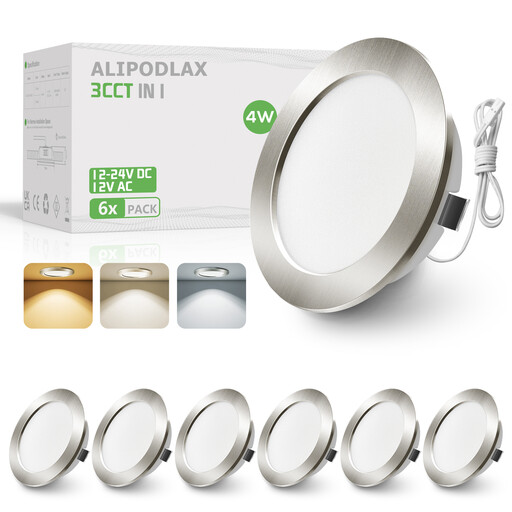
Why this product suits this profile: This compact model is designed for furniture, cupboards, kitchen areas, motorhomes and installations with limited installation depth.
The required 12–24 V power supply and the separately required transformer are specified. Direct connection to mains voltage is expressly ruled out.
3CCT selection with 3000, 4000 and 6000 K, 4 W power, 270 lm luminous flux and IP44 for suitable indoor areas.
We have put together a complete, regularly updated list of products that fully meet these strict selection criteria and the safety regulations applicable in the EU.
Before installation, check the fuse, ceiling construction and existing wiring. Smart lighting also involves app and network permissions. For stable group control, several lights should be installed within the intended Bluetooth Mesh range wherever possible.
A soft, dry cloth is usually all that is needed for cleaning. Water, aggressive cleaning products and covering the light with insulating material can affect safety and heat dissipation. If you notice visible cracks, discolouration or damaged cables, stop using the light.
Not necessarily for every basic function. The exact operation depends on the model. For remote access from outside the home, voice control or certain automations, the Aigostar lights mentioned require a compatible hub or gateway.
Several models in this selection state a lifespan of 30,000 hours and up to 15,000 switching cycles. These are manufacturer figures and depend on the ambient temperature, correct installation, heat dissipation and usage. They do not guarantee a specific actual operating life.
For the Aigostar models with the relevant specification, standby consumption is no more than 0.5 W. Actual annual consumption depends on the operating time, the number of lights and the standby status. For a rough estimate, compare the stated wattage with the daily usage time and the number of lights.