
Lieferung heute & morgen

Qualitätsgarantie

Willkommens-Angebote freischalten: KOSTENLOSE Lieferung | Bis zu 80 % RABATT | Kostenlose 30-Tage-JoyPlus-Testphase
App herunterladen
Smart LED recessed spotlights combine a sleek, low-profile ceiling look with app, voice or Bluetooth control. Depending on the model, you can adjust brightness, colour temperature and, in some cases, RGB colours. However, choosing the right option for living rooms, hallways, kitchens, offices and commercial interiors is not simply a question of design.
The most important factors are the correct cut-out size, the IP rating and the control system actually used. If you focus only on wattage or a wide choice of colours, you could end up buying a light that does not fit mechanically, is not suitable for the intended room or only works with limited functionality without an additional gateway.
The visible size of the light is not automatically the size of the ceiling opening required. For example, an LED recessed spotlight with an outer diameter of 145 mm may require a cut-out of 120 to 130 mm. Other models require 150 to 160 mm or even 200 to 210 mm.
Before buying, you should therefore compare three measurements:
A slim LED ceiling light is particularly practical for suspended ceilings or where the ceiling void is shallow. Even so, there must be enough space above the ceiling for heat dissipation and electrical connections.
With an app-controlled recessed spotlight, the connection technology is important. Bluetooth Mesh can connect several lights together, but remote access or voice control outside the immediate Bluetooth range often requires a compatible gateway.
You should therefore check:
According to the product information, several Aigostar models are dimmed via the app. They are not designed for use with a conventional wall dimmer. This is important information for anyone renovating, particularly if a dimmer switch is already installed.
An RGB+CCT recessed spotlight can produce coloured light and different shades of white. This expands its possible uses, but by itself says nothing about everyday brightness or light quality.
Pay attention to:
A value of Ra ≥ 80 is specified for the smart LED recessed spotlights mentioned. This may be sufficient for hallways or decorative scenes. In kitchens, home offices or areas requiring a high degree of visual accuracy, the other lighting parameters should also be taken into account.
An LED 230 V recessed light is generally connected directly to the 220–240 V mains supply in Germany. Installation at mains voltage should be carried out by a qualified electrician or an appropriately authorised person in accordance with the applicable regulations. Before installation, cleaning or maintenance, the circuit must be switched off at the fuse box.
The level of protection is indicated by the IP rating. IP20 is intended for dry indoor areas and is not suitable for bathrooms, damp cellar areas or zones where condensation occurs. A model with IP44 offers protection against splashing water from certain directions and may be suitable for protected, damp areas depending on the installation situation. Direct jets of water and permanently wet installation locations should still be avoided.
Power consumption in watts describes energy use, not brightness directly. Luminous flux in lumens is more suitable for comparisons. A 9 W model with 780 lm is typically suitable for hallways, smaller rooms or arrangements using several lights. Versions with 18 W and up to around 1,500–1,800 lm are worth considering for larger areas, provided the ceiling cut-out is suitable.
For a rough calculation of running costs:
Cost = power in kW × operating hours × electricity price
A 9 W light uses 9 kWh over 1,000 operating hours in theory. Actual consumption can be affected by dimming levels, lighting scenes and standby mode.
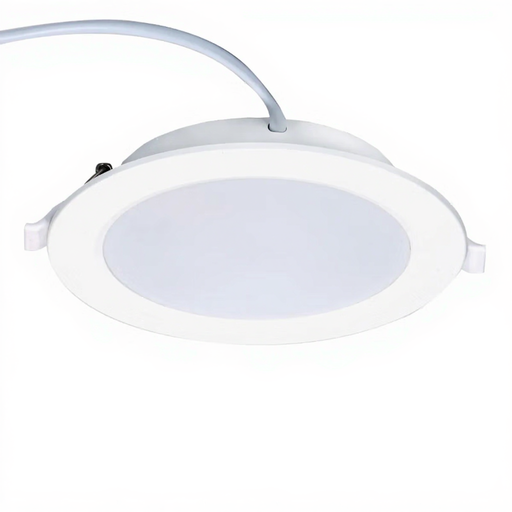
Why this product suits this profile: The 9 W model requires a ceiling cut-out of 120–130 mm, provides 780 lm and can be adjusted between 2700 and 6500 K. This makes it suitable for hallways, smaller rooms and installations using several matching LED recessed spotlights.
The required cut-out size and IP20 rating are clearly stated. This allows you to check before ordering whether the light will fit a dry indoor ceiling.
9 W power consumption, Bluetooth Mesh, a 120° beam angle and adjustable white temperature from 2700–6500 K.
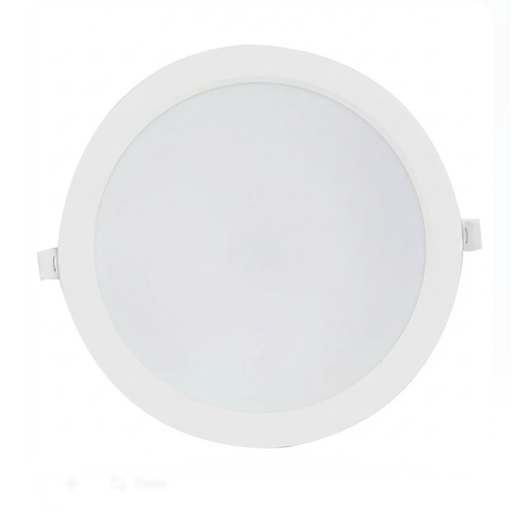
Why this product suits this profile: The combination of 18 W, a stated luminous flux of around 1,500–1,800 lm and an aluminium and PBT housing is designed for larger living areas, open-plan kitchens or offices.
The larger design requires a cut-out of approximately 200–210 mm. This specification helps prevent you from ordering a seemingly suitable model for a ceiling opening that is too small.
CCT adjustment from 3000–6500 K, Bluetooth Mesh and a slim, flush design with an aluminium-PBT housing.
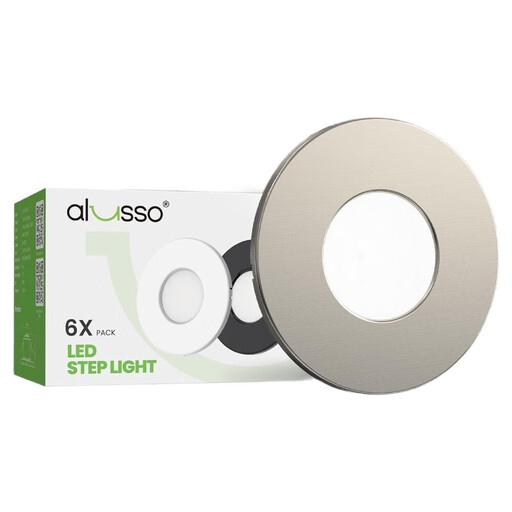
Why this product suits this profile: This set is designed for stairs, hallways and protected areas. It offers 3000, 4000 and 6500 K, three power levels and dimming from 10–100% with a compatible trailing-edge dimmer.
The IP44 rating clearly distinguishes its use from that of IP20 indoor lights. It also states that a compatible trailing-edge dimmer is required.
Six lights per set, 230 V connection, 220 lm per light and three selectable colour temperatures.
We have put together a complete, regularly updated list of products that fully meet these strict selection criteria and the safety regulations applicable in the EU.
In many cases, yes, provided the switch only interrupts the power supply. However, the light must remain connected to the mains for app control, dimming or lighting scenes. An external wall dimmer is not compatible with every model. You should check the relevant manufacturer’s information before installation.
Several of the models mentioned have a stated service life of 30,000 hours. This figure is a technical manufacturer specification under certain operating conditions and is not a guarantee for every installation situation. Heat, frequent switching, voltage fluctuations and insufficient ventilation can affect the actual service life.
This depends on power, usage time and your electricity tariff. At 9 W, 1,000 operating hours result in consumption of 9 kWh; at 18 W, the figure is 18 kWh. A small amount of standby consumption may also be required to maintain the network connection. If you keep several lights connected permanently, this should be taken into account when planning.