
Lieferung heute & morgen

Qualitätsgarantie

Willkommens-Angebote freischalten: KOSTENLOSE Lieferung | Bis zu 80 % RABATT | Kostenlose 30-Tage-JoyPlus-Testphase
App herunterladen
Smart LED recessed spotlights combine a low-profile ceiling installation with features such as dimming, adjustable colour temperature and app or voice control. This makes them an attractive choice for homes, hallways, offices and retail spaces. However, it is only during installation that you discover whether an LED recessed spotlight is actually compatible with the existing ceiling cut-out, your smart home set-up and your desired lighting.
An LED ceiling spotlight is not automatically compatible with every existing cut-out. The required cut-out size and the external diameter are crucial. If a model requires an opening of 120 to 130 mm, an existing 100 mm hole can be just as problematic as a cut-out that is too large. You should therefore measure the ceiling before ordering.
Many Bluetooth Mesh LED spotlights require a compatible gateway or hub for remote control. Depending on the system, only local operation or limited functions may be available without the right bridge. Before buying, check that the gateway, app and voice assistant are compatible with one another.
A CCT LED recessed spotlight adjusts its colour temperature, for example from warm white to cool white. This is not the same as an RGB function. RGB+CCT LED spotlights also offer coloured light, while CCT models are designed for shades of white. The CRI or Ra value describes colour rendering. A value of Ra ≥ 80 is specified for the products considered here, but it should not be confused with professional colour assessment.
Make a note of the following before choosing:
Electrical lighting connected to the mains at 220–240 V should be installed by a qualified electrician in accordance with the applicable regulations. The circuit must be switched off before installation, cleaning and maintenance.
Luminous flux is measured in lumens. A 6 W model with 600 lm is suitable for smaller areas or installations with several light points. A 9 W spotlight with 780 lm can be used in hallways, utility rooms or as part of a group of spotlights. An 18 W model with 1,760 lm provides correspondingly more light.
The beam angle affects how the light is distributed. 120 degrees creates relatively broad illumination, making it suitable for hallways, living areas or commercial interiors. A narrower angle may be more suitable for targeted accent lighting.
A dimmable LED recessed spotlight should not only offer adjustable brightness, but should also work with your existing control environment. With Bluetooth Mesh, several lights are connected to form a network. A gateway can enable remote control via an app or voice commands.
Look out for the following specifications:
IP20 is intended exclusively for dry indoor areas. For bathrooms, utility rooms or sheltered outdoor areas, the required protection rating must be checked separately.
The following recommendations match technical features to different requirements. Details of power, luminous flux, service life and materials correspond to the respective product information.
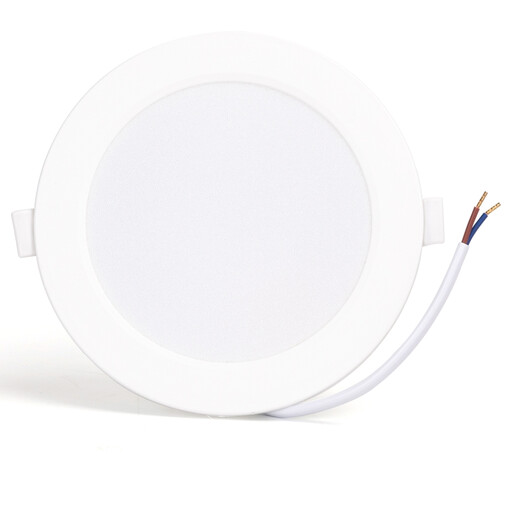
Why this product suits this profile: The 6 W spotlight is designed for smaller rooms, hallways and installations with several light points. The specified cut-out is 100 to 110 mm.
The specifications state the luminous flux, cut-out size, Bluetooth Mesh compatibility and standby consumption. This makes it possible to compare installation and control requirements before buying.
600 lm, 2700–6500 K, dimmable, Bluetooth Mesh and IP20 for dry indoor areas.
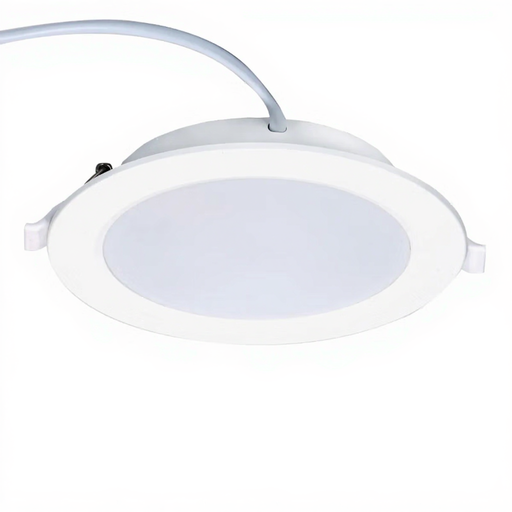
Why this product suits this profile: This model combines 780 lm with a CCT range of 2700 to 6500 K, making it suitable for living areas, hallways and commercial interiors in dry environments.
The required ceiling cut-out of 120 to 130 mm and the IP20 classification are clearly specified. This reduces the risk of an unsuitable installation or use in damp areas.
780 lm, 9 W, 120-degree beam angle, Ra ≥ 80 and a service life of 30,000 hours according to the manufacturer.
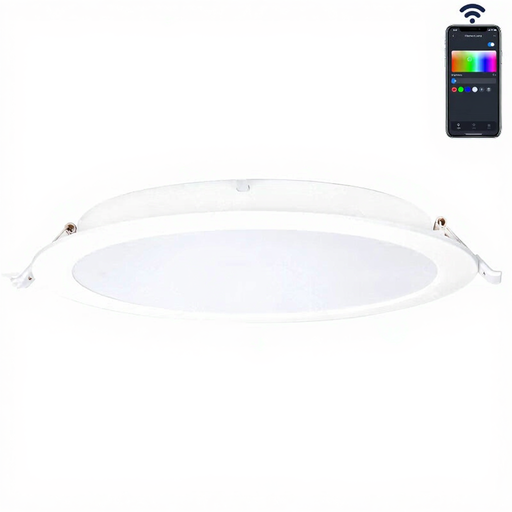
Why this product suits this profile: The RGB+CCT LED spotlight is designed for larger interiors where both white light and colourful lighting scenes are required.
The description explicitly states that a gateway is required, as well as Bluetooth Mesh compatibility, IP20 protection and suitability for indoor use. This allows you to check whether it is suitable before installation.
1,760 lm, 18 W, RGB plus 2700–6500 K, dimming, timer and a specified service life of 30,000 hours.
We have put together a complete, regularly updated list of products that fully meet these strict selection criteria and the safety regulations applicable in the EU.
Electrical power is a practical basis for comparison. With daily use of five hours and a 9 W model, annual consumption is approximately 16.4 kWh:
0.009 kW × 5 hours × 365 days = 16.425 kWh
Actual annual costs depend on your electricity tariff and how long the light is used. If you have several spotlights, add together the power ratings of all the lights. The standby consumption of the gateway and spotlights can also be taken into account if your smart home system remains permanently active.
A traditional LED ceiling light may be more practical for providing even general lighting throughout a room. According to the product information, the Aigostar Smart LED Ceiling Light 36W offers 3,960 lm, 3000 to 6500 K and a 120-degree beam angle. Recessed spotlights remain more flexible for individual accents or zoned lighting.
Not always. It depends on the system in question. For the Bluetooth Mesh models mentioned above, a compatible gateway is specified for remote control and integration with the app. Before buying, check the app, gateway and desired voice control compatibility.
According to the manufacturer, the Aigostar models considered here have a service life of up to 30,000 hours and 15,000 switching cycles. These are technical rated values and depend, among other things, on operating conditions, heat dissipation and mains quality.
CCT models can be suitable for living rooms and hallways if the luminous flux, beam angle and cut-out size are appropriate for the room. Warm white light is often chosen to create a welcoming atmosphere, while more neutral or cooler settings can be used in work areas and where good visibility is important. With IP20 lights, the room must be dry.