
Lieferung heute & morgen

Qualitätsgarantie

Willkommens-Angebote freischalten: KOSTENLOSE Lieferung | Bis zu 80 % RABATT | Kostenlose 30-Tage-JoyPlus-Testphase
App herunterladen
Smart LED strip lights are ideal for TV backlighting, gaming rooms, desks, shelves or indirect ambient lighting in your living space. However, there are significant differences between a basic RGB strip and a connected system with Matter, scene control and music sync.
At first glance, many offers look similar. What really matters isn’t just the number of colours or the advertised app, but also the LED technology, the power supply, the mounting surface and compatibility with your own smart home system.
A conventional RGB LED strip normally shows one colour across its entire active length. With an RGBIC LED strip, multiple sections can display different colours at the same time. This creates colour gradients, chasing effects or segmented patterns.
The phrase “16 million colours” alone therefore tells you very little about the actual display. If you’re after dynamic effects for a gaming room or expressive TV backlighting, you should specifically look for RGBIC or segmented control.
A self-adhesive LED strip sticks most reliably to a clean, dry, smooth and grease-free surface. Dust, textured wallpaper, silicone residue or an insufficiently cleaned furniture edge can all affect adhesion.
Before mounting, plan the route carefully. LED strips should not be bent sharply at corners. On products with marked cut points, only cut at these points. Otherwise, the circuit and segments can be damaged.
An LED strip with Matter can simplify setup on compatible platforms such as Apple Home, Google Home, Amazon Alexa or Samsung SmartThings. Even so, you should check which functions are actually available through each platform. Colour changes, dimming, scenes and music sync may still require the manufacturer’s app.
Additionally, many Wi-Fi products require a 2.4 GHz Wi-Fi connection. A modern smartphone alone does not guarantee a hassle-free setup.
A multi-colour LED strip with adjustable white light can be used more flexibly in the living room, bedroom or workspace than a pure RGB strip. For focused work, however, the lighting effect should be assessed individually; no medical effect can be derived from the technical specifications.
A 5 m LED strip, for example, covers the back of a larger TV, a wall edge or several furniture sections. A 2 m model, on the other hand, may be more suitable for a desk, a shelf or a more compact setup.
Important details include:
The strip should not be left coiled up for long periods during operation. The heat generated can build up more easily as a result. Power supply units must not be covered and should be adequately ventilated.
Many decorative light strips are intended for dry indoor spaces. IP20 does not mean the product is protected against water. For the kitchen, bathroom or sheltered outdoor areas, a higher protection rating may be required. The specific product and the mounting environment must be compatible.
A model with IP44 is not automatically suitable for submersion in water. Even with this protection rating, the power supply unit, plug connections and controller should be protected from moisture.
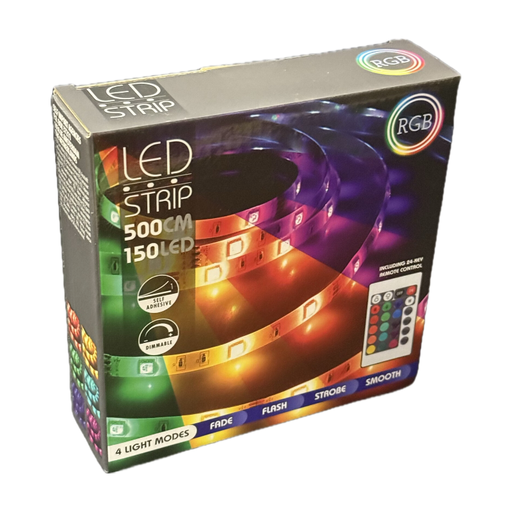
Why this product fits the profile: The 5 m RGB strip with infrared remote control is designed for simple coloured accents on furniture, behind the TV or on shelves.
The product details state the length, 24 V supply, IP20 for indoor use and dimmable brightness. This makes the key usage limits clear.
5 m length, 5050 SMD LEDs and remote control with no app required.
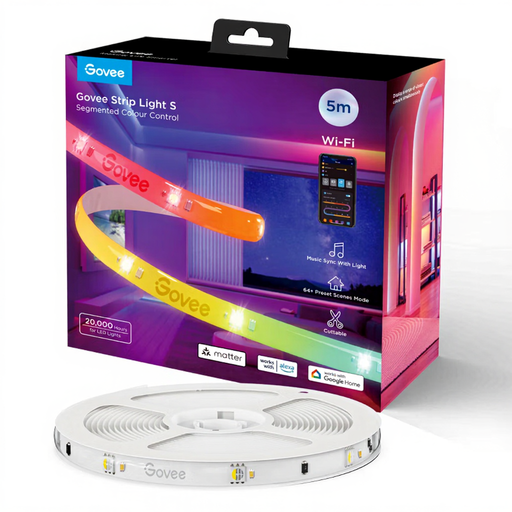
Why this product fits the profile: RGBIC segments, Wi-Fi, Bluetooth, Matter and app control appeal to users who want to integrate their lighting into a connected home or gaming environment.
The specifications distinguish between Bluetooth, 2.4 GHz Wi-Fi and Matter. The protective coating is described as more resistant to dust and light abrasion, not as waterproof.
5 m length, segmented RGBIC control, Matter support and built-in music sync.
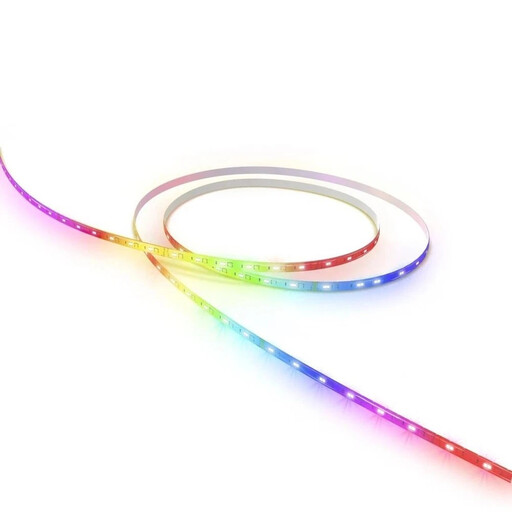
Why this product fits the profile: The RGBCCT system combines coloured lighting with adjustable white light, stepless dimming and marked cut points for individually planned installations.
The specification states IP20 for dry indoor spaces, 5 m length, 2,700 to 6,500 K and the requirement for a 2.4 GHz Wi-Fi connection.
Stepless dimming, RGBCCT white light, Matter compatibility, app and voice control, plus schedules.
For TV backlighting, the strip should not shine directly towards the seating position. An indirect mount on the back of the TV or on a wall behind it distributes the light more evenly. In a gaming room, RGBIC segments and scenes can take centre stage; in the bedroom, low brightness and subtle colours are often more practical.
We’ve put together a complete, regularly updated list of products that fully meet these strict selection criteria and the safety regulations in force in the EU.
That depends on the model. Some products can be operated via remote control or Bluetooth. For remote access, schedules or integration into a smart home system, Wi-Fi is often required. You should check the specific requirements before buying.
The lifespan depends on factors including operating time, heat dissipation, the power supply unit and mechanical stress. A strip that is not left coiled up, adequately ventilated electronics and a suitable power supply can improve operating conditions. A general lifespan cannot be derived from the product category alone.
Consumption depends on length, brightness, colour and the power supply unit. As a guide, the Govee model states 24 W at 5 m; the Hama RGBCCT model also specifies 24 W maximum power. At reduced brightness, actual consumption can be lower. Compare the technical data and standby consumption before buying.