
Lieferung heute & morgen

Qualitätsgarantie

Willkommens-Angebote freischalten: KOSTENLOSE Lieferung | Bis zu 80 % RABATT | Kostenlose 30-Tage-JoyPlus-Testphase
App herunterladen
Smart LED strips have transformed the way we design our living spaces. Whether for an immersive gaming atmosphere, dynamic TV backlighting, or creating a relaxed ambiance with indirect lighting, the possibilities are endless. But the market is filled with technical terms like RGBIC, Matter, and various control options. This guide aims to demystify the topic and help you make the right choice for your needs by objectively highlighting the key features and functions.
Choosing the right LED strip depends on more than just its length. Three key factors determine its functionality and application: the type of colour control, connectivity options, and the intended use case.
Most people are familiar with RGB LED strips, where the entire strip can light up in a single colour from millions of options at once. RGBIC technology is an evolution of this. The "IC" stands for "Independent Chip." Each chip can control a segment of the strip independently of the others. This allows for displaying multiple colours simultaneously on a single strip and creating dynamic effects like gradients, flowing animations, or rainbow patterns. For dynamic and customisable accent lighting, an RGBIC LED Strip is therefore often the more flexible choice.
Control is a crucial feature of smart lighting. The most common options are:
An LED strip with app control is standard today, but the type of connection determines your everyday flexibility.
Consider where and how the LED strip will be used.
Based on the criteria above, we've curated a selection of models that cater to different needs and use cases.
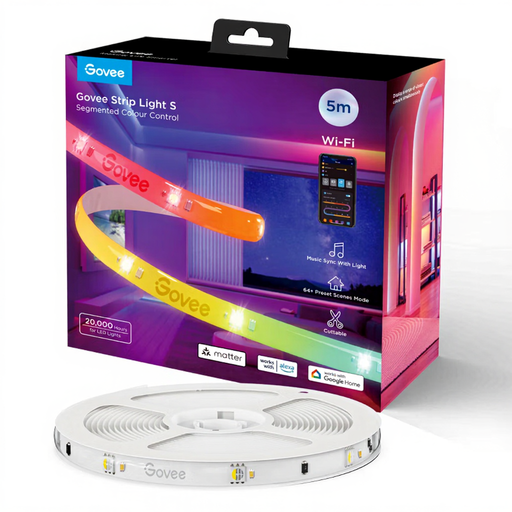
Why It Stands Out The Govee LED Strip combines advanced RGBIC technology with future-proof Matter certification. This not only enables impressive, segmented lighting effects but also ensures seamless integration into all major smart home systems. The additional protective coating on the strip increases durability and provides more even light distribution.
Pros:
Who It's For: For tech enthusiasts and smart home users looking for a powerful, versatile, and future-proof lighting solution for their gaming room, home cinema, or living room.
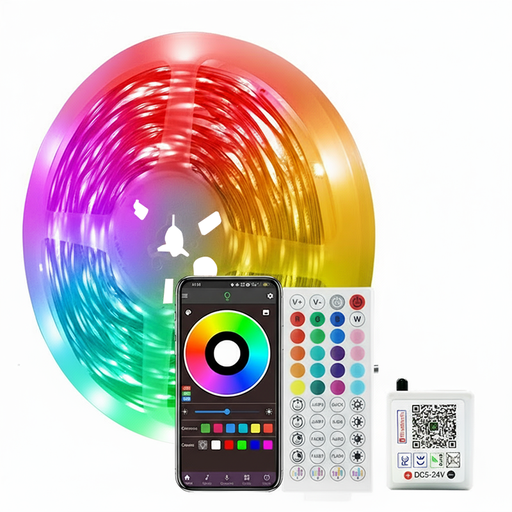
Why It Stands Out With a total length of 10 metres, this LED strip offers excellent coverage for illuminating larger areas or entire rooms. The dual control option via a Bluetooth app and an included 40-key remote makes operation especially flexible and accessible, even without a smartphone.
Pros:
Who It's For: For users who need a straightforward, long light strip for indirect lighting in a room or for party effects and who appreciate the added option of a remote control.
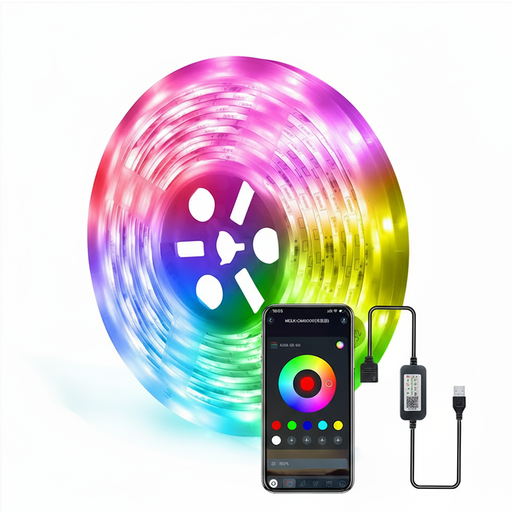
Why It Stands Out This model is specifically designed for TV backlighting. With a length of 3 metres, it fits most common television or monitor sizes. The key advantage is its power supply via a 5V USB port, which means no extra power outlet is needed—plugging it into the TV or a power bank is sufficient.
Pros:
Who It's For: For film and gaming fans looking for a simple plug-and-play solution to enhance their entertainment experience while reducing eye strain.
While smart LED strips are ideal for indoors, designing outdoor areas requires specialised solutions. For instance, if you're looking for atmospheric lighting for your garden or balcony, discover our selection of flame effect outdoor lighting.
A standard RGB LED strip can only display a single colour across its entire length at any one time. An RGBIC LED strip has independent chips (IC) that allow different segments of the strip to light up in different colours simultaneously. This enables dynamic effects like gradients and animations.
Matter is a universal connectivity standard that ensures the interoperability of smart home devices from different manufacturers. A Matter LED strip can be seamlessly connected to and controlled by platforms like Apple Home, Google Home, Amazon Alexa, and Samsung SmartThings without needing manufacturer-specific hubs or complex workarounds.
An LED strip with music sync typically works via a small microphone built into the strip's controller. This microphone picks up ambient sounds like music or audio from games and movies. An internal circuit analyses the rhythm and volume, converting this information into corresponding light effects, colours, and brightness changes in real time.