
Lieferung heute & morgen

Qualitätsgarantie

Willkommens-Angebote freischalten: KOSTENLOSE Lieferung | Bis zu 80 % RABATT | Kostenlose 30-Tage-JoyPlus-Testphase
App herunterladen
A smart LED strip can transform any space, from a gaming room to a living area. However, the market is flooded with products whose marketing promises often suggest more than the technology can actually deliver. Many buyers are quickly disappointed when the colors don't flow as expected, the app control is unreliable, or the lights lose their brightness after just a few months. This guide will show you which technical details truly matter and how to avoid the most common pitfalls.
Before you make a purchase, it's important to understand the typical problems that often only become apparent after installation.
To avoid the problems mentioned above, you should check three core parameters before buying. These define a product's quality and functionality far more accurately than pure marketing terms.
This is the most critical point for creating dynamic lighting effects.
A reliable app-controlled LED strip depends on its underlying technology.
For an immersive experience, additional features are crucial.
Based on the criteria above, we have compiled a selection of products suitable for different user profiles and their specific needs.
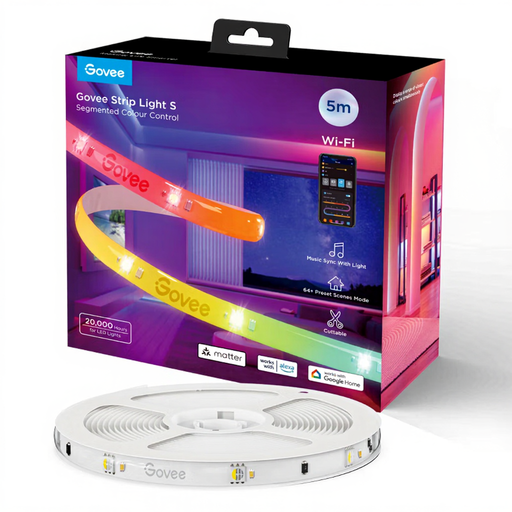
Why This Fits Their Persona: Ideal for tech-savvy users looking for a future-proof solution. Thanks to its Matter certification, this Govee 5m LED strip integrates seamlessly and reliably into existing smart home systems like Apple Home, Google Home, or Alexa, without being locked into proprietary ecosystems.
Solves the two biggest problems: The RGBIC technology enables complex, multi-color effects. Matter support prevents the connectivity trap and guarantees stable, cross-platform control.
Matter certification for maximum compatibility; mature Govee Home app with numerous scenes; protective coating for increased durability.
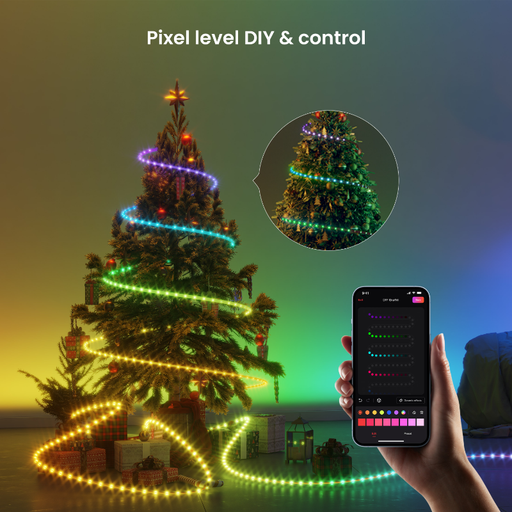
Why This Fits Their Persona: Designed for gamers who want to create an immersive atmosphere. The RGBIC technology is perfect for dynamic lighting behind a monitor or along a desk. Yeelight often offers compatibility with gaming software like Razer Chroma, allowing the lights to react directly to in-game action.
Prevents disappointment from static light through advanced RGBIC segment control. The music sync ensures a direct response to gaming sounds, creating the desired immersion.
Focus on gaming applications; segmented color control for fluid effects; expandable with additional segments (sold separately).
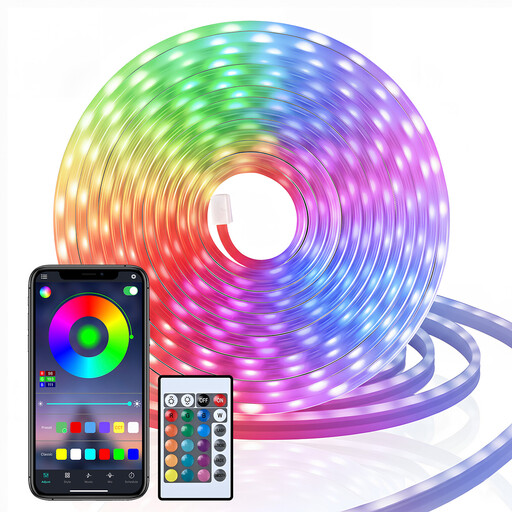
Why This Fits Their Persona: A great choice for anyone looking to enter the world of smart lighting on a limited budget. This set offers essential features like app control and music sync without the cost of advanced RGBIC or Matter technology.
Although it's a standard RGB strip, it offers much more than just static light with its music sync and app control. The flexible neon design also provides a diffuse, high-quality light without visible hotspots.
Great value for money; flexible design for creative DIY projects; controllable via app and remote.
We have compiled a complete, real-time updated list of products that fully meet these strict selection criteria and UK safety regulations.
1. How long does a smart LED strip last? The lifespan of an LED strip is typically rated between 20,000 and 50,000 hours. However, the actual durability heavily depends on the quality of the LEDs, heat management, and usage. High-quality strips with better heat dissipation and a stable power supply tend to retain their brightness and color accuracy for longer. Continuous operation at maximum brightness can shorten the lifespan.
2. What is the difference between RGB and RGBIC on LED strips? In short: RGB can only display one color across the entire length of the strip at a time. RGBIC (Independent Chip) has individually controllable chips, allowing multiple colors to be displayed simultaneously. This enables dynamic effects like rainbow gradients, flowing animations, or chasing light effects, which are not possible with a standard RGB strip.
3. Does a Wi-Fi LED strip always need an internet connection? An internet connection is required for initial setup, for control when you're away from home, and for firmware updates. However, many models can also be controlled locally over your Wi-Fi network, even if the internet connection is temporarily down. Some strips also offer a Bluetooth connection or a physical remote as a backup, ensuring basic functions are available even without an active Wi-Fi connection.