
Lieferung heute & morgen

Qualitätsgarantie

Willkommens-Angebote freischalten: KOSTENLOSE Lieferung | Bis zu 80 % RABATT | Kostenlose 30-Tage-JoyPlus-Testphase
App herunterladen
By Joybuy Product Recommendation Officer, 29 August 2026
Smart lighting promises to make our homes more comfortable, atmospheric, and energy-efficient. Dimming the lights, changing colours, or creating schedules via app or voice command—the possibilities are vast. However, the market is crowded and full of potential pitfalls. Before you invest, it's crucial to understand the key features to avoid products that overpromise and underdeliver.
This guide will show you the most common purchasing mistakes and which technical parameters to look for to make an informed decision for your home.
Many buyers focus on marketing buzzwords like "millions of colours" but overlook fundamental technical flaws that severely limit a product's everyday usability.
To avoid these mistakes, you should check three core aspects before buying. These determine whether a smart LED lamp truly fits your needs.
The connection type is crucial for installation and daily use.
Three values define the quality of light:
The most trivial, yet most important point: check the fitting of your existing fixture. The most common types are E27 smart (the classic, wide screw base) and E14 (the narrower screw base for smaller lamps). For spotlights, GU10 fittings are often required. Also, pay attention to the dimensions of the bulb to ensure it physically fits inside the lampshade.
Based on these objective criteria, we have identified some products that represent a suitable solution for specific user profiles and their requirements.
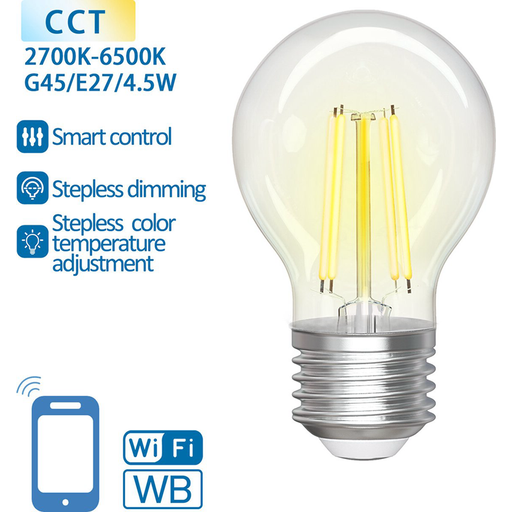
Why This Fits Their Persona: Ideal for users who want to make a single lamp or a small room smart without much hassle. The setup is straightforward and requires no prior knowledge or additional hardware. Perfect for trying out the concept of smart lighting.
Thanks to direct Wi-Fi and Bluetooth connectivity, no separate hub is needed (avoids the hub trap). The wide CCT range from 2700K to 6500K ensures high-quality white light.
The dual connectivity simplifies initial setup via Bluetooth and ensures stable control over Wi-Fi. The standard E27 fitting fits most lamps.
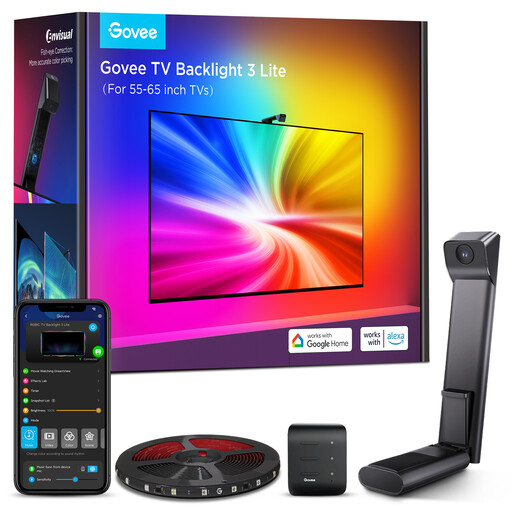
Why This Fits Their Persona: Specifically designed to create an immersive atmosphere for movies and games. This TV backlight extends the visual experience beyond the screen and is a central element for any modern gaming room lighting setup.
This product specialises in dynamic RGB effects. The RGBICW technology not only allows for segmented colours but also includes a dedicated white light, sidestepping the poor light quality trap.
The Govee Home app offers extensive customisation options, including synchronisation with screen content (with additional hardware) or music. Installation as an app-controlled LED strip is simple.
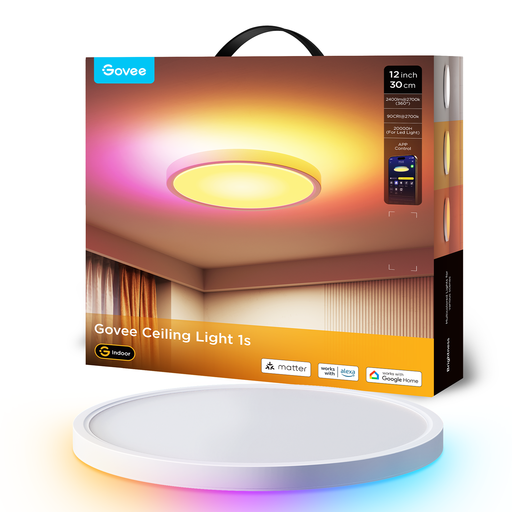
Why This Fits Their Persona: For anyone seeking a complete, integrated, and aesthetically pleasing lighting solution. This smart ceiling light replaces an entire fixture and offers both functional room illumination and atmospheric accents.
As a complete system, all components are perfectly matched. With 2400 lumens and dedicated warm and cool white LEDs (RGBWW), it provides excellent primary lighting and bypasses the weaknesses of pure RGB products.
The dual lighting system, with main and backlighting (RGBIC), enables unique, multi-layered light effects. Its high brightness makes it the ideal main light source for medium-sized rooms.
We have compiled a complete, up-to-date list of products that fully meet these strict selection criteria and UK safety regulations.
1. Does every smart LED lamp need a bridge or a hub? No, that's a common misconception. Many modern bulbs, especially those with Wi-Fi or Bluetooth, connect directly to your smartphone and router. A hub (often used with Zigbee or Matter systems) is typically needed when you want to build a very large network with dozens of devices to increase stability and reduce the load on your Wi-Fi network.
2. Can I dim a smart bulb with a normal wall switch? No, you should strictly avoid this. Smart bulbs contain sensitive electronics designed for a constant power supply. Dimming must be done via the app, voice command, or a compatible remote control. Using a conventional wall dimmer can lead to flickering, buzzing, or even damage to the lamp.
3. How do the electricity costs of smart lighting compare? Smart lighting is based on LED technology, which is inherently very energy-efficient. A typical 8-watt LED lamp that replaces a 60-watt incandescent bulb uses over 85% less electricity. The standby power consumption for connectivity is very low in most modern devices (often under 0.5 watts) and is negligible in terms of annual electricity costs. The savings from the LED technology far outweigh this.