
Lieferung heute & morgen

Qualitätsgarantie

Willkommens-Angebote freischalten: KOSTENLOSE Lieferung | Bis zu 80 % RABATT | Kostenlose 30-Tage-JoyPlus-Testphase
App herunterladen
As a Joybuy Product Recommendation Officer, I see daily how the desire for greater convenience and security is sparking interest in smart home technology. A Smart Lock promises the end of the traditional key—an appealing prospect. But the market is crowded and not every product delivers on its promises. Before you make a decision, it's important to know the most common pitfalls that can lead to a poor purchase.
The biggest mistakes when buying an electronic door lock can often be traced back to three core problems:
To avoid making a bad purchase, you should focus on the technical fundamentals rather than marketing promises. Three parameters are essential for an informed decision.
Before you shortlist a model, you need to examine your door closely. The most important decision is between a retrofit solution and a complete replacement.
A smart lock is an electronic device and requires power. The type of supply and the emergency options are critical for reliability.
The smart functionality depends on the connection technology. There are two common standards that cover different use cases and influence smart home security.
Instead of making a one-size-fits-all recommendation, we have selected products that meet specific needs and user profiles.
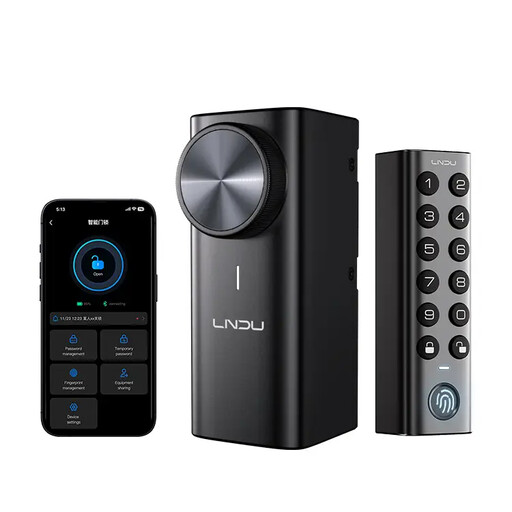
Why This Fits Their Persona: Ideal for users looking for a straightforward retrofit solution for their front door. The installation requires no drilling, and the combination of a fingerprint door lock, password, and app control offers maximum convenience for the whole family.
Thanks to 8 included adapters, it is compatible with most European door locks, thus bypassing the compatibility trap. The integrated emergency turn knob ensures manual opening at all times, preventing lockouts when the battery is dead.
Long battery life of up to 240 days. The IP65 certification ensures protection against dust and water, which is important for devices mounted on exterior doors.

Why This Fits Their Persona: For individuals whose security needs extend beyond the front door. This cabinet secures important documents, tools, or personal items inside the house, office, or garage, complementing your front door's burglary protection.
This product relies on proven, mechanical security. There are no electronics that can fail, no batteries that can die, and no hidden subscription costs. A simple, reliable, and durable solution.
Robust and rust-resistant steel construction. The adjustable shelves allow for flexible organisation of contents, while the steel lock with keys provides dependable protection.
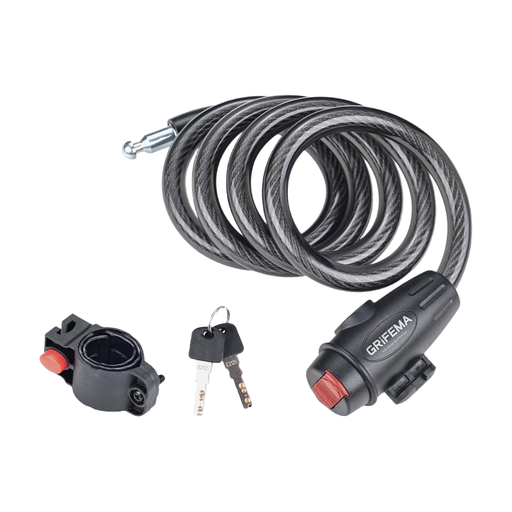
Why This Fits Their Persona: Perfect for commuters and active people who need to secure their e-bike, scooter, or other mobile valuables in public spaces or shared bike storage rooms. The focus is on robust, physical security on the go.
As a purely mechanical lock, it bypasses all potential problems of electronic devices: no dead batteries, no software glitches, no compatibility issues with smartphones. It offers straightforward and reliable security.
The 120 cm long and 12 mm thick steel cable offers flexibility when securing to fixed objects. The zinc alloy lock cylinder is drill-resistant, and a dust cover protects the mechanism from the elements.
We have compiled a complete, up-to-date list of products that fully meet these strict selection criteria and security requirements.
Battery life varies greatly depending on the model, frequency of use, and environmental conditions. Most manufacturers specify a runtime of between 6 and 12 months. Models with rechargeable batteries, like the LNDU DL500, can last up to 240 days on a single charge, according to the manufacturer. Almost all devices will warn you in good time via the app or a visual/audible signal on the device itself when the battery is running low.
A power outage does not directly affect battery-operated smart locks. However, if the battery should run completely flat, reputable models offer emergency options. This almost always includes a traditional keyhole for a mechanical emergency key. Alternatively, some devices have a concealed USB port that allows the lock to be temporarily powered by a power bank to unlock it.
Yes, retrofit solutions in particular are well-suited for rental properties as they are usually installed without drilling or making permanent alterations to the door. They are placed over the existing cylinder. When you move out, the smart lock can be removed without a trace, restoring the door to its original condition. Nevertheless, it is advisable to get your landlord's consent before installation to avoid any misunderstandings.