
Lieferung heute & morgen

Qualitätsgarantie

Willkommens-Angebote freischalten: KOSTENLOSE Lieferung | Bis zu 80 % RABATT | Kostenlose 30-Tage-JoyPlus-Testphase
App herunterladen
A fingerprint padlock offers a convenient and modern alternative to a traditional key or combination code. No more fumbling for your keys or forgetting a combination—just a quick touch, and the lock opens. However, the market is flooded with models of widely varying quality. Before you invest, it's crucial to understand the common pitfalls that can quickly turn a handy gadget into a costly frustration.
As your Joybuy Product Recommendation Officer, I'm here to help you separate the wheat from the chaff. In this guide, I'll show you the three most common traps to avoid when buying and which technical features truly matter.
Many products advertise impressive features, but their flaws often become apparent in daily use. Pay close attention to these three points to avoid making the wrong choice:
To ensure your new lock functions reliably, you should check three core technical parameters. These features separate high-quality models from unreliable alternatives.
The IP (Ingress Protection) rating is an international standard that indicates how well an enclosure is protected against the ingress of foreign objects (the first digit) and water (the second digit). For a weather-resistant padlock, the following ratings are relevant:
An advanced sensor is useless if the lock itself is easy to break. Pay attention to the material quality of the shackle and body. A shackle made of hardened steel offers significantly higher resistance to bolt cutters or saws. The lock body should be made of a robust metal alloy. Some manufacturers, like ABUS, also provide their own security level, which offers a good indication of the lock's mechanical resistance.
Modern biometric padlocks use 360° sensors that can recognise a fingerprint from any angle. This significantly increases reliability in daily use. Also, check how many fingerprints can be stored. While 10 slots are sufficient for personal use, 20 or more are practical for a fingerprint locker lock in commercial settings or for families. Clear instructions for managing administrator and user fingerprints are essential.
Based on the criteria above, we have curated a selection of products suitable for different user profiles.
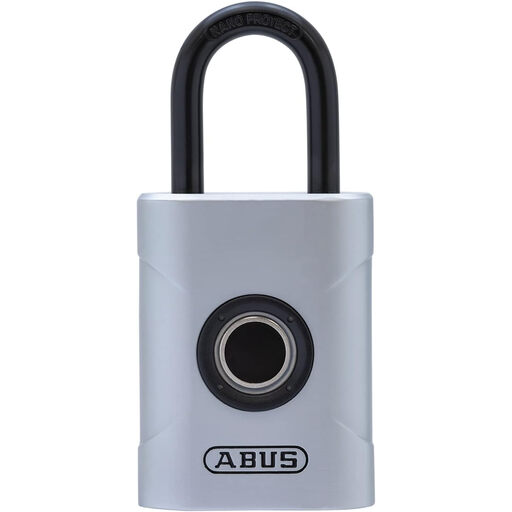
Why This Fits Their Persona: Ideal for homeowners and small business owners who need to secure garden gates, sheds, or outdoor storage areas and cannot compromise on weather resistance and mechanical security.
With certified IP66 and IP68 ratings, it is protected against dust and powerful water jets, avoiding the trap of misleading weather-resistance claims.
Hardened steel shackle and double ball locking for high tensile and torsional strength; stores up to 20 fingerprints.
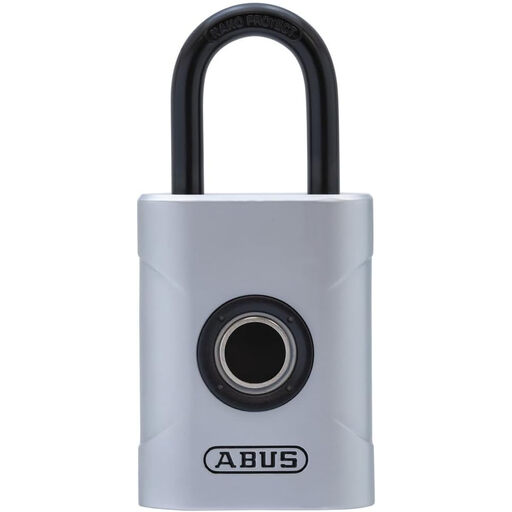
Why This Fits Their Persona: Perfect for gym-goers, students, or employees looking for a reliable fingerprint locker lock. The focus is on fast, uncomplicated, and keyless access indoors.
The high-quality 360° sensor minimises frustration from recognition errors, even when the finger isn't perfectly placed—a common issue with cheaper sensors.
High ABUS security level 8; spring-loaded shackle for automatic opening; also protected against dust and water with IP66 and IP68 ratings.
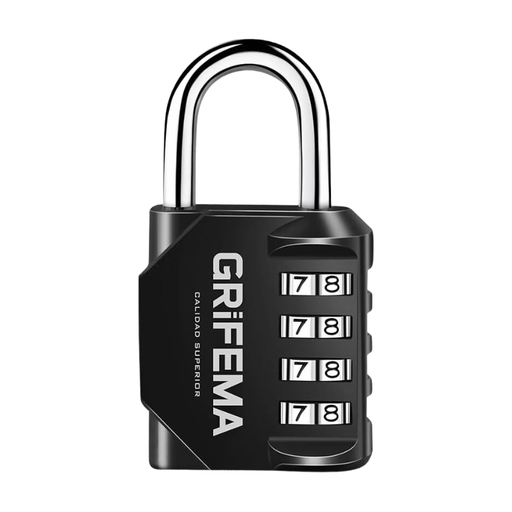
Why This Fits Their Persona: A great choice for users who want a keyless padlock but prefer to avoid the electronics of a biometric lock. Ideal for toolboxes, basement storage, or cabinets.
This lock completely bypasses the typical electronic pitfalls (sensor and battery issues) with a purely mechanical 4-digit combination.
No reliance on batteries; 10,000 possible combinations for enhanced security over 3-digit locks; weather-resistant zinc alloy body.
We have compiled a complete, up-to-date list of products that meet these strict selection criteria and security requirements.
High-quality models are designed to prevent you from being locked out. They provide early visual (flashing LED) and/or audible warnings when the battery is low. According to manufacturers, the remaining power after the first warning is often sufficient for numerous additional openings. After a certain number of warnings, the lock will no longer engage, preventing it from running out of power while secured. Battery replacement is typically straightforward via an accessible compartment.
Reliability heavily depends on the sensor's quality. Premium models like the ABUS Touch are designed for outdoor use and can better handle light dirt or moisture. Nevertheless, the general rule is: for optimal recognition, both the sensor and your finger should be as clean and dry as possible. A quick wipe of both surfaces resolves most recognition issues.
With most brand-name products, the process is kept simple. Typically, the first fingerprint saved becomes the "administrator." Only this fingerprint can be used to add other users or delete all stored prints. The exact procedure (e.g., holding the sensor for a specific duration) is described in the product's user manual and usually requires only a few steps.