
Lieferung heute & morgen

Qualitätsgarantie

Willkommens-Angebote freischalten: KOSTENLOSE Lieferung | Bis zu 80 % RABATT | Kostenlose 30-Tage-JoyPlus-Testphase
App herunterladen
A reliable security lock protects what matters to you—whether it's your bike outside the supermarket, the tools in your garage, or the mail in your letterbox. But the market is crowded and confusing, and not every lock delivers on its promise. Before you make a decision, you should be aware of the most common pitfalls that can lead to inadequate security and unnecessary expenses.
Security often fails due to details overlooked in the product description:
To avoid a bad purchase, base your decision on objective criteria. Pay attention to the following three core parameters to find the right lock for your specific use case.
The material is the first line of defence.
For outdoor use, such as with an outdoor key safe or a bike lock, a weather-resistant coating is essential. Look for specifications like powder coating, galvanisation, or specific IP ratings (e.g., IP66) that define the level of protection against dust and water.
The mechanism determines both ease of use and the level of security.
Not every lock is right for every job. Think carefully about what you want to secure:
Here are some product recommendations tailored to specific use cases that account for the pitfalls mentioned.
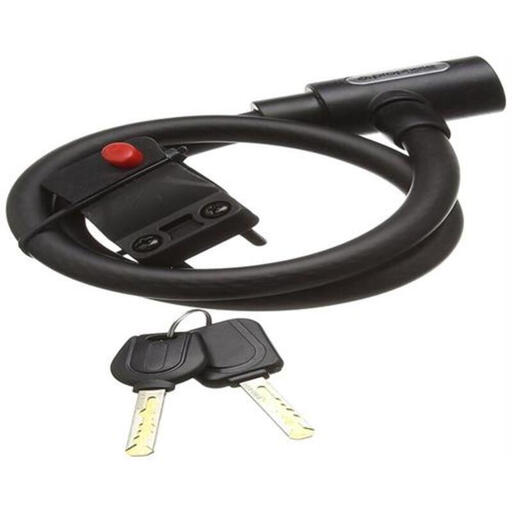
Why This Fits Their Persona: Ideal for quickly securing a bike during short errands in low-theft-risk areas. It provides basic protection against opportunistic theft.
It avoids the pitfall of using the wrong type of lock by being clearly positioned as a solution for basic security needs, with a security level of 3 (according to the manufacturer), rather than implying high-security protection.
Includes a practical seat post bracket for transport and a key with an integrated LED light for easy use in the dark.

Why This Fits Their Persona: Enables secure key handover to vacation guests, service providers, or family members without anyone needing to be present in person.
The 4-digit combination lock offers 10,000 combinations, bypassing the weakness of simpler mechanisms. The robust, weather-resistant zinc alloy body is explicitly designed for wall mounting outdoors.
Large interior space for up to 5 keys and a protective cover that shields the combination dial from rain and dirt.
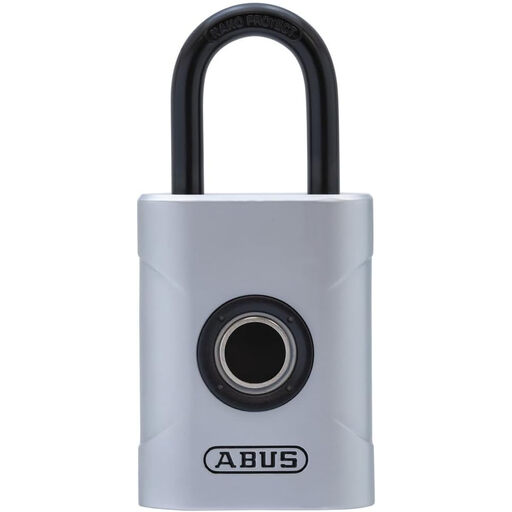
Why This Fits Their Persona: Perfect for users who want keyless convenience for a locker, cellar, or garden gate, without having to remember a code or carry a key.
It addresses concerns about weather resistance with high protection ratings of IP66 and IP68. This makes it a reliable, weather-resistant fingerprint lock that also works outdoors.
Quick opening via fingerprint, a hardened steel shackle, and the high ABUS security level of 8 (according to the manufacturer) offer a combination of convenience and security.
We have compiled a comprehensive, up-to-date list of products that meet these strict selection criteria.
Keyed alike means that multiple locks can be opened and closed with the same key. This is especially practical if you want to secure several access points, such as a garden gate, a shed, and a cellar room with padlocks, but don't want to carry a separate key for each lock on your keychain.
Even a weather-resistant lock benefits from occasional maintenance. To keep the locking mechanism operating smoothly, it is recommended to spray a non-resinous lock lubricant (e.g., graphite- or silicone-based) into the cylinder once or twice a year. Avoid conventional oils, as they can attract dust and dirt, which can gum up the mechanism. For a key safe, the protective cover over the combination dial should always be kept closed.
Whether a fingerprint lock is suitable for outdoor use depends on its IP rating. The IP (Ingress Protection) rating indicates how well the housing is protected against the ingress of foreign objects (first digit) and water (second digit). A lock with an IP66 rating is dust-tight and protected against powerful water jets, while IP68 even offers protection during permanent submersion. For unprotected outdoor use, a high IP rating is therefore a crucial selection criterion.