
Lieferung heute & morgen

Qualitätsgarantie

Willkommens-Angebote freischalten: KOSTENLOSE Lieferung | Bis zu 80 % RABATT | Kostenlose 30-Tage-JoyPlus-Testphase
App herunterladen
A motion sensor light is a practical addition to any home. It provides outdoor security, serves as a guidance light in dark hallways, and can even function as a gentle children's night light. However, the market is flooded with products whose real-world performance often fails to live up to their promises. Before you make a decision, it's important to understand the common pitfalls that can lead to disappointment and unnecessary expense.
As your Joybuy Product Recommendation Officer, I'm here to help you separate the wheat from the chaff. In this guide, I'll show you what really matters and how to find a light that is both reliable and durable.
Many products advertise impressive features, but their weaknesses quickly become apparent in daily use. Pay close attention to these three points to avoid making a bad buy:
To avoid these problems, you should carefully check three technical parameters. These will give you an objective basis for your purchasing decision.
Most lights use PIR (Passive Infrared) sensors, which react to body heat. Pay attention to two values here: the detection angle (often 120° to 180°) and the range (typically 3 to 12 metres). For a long hallway, the range is more important, while for a wide entryway, the angle is key. An additional dusk-to-dawn sensor is essential. It ensures that the light only activates in the dark and doesn't waste power during the day.
The choice of power supply depends entirely on the location of use:
The IP rating indicates how well a light is protected against the ingress of foreign objects and water. For outdoor use, the following classes are relevant:
Here are some models that represent a considered choice for specific use cases, based on their objective features.
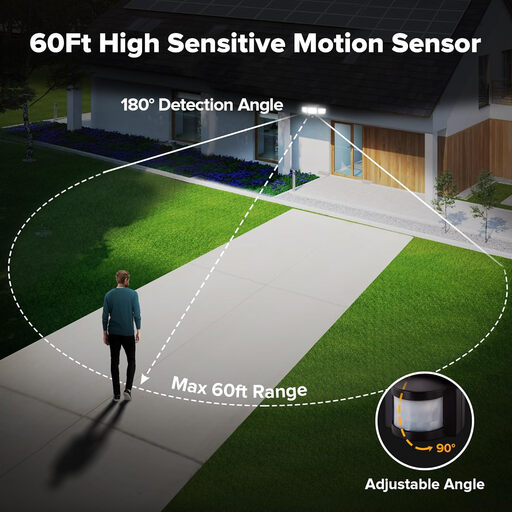
Why It's a Great Fit: Ideal for illuminating large outdoor areas like driveways, gardens, or yards. The high light output of 3000 lumens per light and solar operation make it a powerful and self-sufficient outdoor security light.
With an IP65 rating, this light is protected against water jets and thus designed for unprotected outdoor use. The efficient solar panel addresses the problem of an inadequate power supply.
Three flexible, adjustable light heads allow for targeted illumination. Three different operating modes offer customisable security solutions.

Why It's a Great Fit: Provides safe and gentle guidance in hallways, bathrooms, or as a children's night light. The plug-in design is easy to install and requires no maintenance.
The combination of a motion and dusk-to-dawn sensor ensures the light only turns on when motion is detected in the dark. This prevents false triggers and unnecessary power consumption.
The 5-level adjustable brightness allows you to customise the light intensity, for example, to avoid being too bright in a child's room. At 0.5 watts, its power consumption is very low.
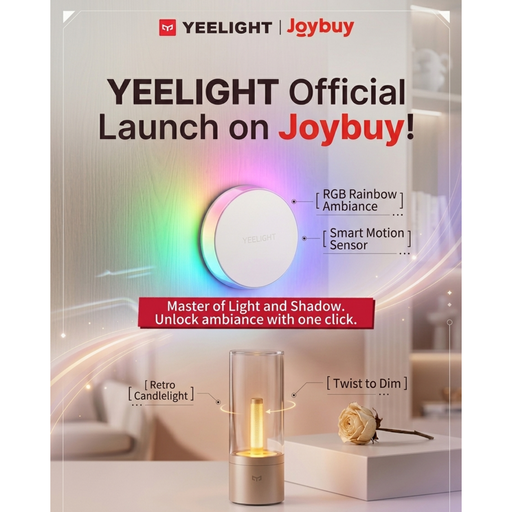
Why It's a Great Fit: For users who want more than just a simple guidance light. It combines functionality with modern design and can be used as an accent or mood light in the living room or bedroom.
Thanks to its integrated battery with a USB-C port, it bypasses the limitations of a fixed power source and the need for constant battery changes. The magnetic mount ensures flexible placement.
In addition to motion detection, it also offers RGB mood lighting with 11 preset effects. This allows for individual customisation of the atmosphere that goes beyond pure functionality.
We have compiled a complete, up-to-date list of products that fully meet these strict selection criteria and safety regulations.
For optimal performance, you should mount the solar light in a location that receives several hours of direct sunlight daily, ideally with a south or west-facing orientation. The recommended mounting height is usually between 2 and 3 metres to best utilise the sensor's detection area. Clean the solar panel regularly with a soft cloth to maintain its charging performance.
A motion sensor (PIR sensor) reacts to the movement of heat sources, such as people or animals. A light with a dusk-to-dawn sensor, on the other hand, reacts to the ambient light; it turns on automatically when it gets dark and off when it gets light. Many modern lights combine both technologies to illuminate only when it's dark and there is simultaneous movement.
This is model-dependent. Particularly with outdoor lights for security purposes, you can often adjust parameters like the light duration after activation, the sensor's sensitivity, and the lux level (the darkness threshold for activation). Simple indoor lights like plug-in night lights, however, often have fixed, manufacturer-defined settings. Always check the product description for the specific model.