
Lieferung heute & morgen

Qualitätsgarantie

Willkommens-Angebote freischalten: KOSTENLOSE Lieferung | Bis zu 80 % RABATT | Kostenlose 30-Tage-JoyPlus-Testphase
App herunterladen
Consistent, needs-based nutrition is a cornerstone of responsible pet care. Manual feeding can become inconsistent due to irregular schedules, work commitments, or travel. A smart pet feeder with app control offers a data-driven solution, enabling precision, control, and seamless documentation of your pet's food intake. These systems not only ensure timely meals but also address specific challenges like feeding in a multi-cat household or managing a strict diet.
Choosing the right model depends on objective technical parameters. The following criteria are essential for making an informed decision.
The primary interface is the mobile application. Stable operation typically requires a 2.4 GHz Wi-Fi pet feeder network. Some models also offer Bluetooth for a simplified initial setup. A crucial feature is the ability to operate offline: Can the feeder reliably execute the saved feeding schedule even if the internet connection fails? This ensures your pet's basic needs are met under all circumstances.
The capacity of the food tank, measured in litres (e.g., 3L pet feeder or 4L pet feeder), determines how often you need to refill it. However, the portion control mechanism is even more important. Precise systems allow you to set the food amount in small increments (e.g., 5-10 grams per portion) and schedule multiple meals per day. This enables a diet tailored to your pet's energy needs and helps prevent obesity. The maximum kibble size is also a relevant specification to prevent jams in the dispensing mechanism.
Components that come into contact with food should be made of food-grade materials. A stainless steel pet feeder bowl (e.g., Type 304) is preferable to plastic bowls because it is non-porous, scratch-resistant, and less prone to bacterial buildup. The ease of disassembly and cleaning of the food tank, dispensing mechanism, and bowl is a key criterion for maintaining food hygiene.
For households with multiple pets, a pet feeder for multiple cats with individual pet recognition is a functional necessity. These systems use RFID (Radio-Frequency Identification) technology via a chip on the pet's collar. The feeder only dispenses food when the authorised pet approaches. This prevents food theft and ensures that pets with special dietary requirements or different nutritional needs are fed exactly according to their plan.
Based on an analysis of technical specifications and practical benefits, we present two models that cater to different user profiles.
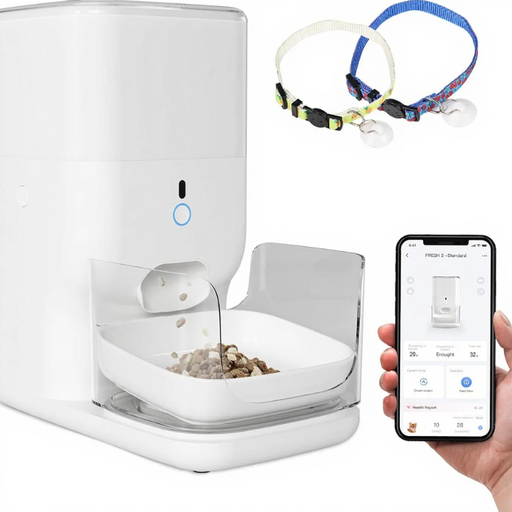
Why We Recommend This Product The Catlink FRESH 2-F04 is specifically designed for the complex needs of multi-cat households. Its core functionality is the RFID collar identification system, which ensures exclusive and personalised feeding for each individual cat. The combination of a large 4L pet feeder tank, a sealed design to maintain freshness, and the ability to execute feeding schedules offline makes it a robust solution for pet owners who require maximum control and reliability.
Pros
Who It's For This model is primarily designed for multi-cat households where individual feeding is necessary to adhere to diets or prevent food-related conflicts. It is also suitable for owners who want to collect detailed data on their pets' eating habits for preventative health care.
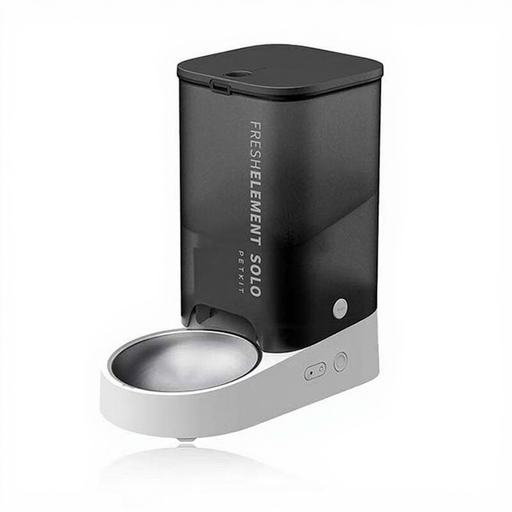
Why We Recommend This Product The PETKIT SOLO focuses on reliability, material quality, and intuitive app control for single-cat or small-dog households. Its use of a 304 stainless steel food bowl underscores its focus on hygiene. With a 3-litre capacity and a precise rotational mechanism for portioning, it offers a solid and proven solution for automated feeding.
Pros
Who It's For This model is an excellent choice for owners of single cats or small dogs who are looking for a reliable, hygienic, and easy-to-use smart pet feeder. The focus here is on the consistent and programmable feeding of a single pet.
If the models presented here don't exactly meet your requirements, or if you're looking for simpler solutions like gravity feeders without app connectivity, you can find a wider selection in our Bowls & Accessories category. Various systems for food and water dispensing are listed there.
1. Can a pet feeder with an app work without Wi-Fi? Yes, many high-quality models, like the Catlink FRESH 2 featured here, have an offline mode. After the initial programming via the app, the feeding schedule is saved on the device itself. The feeder will execute this plan even if the Wi-Fi connection is interrupted. This ensures your pet's basic feeding needs are always met.
2. How do you properly clean a smart pet feeder? To clean the device, always unplug it from the power source. The components that come into contact with food (food tank, dispensing mechanism, bowl) are removable on most models. These parts should be cleaned with warm water and mild soap according to the manufacturer's instructions and dried completely before reassembly. The base unit containing the electronics must not be submerged in water and should only be wiped with a damp cloth.
3. Is a pet feeder for multiple cats a good idea? A standard pet feeder is only partially suitable for multiple cats, as it's impossible to control which pet eats how much. For such households, a microchip pet feeder with RFID recognition is the technically superior solution. It ensures that each cat receives only its own designated portion of food, which is essential for managing different diets or controlling weight.