
Lieferung heute & morgen

Qualitätsgarantie

Willkommens-Angebote freischalten: KOSTENLOSE Lieferung | Bis zu 80 % RABATT | Kostenlose 30-Tage-JoyPlus-Testphase
App herunterladen
A smart plug transforms conventional appliances into intelligent, remotely controlled components of your home. Whether you want to turn on the coffee machine from your bed, monitor your TV's energy consumption, or simulate your presence while on vacation, the possibilities are endless. However, the market is crowded, and not every product delivers on its promises. As your Joybuy Product Recommendation Officer, I'll help you navigate the common pitfalls and make an informed decision.
Before you invest, you should be aware of the most common issues that arise with cheap or poorly specified models, which often only become apparent after a few weeks of use.
To make the right choice, focus on three core technical features that define the utility and safety of your smart plug.
The type of connection determines how you control the plug and what it's best suited for.
The electrical load capacity is a critical safety criterion. Before purchasing, check the specifications for maximum power.
Also, look for certifications like T?V or CE, which confirm compliance with European safety standards. Integrated overload protection is another important feature.
Modern plugs offer more than just turning things on and off.
Here are some recommendations tailored to specific user needs, taking the aforementioned criteria into account.
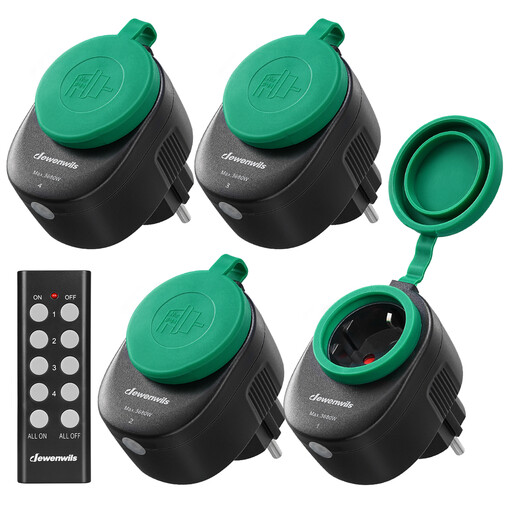
Why This Fits Their Persona: This set is ideal for users who want a ready-to-use solution without technical hurdles. Perfect for controlling garden lighting, Christmas decorations, or hard-to-reach indoor appliances. Operation is exclusively via the included remote control.
It completely bypasses the Wi-Fi compatibility trap by relying on proven 433.92 MHz radio frequency technology. No setup, app, or internet connection is required.
High load capacity of 16 A (3680 W) and IP44 weather resistance, making it suitable for both high-power indoor appliances and as an outdoor remote control outlet.
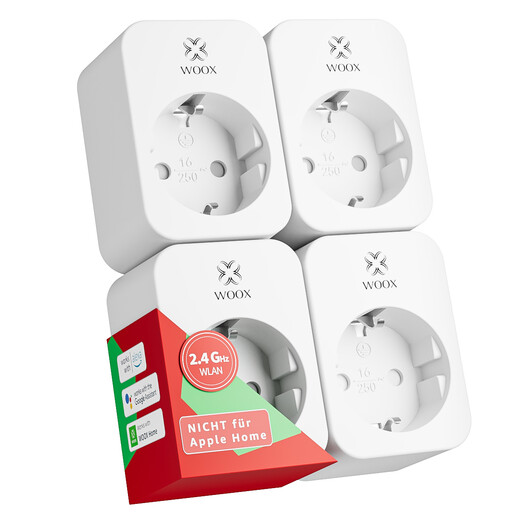
Why This Fits Their Persona: For tech-savvy users who want full control over their devices and their energy consumption. Integration with Alexa and Google Home allows for convenient voice control, while the app provides detailed consumption analysis and automation.
This model is T?V-certified, directly addressing safety concerns associated with unverified products. Its high load capacity of 16 A also prevents overload from powerful household appliances.
The combination of T?V safety certification and precise energy monitoring offers a high degree of security and control. Compatibility with the widely used Tuya platform ensures broad functionality.
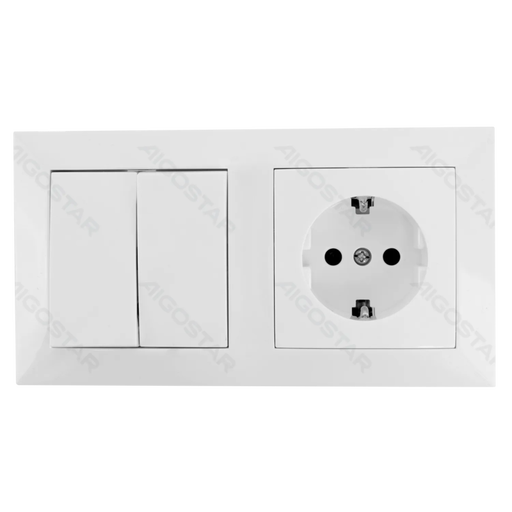
Why This Fits Their Persona: Ideal for homeowners and renovators who prefer a permanent, hardwired solution without visible adapters. This combination of a Schuko socket and a dual switch integrates seamlessly into the wall, providing a clean, professional look.
As a hardwired in-wall outlet with a switch, it offers a code-compliant and permanently safe solution. It is CE-certified and includes child safety features, making it a more reliable alternative to mobile adapters.
The flexible module combination meets various power control and device connection needs in a single, elegant unit. Professional installation ensures maximum safety and functionality.
We have compiled a complete, up-to-date list of products that fully meet these strict selection criteria and German safety regulations.
1. Does every smart plug require a Wi-Fi connection? No. There are two main types: Wi-Fi plugs, which connect to your home network and are controlled by app/voice, and RF plugs, which operate via a dedicated remote control without an internet connection. The latter is a very simple and stable solution for basic remote switching tasks.
2. What is the typical lifespan of a smart plug? The mechanical lifespan of the relay in a high-quality smart plug is rated for many thousands of switching cycles. With normal use (a few times per day), the hardware can last for many years. However, longevity heavily depends on the quality of the components and adherence to the maximum load. Models with safety certifications like T?V are generally designed for a longer and safer operational life.
3. Can a smart plug damage my devices during a power outage? No, quite the opposite. Most high-quality smart plugs have a feature that ensures they remain in the "off" state after a power outage. This prevents connected devices from turning back on uncontrollably, which not only saves energy but also enhances safety, especially with heaters or kitchen appliances.