
Lieferung heute & morgen

Qualitätsgarantie
App herunterladen
Kategorien
A smart RGB ceiling light is a central element of modern interior design, combining illumination, atmosphere, and functionality. Unlike conventional fixtures, it allows for dynamic adjustment of colour, brightness, and colour temperature via a Wi-Fi ceiling light with an app or voice assistants. Choosing the right model is based on an analysis of technical specifications and the intended application.
The decision to purchase a smart ceiling light should be based on objective criteria. The following parameters are crucial for functionality and longevity.
The type of LED technology determines the colour-changing capabilities.
Integration into a smart home system is a core feature. Most models use Wi-Fi or Bluetooth to connect to a smartphone app. Look for compatibility with popular platforms like Amazon Alexa, Google Assistant, or Samsung SmartThings to enable voice command control (e.g., as an Alexa ceiling light). The app's functionality defines the scope of customisation options, such as creating schedules, scenes, or syncing with music.
The form factor influences the aesthetics and the area of application. A particularly low-profile ceiling light design is popular in modern models, as it integrates discreetly into the ceiling and is also suitable for rooms with low ceilings.
For use in damp environments, the IP protection rating is crucial. A bathroom ceiling light or one for the kitchen should have at least an IP44 rating (protection against splashing water) or higher. Models with IP54 also offer protection against dust ingress.
Based on an analysis of technical specifications and practical utility, we present a few models here.
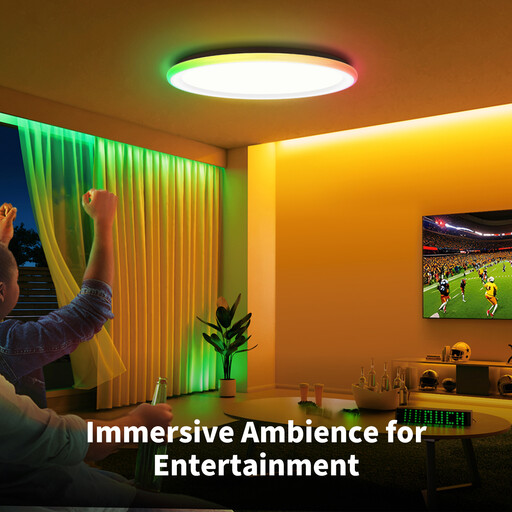
Why We Recommend This Product This model combines a powerful main light with a side-emitting RGBIC ambient light (SideGlow). The RGBICWW technology enables both dynamic, multi-colour effects and high-quality white light with a high colour rendering index (CRI > 90), ensuring that colours in the room are rendered very naturally.
Pros
Who It's For Users seeking immersive and room-filling lighting for living rooms, bedrooms, or entertainment areas who value high colour quality.
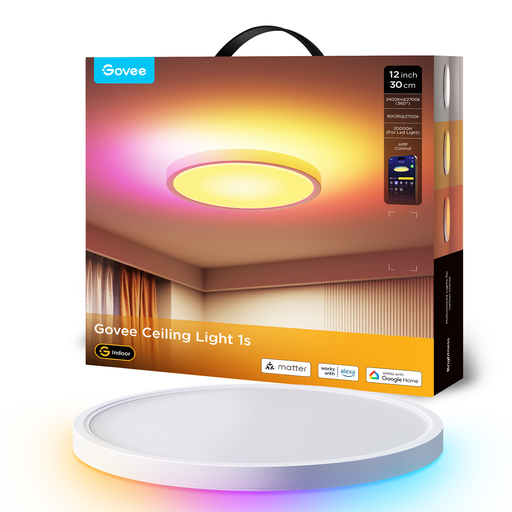
Why We Recommend This Product The Govee ceiling light features a dual-light architecture: an RGB+WW main light for functional illumination and a separate RGBIC backlight for ambient effects. With a brightness of up to 2400 lumens, it is well-suited for illuminating medium-sized rooms. Integration into the Govee ecosystem allows for synchronisation with other Govee products.
Pros
Who It's For Users looking for a powerful smart colour-changing ceiling light who may already use other products from the Govee ecosystem or desire synchronisation with music.
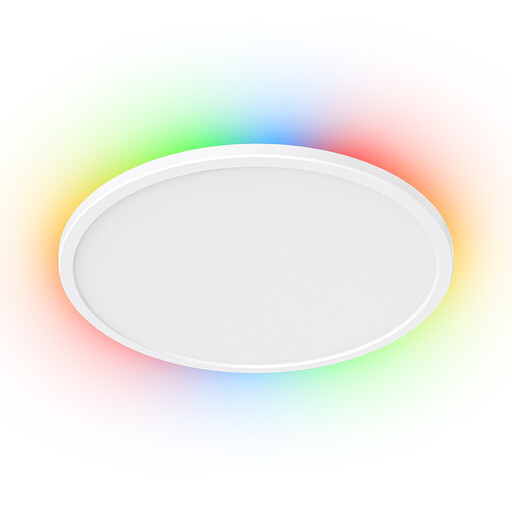
Why We Recommend This Product This model focuses on a minimalist design and functionality for specific applications. With a profile height of just 2.5 cm (0.98 inches), this ceiling light is low-profile and unobtrusive. The IP54 certification makes it dust- and splash-proof, ideal for use in bathrooms, kitchens, or on covered balconies. The RGB backlight provides subtle colour effects.
Pros
Who It's For Individuals seeking a functional and design-oriented lighting solution for damp environments or areas with low ceilings who prefer an unobtrusive aesthetic.
If the models presented here do not exactly meet your requirements, you can find a wider selection of lighting solutions in our RGB Lighting category. More models with different specifications and designs are available there.
1. What is the difference between RGB and RGBIC? With RGB LED strips or lights, all LEDs light up in the same colour at once. You can change the colour of the entire strip, but you cannot colour individual sections differently. With RGBIC (Independent Control), an integrated chip allows individual segments of the LEDs to be controlled independently. This enables multiple colours to be displayed simultaneously and dynamic effects like colour gradients or "rainbow" patterns to be created.
2. Can I install a smart ceiling light myself? Installing a ceiling light involves working with the mains electricity (230V). While some models feature quick-mount systems that simplify the mechanical installation, the electrical connection should always be performed by a qualified electrician in accordance with local regulations for safety reasons. Before starting any work, ensure that the power supply is disconnected at the fuse box.
3. Do smart ceiling lights work without an internet connection? Functionality without the internet depends on the model. Most smart lights can still be turned on and off via a conventional light switch, typically starting with the last-used setting. However, smart features like app control, voice commands, or schedules require an active Wi-Fi connection and often a connection to the manufacturer's server. Some models offer limited control via Bluetooth if the Wi-Fi fails.