
Lieferung heute & morgen

Qualitätsgarantie

Willkommens-Angebote freischalten: KOSTENLOSE Lieferung | Bis zu 80 % RABATT | Kostenlose 30-Tage-JoyPlus-Testphase
App herunterladen
Smart RGB LED lighting can help you create a personalised look in your living room, gaming setup, bedroom, vehicle or outdoor space. But RGB, RGBIC, Wi-Fi, Bluetooth Mesh and Matter all have practical differences. If you focus only on the number of colours or the most dynamic effects, it’s easy to overlook important details such as IP rating, connections, compatibility and mounting surface.
A standard RGB LED strip displays one colour along its full length in many modes. An RGBIC LED strip, on the other hand, can show different colours in several sections at once. This makes colour gradients, flowing light effects and segmented scenes possible. However, this feature isn’t available on every strip, and its use may be limited by the app.
The IP rating needs to suit where you plan to use the product. IP20 is intended for dry indoor spaces. IP44 protects against solid objects and splashing water, but doesn’t make a product suitable for immersion. An LED light with an IP44 rating shouldn’t be left exposed to rain for extended periods. For vehicle or outdoor use, you should also consider connectors, the power supply and the mounting surface.
A product with app control often needs a compatible 2.4 GHz Wi-Fi connection. Bluetooth Mesh may require a suitable hub or compatible app. For Matter, check whether you have a Matter-enabled controller at home and whether it supports the platform you want to use. “Alexa compatible” doesn’t automatically mean every function is available by voice command.
A Wi-Fi LED light can usually be controlled directly over your home network. Check whether it supports 2.4 GHz only or 5 GHz as well. If several people in your household need access, make sure your app-controlled LED lighting is compatible with both Android and iOS.
Matter-compatible lighting can make it easier to connect to Apple Home, Google Home, Alexa or SmartThings. Even so, you’ll need to check the specific product’s compatibility. For a Bluetooth Mesh LED, check whether you need a gateway and how many devices can connect to the network.
The figure in lumens describes light output. A higher value doesn’t automatically mean more comfortable lighting, as the beam angle and mounting position also matter. Consider the following features when choosing a product:
For workspaces or general room lighting, coloured light shouldn’t be your only light source. A separate light positioned to minimise glare may be a better choice for practical lighting.
Measure the area before ordering and check whether the strip can be bent around corners. Many LED strips can’t be cut just anywhere. The adhesive is more reliable on clean, dry and smooth surfaces. If you’re applying it to a TV, furniture or painted surfaces, it’s worth testing the adhesion carefully first.
Also check the power supply’s power rating, cable length and controller ventilation. Don’t leave a switched-on strip rolled up for long periods, as heat can build up.
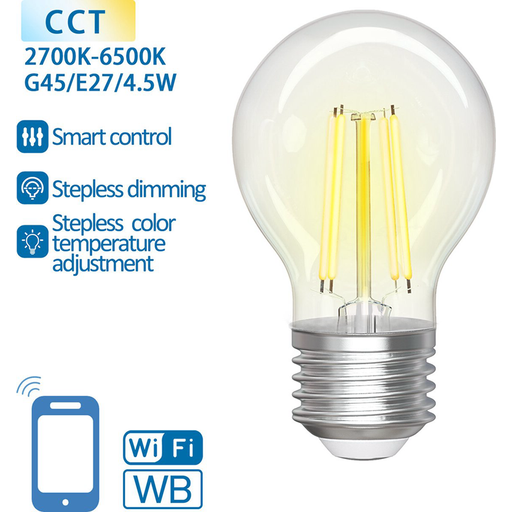
Why this product suits this profile: E27 fittings are common in many table, wall and ceiling lights. Control it through the app, Wi-Fi or Bluetooth, with Alexa and Google Assistant also supported.
The specifications list 2700–6500 K, 1–100% dimming and a power consumption of 4.5 W. The IP20 rating limits its use to dry indoor spaces.
E27 base, 470 lm, RGB+CCT, app and voice control, and dimming without a separate bridge, according to the product specifications.
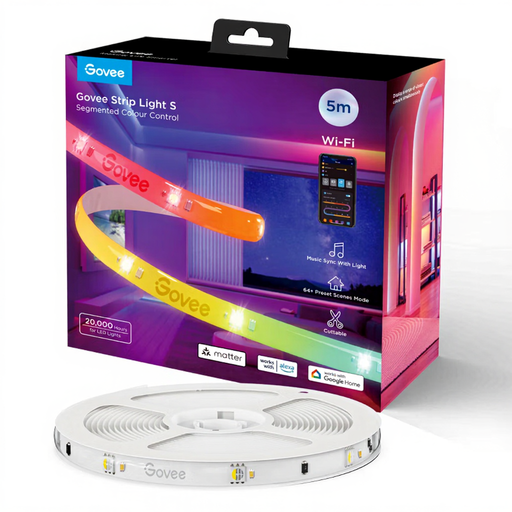
Why this product suits this profile: This 5-metre strip is aimed at people looking for segmented effects, Matter support and a combination of app, Wi-Fi and Bluetooth control.
The product information specifies 2.4 GHz Wi-Fi, indoor use and a protective coating. Don’t operate the strip rolled up for extended periods or allow it to come into contact with water.
RGBIC segment control, Matter support, music synchronisation and 64 preset scenes, according to the product description.
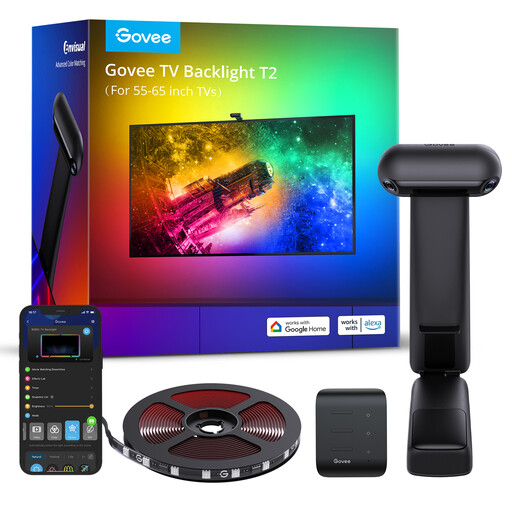
Why this product suits this profile: This system is designed for home cinema and gaming fans with 55- to 65-inch TVs. Two cameras detect the colours on screen to create matching backlighting.
The recommended screen size is clearly stated. The product information also specifies 2.4 GHz Wi-Fi, indoor use and the use of the supplied 12 V power supply.
TV colour matching, music mode, the Govee app and Alexa and Google Assistant control, according to the product information.
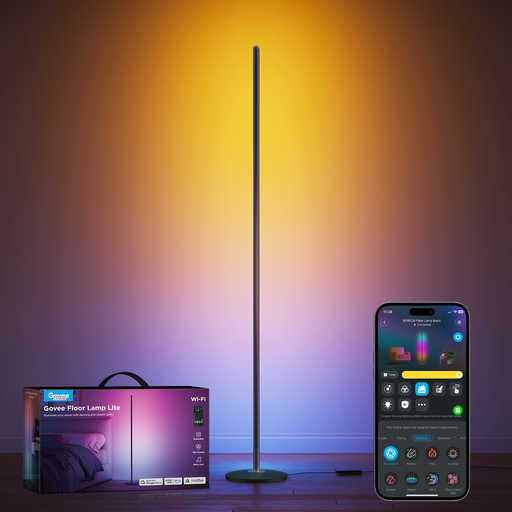
Why this product suits this profile: Standing 136 cm tall, this floor lamp needs no adhesive installation. It’s ideal for living rooms, bedrooms and gaming areas with enough free floor space.
This lamp is intended for indoor use and should be placed on a stable, level surface. That means you don’t have to worry about adhesive strips on furniture or walls.
1,000 lm, dimmable RGBIC lighting, 58 scenes, plus app, Wi-Fi, Bluetooth, Alexa and Google Assistant control, according to the manufacturer.
We’ve put together a comprehensive, regularly updated list of products that meet these strict selection criteria and fully comply with the safety regulations in force in the EU.
First, install the product and connect it to the supplied power supply. Then install the manufacturer’s app, enable Bluetooth or connect the device to 2.4 GHz Wi-Fi. For Matter products, you’ll usually scan the QR code and then select a compatible smart home system. The exact steps may vary by model.
Its lifespan depends on the LED module, heat dissipation, power supply, switching cycles and operating conditions. Manufacturer estimates such as 10,000 to 25,000 hours are guide figures, not a guarantee of a specific service life. Allowing enough ventilation and using the specified power supply can reduce strain on the components.
Power consumption depends on the wattage, brightness, how long the light is on and the controller’s standby consumption. A 24 W strip uses considerably more energy at full power than a 4.5 W LED bulb. For a realistic estimate, multiply the power consumption by the number of hours you use it each day and your electricity tariff.