
Lieferung heute & morgen

Qualitätsgarantie

Willkommens-Angebote freischalten: KOSTENLOSE Lieferung | Bis zu 80 % RABATT | Kostenlose 30-Tage-JoyPlus-Testphase
App herunterladen
A smart RGB solar wall light can illuminate your house, patio, balcony or entrance without a fixed power supply. Before you buy, though, it’s worth checking the technical details carefully. Some products advertise high wattages without clearly stating their actual light output. Others quote an IP rating that applies only to certain components. App and Bluetooth features may not be compatible with every smartphone or smart home system, either.
The label ‘20W solar light’ may sound informative, but visible brightness depends primarily on luminous flux in lumens, LED technology, beam angle and mounting height. An RGB solar wall light can also appear brighter or dimmer depending on the colour selected. Check whether the manufacturer provides a specific lumen rating.
An IP65 outdoor wall light is protected against dust and water jets from various directions. That doesn’t mean it can be used underwater for extended periods or that it’s suitable for every mounting position. Cable entries, the solar panel and the wall bracket should also be designed for outdoor use.
Claims such as ‘up to 24 hours’ depend on several factors: sunlight, time of year, panel orientation, selected light colour, brightness setting and how long the light is activated for. In winter, charging may be significantly less effective. For this reason, a wireless solar outdoor light should ideally be installed somewhere that gets plenty of direct sunlight.
Check the size and output of the solar panel, as well as the battery capacity. The Aigostar Smart Solar model is listed with a 5 W monocrystalline solar panel and a 3.7 V, 4,000 mAh battery. The panel connects to the light via a 5-metre cable. This means you can mount the light on a shadier wall and position the panel somewhere sunnier.
A stated charging time of four to six hours typically assumes favourable light conditions. In practice, it’s important that the panel stays clear of shadows cast by roof overhangs, trees or neighbouring buildings.
An RGB CCT outdoor light combines coloured RGB lighting with adjustable white light. On the Aigostar model mentioned, the white light ranges from 2700 K to 6500 K. Warm white is a good choice for subtle patio lighting, while a more neutral or cooler white can work well for paths and entrances.
You should also check the controls. Bluetooth Mesh outdoor lighting can connect several compatible lights together. The Aigostar model is listed as supporting more than 200 devices through a Bluetooth Mesh network. Before buying, check that the app you need is available and confirm its range and smartphone compatibility.
Durable materials and a suitable operating temperature range are important for an outdoor solar wall light. According to the product details, the Aigostar model is made from ABS and PE and is designed to operate at temperatures from -10 °C to 50 °C. The Smart Solar wall light is rated IP65.
Even though installation is wireless, the wall still needs to be sturdy enough to support the light. Check whether the solar panel can be mounted separately and whether the 5-metre cable will reach your chosen position. If you’re renting, agree on drilling and the type of fixings with your landlord first.
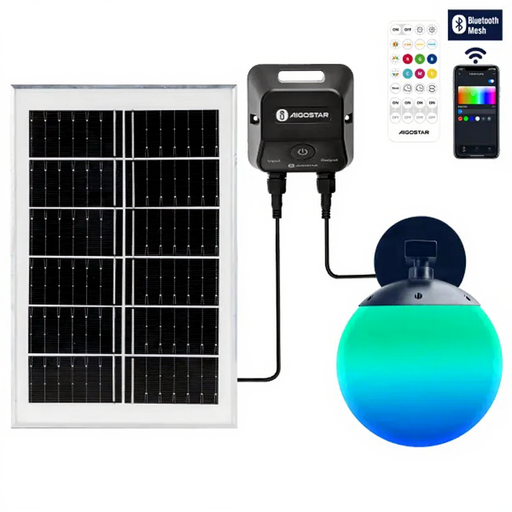
Why this product suits this profile: The combination of solar power, RGB and white light, and wireless installation covers the essentials for flexible outdoor lighting.
The product details list the battery, solar panel, charging time and cable separately. This makes it easier to assess where to install the light and what to expect from it than relying on a wattage claim alone.
RGB plus 2700–6500 K white light; Bluetooth Mesh controls and a 5-metre solar cable.
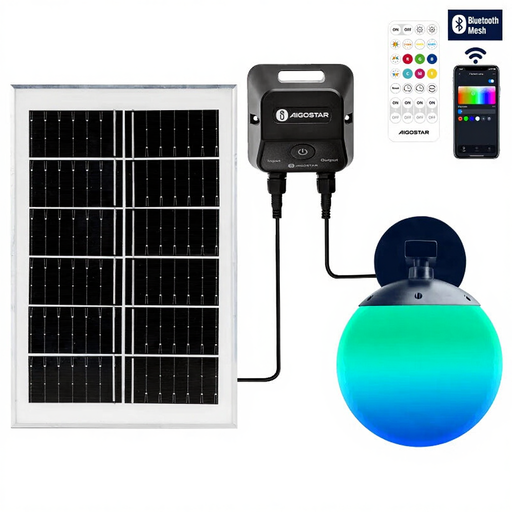
Why this product suits this profile: This model is for buyers who want to check the IP rating, lighting specifications and smart home features in detail before making a purchase.
The product details list IP65, 200 lm, the temperature range, charging time and battery specifications. This lets buyers compare marketing claims with technical figures.
IP65 rating; 200 lm luminous flux, plus RGB and CCT white light from 2700 to 6500 K.
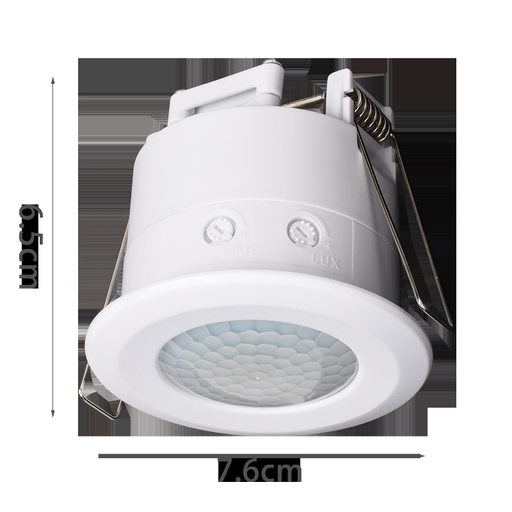
Why this product suits this profile: The product name and description need particularly careful checking here, as the listed details refer to indoor use and a wired power supply.
It shows why the product title alone isn’t enough: according to the description, this product is intended for indoor use and shouldn’t be considered a wireless solar outdoor light.
The description lists adjustable sensor settings and 360-degree detection. However, according to the available details, this model isn’t suitable for outdoor use.
We’ve put together a complete, regularly updated list of products that meet these strict selection criteria and fully comply with the safety regulations in force in the EU.
First, attach the wall bracket to a sturdy surface. The solar panel needs as much direct sunlight as possible. If the panel is separate, connect its cable to the light and check that all the connectors are secure. Before completing the installation, test the light with the app, Bluetooth and automatic dusk detection.
How long it runs depends on the battery, charging cycles, temperature, sunlight and operating mode. Bright RGB light uses the battery differently from dimmed warm white light. Manufacturer claims about lifespan, such as a stated LED lifetime, should therefore be distinguished from actual use. If the run time starts to drop, the battery is often the first component to check.
The light uses energy from the solar panel while it’s operating, so it doesn’t draw mains electricity during everyday use. However, you may need to pay for the initial purchase, installation, replacement parts or a new battery later on. A solar light with app control also uses some power from your smartphone, although this is usually minimal compared with the light itself.