
Lieferung heute & morgen

Qualitätsgarantie

Willkommens-Angebote freischalten: KOSTENLOSE Lieferung | Bis zu 80 % RABATT | Kostenlose 30-Tage-JoyPlus-Testphase
App herunterladen
A smart ring offers a discreet and comfortable way to track health data without occupying your wrist with a watch. However, the market is filled with models whose promises often don't match reality. Many users invest in a health ring only to be disappointed later by hidden costs, poor comfort, or a lack of functionality. This guide highlights the most common pitfalls and explains which technical features you should look for before making a purchase.
Before you make a decision, it's important to understand the typical issues that can lead to dissatisfaction.
To avoid a bad purchase, you should focus on objective, technical specifications. These three criteria are crucial for the performance and longevity of a smart ring.
A sleep tracker ring is only useful if it doesn't have to spend every night on the charging station. A long battery life of at least 7 days is a key indicator of a mature product. This allows for continuous recording of sleep cycles and other vital data over an extended period. Also, pay attention to the charging time; modern devices should be fully charged in under two hours.
The quality of a smart ring depends on its sensors. A precise heart rate tracker ring typically uses PPG (photoplethysmography) sensors to measure blood flow in the finger. Other important sensors track skin temperature, blood oxygen saturation (SpO2), and movement (accelerometer). It is crucial that the raw data and the derived analyses—such as stress levels, sleep quality, and activity readiness—are accessible via the companion app at no extra cost. This is a central feature of a good Oura Ring alternative.
For round-the-clock comfort, material and weight are of great importance. Models made of titanium are often particularly lightweight and durable. A weight of under 5 grams and a slim profile ensure that the ring does not interfere with work at the computer or during sports. Waterproofing is defined by the IP rating. An IP68 certification means the device is dust-tight and protected against continuous submersion in water, qualifying it for swimmers and daily use.
Based on the criteria above, we have identified models that are well-suited for different user needs.
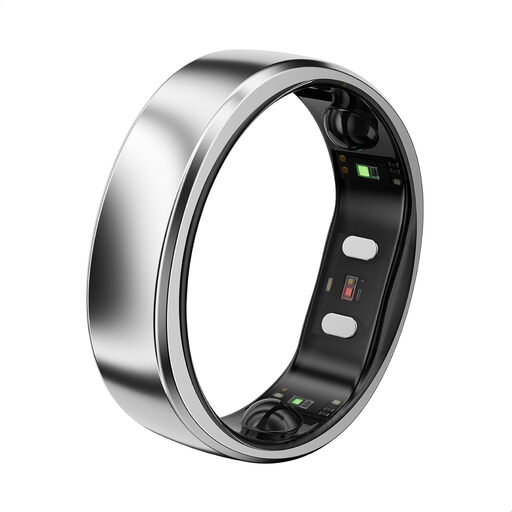
Why This Fits Their Persona: This user wants to proactively use their health data to enhance performance and optimize their lifestyle. The ring provides detailed, AI-based analyses of sleep, stress, and activity, offering directly actionable insights.
It bypasses the subscription trap, as all standard health data and AI reports are accessible without monthly fees. The full range of features is permanently available after purchase.
Up to 10 days of battery life according to the manufacturer for uninterrupted data collection; AI-powered assistant for personalized health insights.
Why This Fits Their Persona: For athletes and active individuals looking for an unobtrusive fitness ring that doesn't get in the way during any activity. Its lightweight and thin design is ideal for the gym, running, or swimming.
The IP68 certification ensures true waterproofing (tested to a depth of 100m by the manufacturer), preventing damage during water sports or daily use, unlike models that are merely splash-proof.
Very lightweight (approx. 2.5g) and thin (2mm profile), ensuring high comfort without any sense of interference during physical activity or sleep.
Why This Fits Their Persona: Ideal for users seeking a cost-transparent alternative to established brands. This model offers all essential tracking features without the financial burden of a subscription.
Proactively solves the problem of an inaccurate fit, as the manufacturer recommends using a special sizing kit before purchase. This ensures data quality and wearing comfort.
One-time purchase price for the hardware with lifetime access to the app's standard features. No hidden recurring costs.
We have compiled a complete, up-to-date list of products that fully meet these strict selection criteria and safety regulations.
The measurement accuracy of a smart ring can be very high. Since the arteries in the finger are closer to the skin's surface than those on the wrist, PPG sensors can often capture more stable and precise signals for heart rate and blood oxygen. However, the final accuracy always depends on the specific model, the quality of the sensors, and, most importantly, the correct fit of the ring.
No. Models with long battery life, like the RingConn Gen 2 Air with up to 10 days, only need to be charged about once a week. The charging process itself often takes only 90 minutes. This allows for uninterrupted tracking of your data, especially the important sleep stages, over several nights.
An incorrect size compromises both comfort and measurement accuracy. To prevent this, some manufacturers, like RingConn, offer a separate sizing kit. It is strongly recommended to use this before the actual purchase to determine the exact size for your finger. This minimizes the risk of a bad purchase and ensures the device's functionality.