
Lieferung heute & morgen

Qualitätsgarantie

Willkommens-Angebote freischalten: KOSTENLOSE Lieferung | Bis zu 80 % RABATT | Kostenlose 30-Tage-JoyPlus-Testphase
App herunterladen
If you’re looking to buy a smart robot, you’ll find models for all kinds of uses, from household robots and robot dogs to humanoid robots. Product names often sound similar, but their technical capabilities can vary considerably. What matters is not the number of advertised features, but whether the sensors, surroundings and maintenance requirements suit the way you plan to use the robot.
Terms such as AI robot, ‘autonomous’ or ‘intelligent’ don’t automatically describe a specific set of capabilities. Check which features are actually documented:
A robot with obstacle detection may not be able to detect every obstacle reliably. Depending on the sensors, transparent surfaces, thin cables, stair edges and small objects can all pose problems.
With a robot vacuum with a mopping function, changing the water, cleaning the station, and replacing dust bags and filters are all part of day-to-day use. For a robot dog, batteries, joints, charging accessories and software maintenance may also be relevant. If you’re considering a surveillance robot, check its storage options, app access and any potential cloud costs too.
Before you buy, check:
An autonomous robot needs enough space to move around. Loose cables, rug edges, fragile ornaments and open staircases can all interfere with its operation. Humanoid robots and robots with powerful joints also need additional safety clearance. Devices in this category aren’t toys and should be supervised, particularly in homes with children or pets.
Navigation may rely on cameras, infrared sensors, LiDAR, RGB-D cameras or UWB technology. LiDAR can map distances and room layouts, while cameras identify objects from images. With compatible transmitters, UWB can help provide more precise tracking.
The sensors should suit the intended use:
Battery capacity on its own tells you little about how long a robot will actually run. Motor load, speed, sensors and computing power all affect energy consumption. Check whether the robot can return to its charging dock on its own, whether the battery can be replaced and how long a full charge takes.
For example, the AGIBOT X2 Ultra is listed with a battery capacity of around 500 Wh, an approximate operating time of two hours at 0.5 m/s and a charging time of up to 1.5 hours. These figures apply under the stated conditions and may not reflect other types of use.
Measure doorways, passageways, floor space and the area around the charging dock. With the NARWAL Freo Z10, you’ll need to allow for the base station as well as the robot itself. The station measures 431 × 426,8 × 461,5 mm. According to the product information, the device supports 2.4 GHz Wi-Fi only.
Safety information is especially important for heavier mobile robots and those with powerful drives. According to the product specifications, the AGIBOT X2 Ultra weighs around 37 kg and has joints with a stated peak torque of 120 N·m. Devices like these need a controlled, uncluttered operating area.
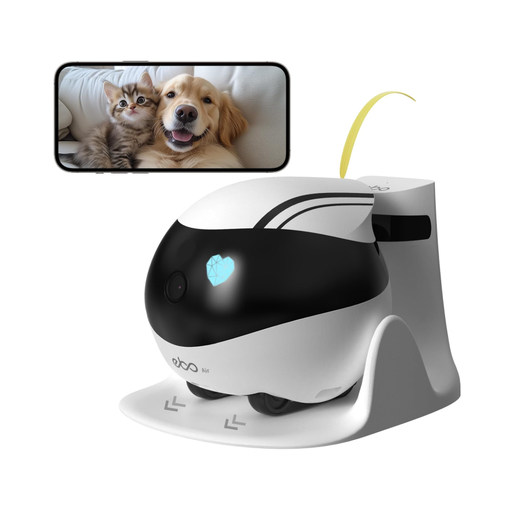
Why this product suits this profile: For mobile indoor monitoring and interacting with pets, this model offers a relatively clearly defined set of features, including app control.
The product information specifies 1080p night vision, a 118° wide-angle lens, local SD card storage and 2.4 and 5 GHz Wi-Fi. This makes it easy to check key requirements before you buy.
Two-way audio, Auto Cruise mode and automatic recharging; designed for indoor use.
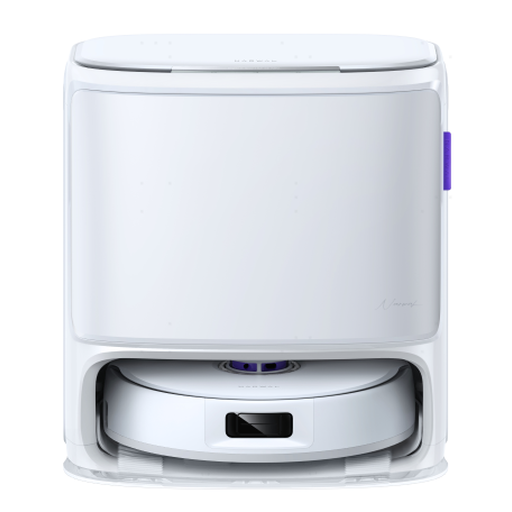
Why this product suits this profile: Households with hard floors and pets can weigh up its extensive cleaning and docking station features against their maintenance requirements.
The specifications state that it requires 2.4 GHz Wi-Fi and include details of the base station, tank and container capacities. This makes the space and network requirements clear.
Stated suction power of 15.000 Pa, mops rotating at 180 rpm, plus automatic mop cleaning and drying.
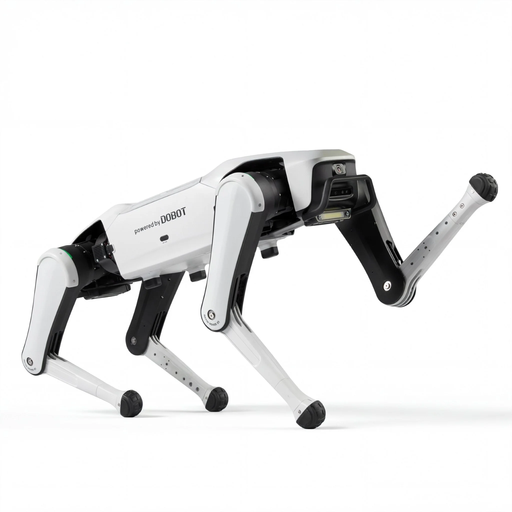
Why this product suits this profile: Tech enthusiasts looking for a robot dog with movement features, voice interaction and tracking get a clearly specialised option.
The model name indicates vision and UWB follow, as well as voice interaction. Before buying, check the range, compatible accessories and whether it’s intended for indoor or outdoor use.
Quadruped design, visual tracking and UWB follow, according to the product name.

Why this product suits this profile: This humanoid robot is aimed at users who want to combine movement control, multimodal interaction and potential development projects.
According to the specifications, secondary development isn’t available for the X2; this feature is listed for the X2 Ultra. Make sure you confirm the exact model variant before ordering.
27 degrees of freedom, interactive RGB camera, microphone array and app support, according to the product specifications.
We’ve put together a complete, regularly updated list of products that meet these strict selection criteria and comply fully with the safety regulations in force in the EU.
Before you place your order, make a note of the following:
It depends on the type of device. A household robot, for example, may need filters, brushes, dust bags or cleaning products. Camera and companion robots may need memory cards or, in some cases, paid cloud services. Robots with lithium-ion batteries may also need a replacement battery after extended use.
There’s no single answer. Frequent charging, dust, moisture, impacts and heavy motor loads can all affect wear and tear. Regular cleaning, staying within the operating limits and choosing a suitable place to charge the robot can help keep it in good working order. Check the warranty period and spare parts availability before you buy.
Some basic functions may be available offline or via a remote control. However, features such as mapping, schedules, live video, voice control and app access often require a network connection. According to the product information, the NARWAL Freo Z10 supports 2.4 GHz Wi-Fi only. Check that your smart home network meets this requirement before ordering.