
Lieferung heute & morgen

Qualitätsgarantie

Willkommens-Angebote freischalten: KOSTENLOSE Lieferung | Bis zu 80 % RABATT | Kostenlose 30-Tage-JoyPlus-Testphase
App herunterladen
A modern body fat scale with an app can do much more than just display your weight. It provides detailed insights into key health metrics like body fat percentage, muscle mass, and BMI, sent directly to your smartphone. But the market is crowded, and not every device lives up to its promises. Many people invest in a smart bathroom scale only to find that inaccurate measurements or a clunky app severely limit its daily usefulness. This guide will help you avoid common pitfalls and find a scale that truly fits your needs.
Before you make a decision, you should be aware of the typical weaknesses that often only become apparent after the purchase and lead to frustration.
To make an informed decision, focus on the following technical features. These are the primary determinants of the reliability and practical value of your new fitness scale.
Modern body composition scales use Bioelectrical Impedance Analysis (BIA). This method sends a weak, imperceptible electrical current through the body. Because fat, muscle, and water conduct electricity differently, the scale can calculate the body's composition from the measured resistance.
Pay attention to the type of electrodes. While many models use visible metal electrodes, scales with an ITO coating offer a more advanced solution. With this technology, the entire glass surface is conductive, which allows for a more uniform measurement as foot placement is less critical. Four high-precision sensors at the corners of the scale are the standard for reliable weight measurements.
A good digital scale with an app should offer a stable Bluetooth connection and synchronise data automatically and reliably. Before buying, check the app's compatibility with your smartphone (iOS/Android). An intuitive user interface that displays clear graphs for trend tracking is crucial. Another key point is the ability to sync data with other health apps like Apple Health or Google Fit to get a holistic view of your health.
For families or shared living spaces, a scale for multiple users is indispensable. Make sure the device supports automatic user recognition and offers enough storage slots for all household members. Also, check the scale's maximum weight capacity. Standard models support up to 180 kg (approx. 396 lbs), but for some users, models with a higher capacity of up to 200 kg (approx. 440 lbs) may be more suitable.
Here are a few models tailored to different user groups and their specific requirements.
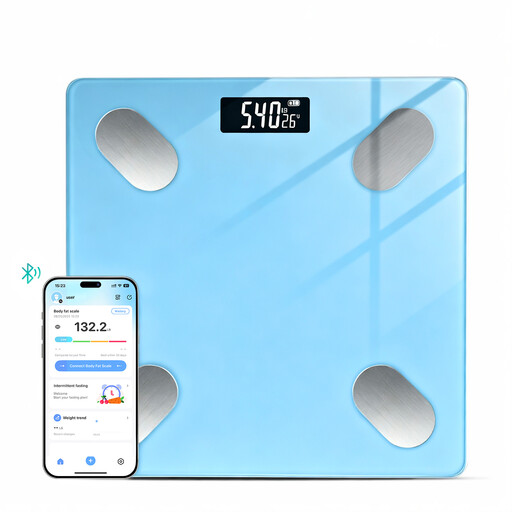
Why This Fits Their Persona: This model is a great choice for users looking for a fully functional body fat scale with an app without a large investment. It covers all the basic requirements for health monitoring.
The scale supports multiple user profiles with automatic recognition, and the companion OKOK app provides essential tracking functions without any known subscription traps.
Tracks 13 key body metrics, including weight, BMI, body fat, and muscle mass. Simple Bluetooth connection for data synchronisation.
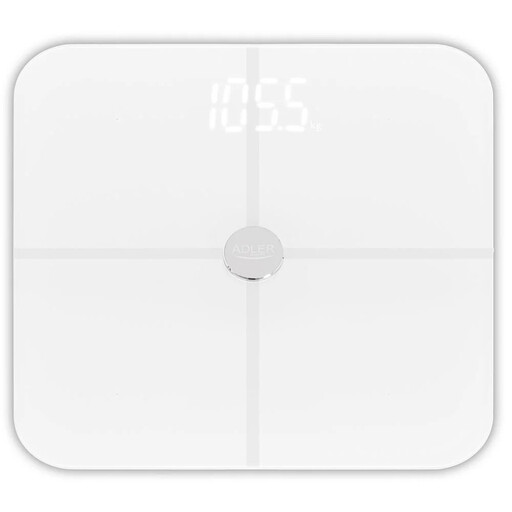
Why This Fits Their Persona: Ideal for users who value a modern and minimalist aesthetic in their bathroom. The metal-free surface blends seamlessly into any design.
The ITO-coated glass surface provides a uniform contact area and can improve measurement consistency compared to models with small metal electrodes.
Elegant, continuous glass surface with no visible metal electrodes. Measures 12 body parameters and supports up to eight user profiles via the FitGo app.

Why This Fits Their Persona: Perfect for large families or users with specific needs. The high weight capacity, baby/pet mode, and extensive metric analysis cover almost any use case.
Solves the user management problem by supporting up to 10 local profiles and special modes that go beyond standard features. The high 200 kg capacity prevents limitations.
Analyses 25 body metrics, offers a high weight capacity of 200 kg, and features a clear LED colour display. The baby and pet mode is a practical bonus for families.
We have compiled a complete, up-to-date list of products that fully meet our strict selection criteria and safety standards.
1. How accurate is the body fat measurement on a smart scale?
The measurement via Bioelectrical Impedance Analysis (BIA) is an estimate and cannot be compared to clinical methods. Accuracy is influenced by factors like hydration level, time of day, and recent meals. However, consistency is more important than the absolute value. If you weigh yourself regularly under the same conditions (e.g., in the morning after waking up), a scale with body fat measurement is a very useful tool for tracking trends and changes over time.
2. Do I need a subscription to use the app?
For most devices, the basic functions of the companion app—such as saving and displaying measurements—are free. However, some providers reserve the right to place advanced analytics or data exports behind a paywall. It is advisable to check the product description and app store reviews before purchasing. The models presented here are based on apps whose core functions are free to use.
3. Can every family member use a body fat scale with an app?
Yes, most models are designed for use by multiple people and automatically recognise who is on the scale based on their weight. However, pay close attention to the manufacturer's safety warnings. People with pacemakers or other medical implants should not use BIA scales. The body analysis function is also often not recommended for pregnant women, as the results are not meaningful.