
Lieferung heute & morgen

Qualitätsgarantie

Willkommens-Angebote freischalten: KOSTENLOSE Lieferung | Bis zu 80 % RABATT | Kostenlose 30-Tage-JoyPlus-Testphase
App herunterladen
A cluttered entryway with shoes blocking the path is a common frustration. The right shoe storage not only creates order but can also elevate the look of your hallway or bedroom. However, the selection is vast, ranging from slim, tip-out cabinets to spacious benches with built-in storage.
This guide serves as a practical resource. We'll introduce different types of shoe cabinets and analyse their features to help you make an informed decision that suits your living space and needs.
Before you decide on a model, a few basic considerations are helpful. The following points summarise the most important criteria.
The available space is the deciding factor. Measure the intended spot precisely—width, height, and depth. Also, consider the clearance needed to open doors or flaps.
Consider what type of shoes you primarily need to store and which additional features would be useful for you.
A modern shoe cabinet should blend harmoniously with your existing home decor. The choice of material and colour plays a crucial role.
Based on functionality, design, and user needs, we have curated a selection of models that cater to different requirements.

Why it stands out: This model combines a large capacity with an elegant, modern design. The closed doors, featuring a subtle diamond pattern and gold accents, ensure a tidy appearance.
Pros:
Who is it for? For households with an extensive shoe collection looking for a stylish and concealed storage solution for the living room, bedroom, or a spacious hallway.
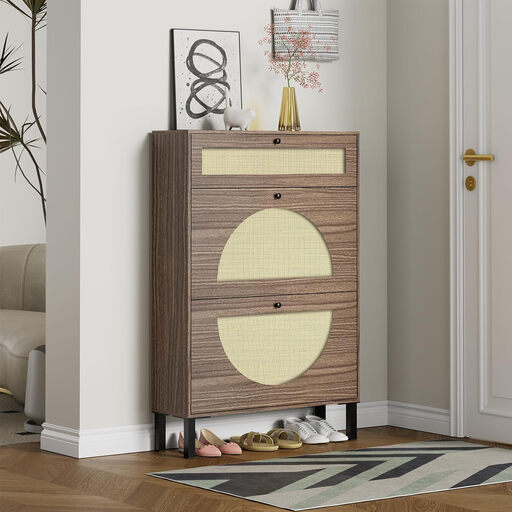
Why it stands out: With its slim depth of just 24 cm, this tip-out cabinet is extremely space-saving. The rattan-weave fronts are not only a visual highlight but also promote air circulation.
Pros:
Who is it for? For those who need a space-saving solution for a narrow hallway and appreciate a design that combines natural materials with modern functionality.
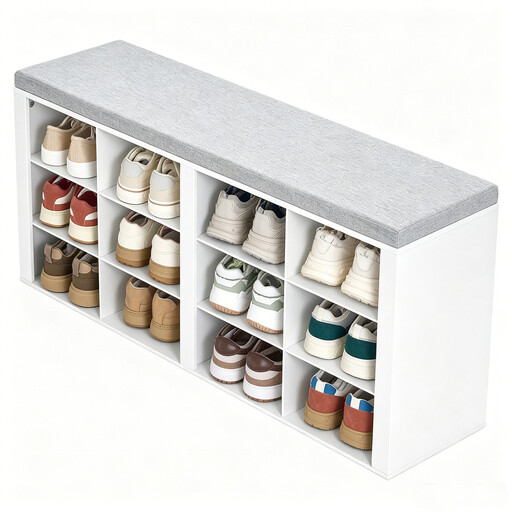
Why it stands out: This piece of furniture is a true multi-tasker. It serves as a shoe bench with seating while also offering organised storage in 12 compartments.
Pros:
Who is it for? Ideal for entryways where a place to sit while putting on shoes is appreciated. It's especially practical for families or individuals who need flexible storage for various shoe types.
The models featured here cover common requirements, but every living space is unique. If you're looking for a different size, design, or a specific function, there are numerous other options available. From simple shoe racks to large wardrobe systems, the selection is diverse.
Explore our full range of shoe storage furniture and find the perfect solution for your home.
A tip-out shoe cabinet is distinguished by its very slim depth. Shoes are stored vertically or tilted in narrow, flip-down compartments rather than lying flat on shelves. A classic shoe cabinet is deeper and uses horizontal shelves behind doors, much like a standard cupboard.
Measure the available space carefully. A slim tip-out cabinet often requires only 20–25 cm of depth. A standard shoe cabinet typically needs 30–40 cm. Additionally, plan for enough clearance in front of the cabinet to allow doors or flaps to open fully and to keep the walkway clear. As a rule of thumb, you should leave at least 60 cm of free space in front of the furniture.
An open shoe rack has its advantages: shoes are quickly accessible and well-ventilated. The downside is that the area can quickly look messy, and the shoes can collect dust. For a tidy appearance in main living areas, closed systems are often the better choice. However, in a walk-in closet or basement, an open rack can be very practical.