
Lieferung heute & morgen

Qualitätsgarantie

Willkommens-Angebote freischalten: KOSTENLOSE Lieferung | Bis zu 80 % RABATT | Kostenlose 30-Tage-JoyPlus-Testphase
App herunterladen
The idea is tempting: to grace your garden or balcony with atmospheric light, without laying cables and with no extra electricity costs. Smart solar garden lighting promises exactly that. Yet, the reality is often different. Many products disappoint after just a short time with dim light, short runtimes, or unreliable controls. Before you make a purchasing decision, it's crucial to understand the common pitfalls often hidden behind appealing product images.
As your Joybuy Product Recommendation Officer, I'll help you correctly interpret technical specifications and make an informed choice. This guide focuses on the three most common problems and shows you what to look out for.
The 3 Most Common Pitfalls of Solar Garden Lights:
To avoid the problems mentioned above, you should be guided not by marketing promises, but by verifiable technical specifications. Here are the three most important parameters for durable and functional smart outdoor lighting.
The IP (Ingress Protection) rating indicates how well an electrical device is protected against the ingress of foreign objects (first digit) and water (second digit). For year-round outdoor use in the UK and Europe, the following values are relevant:
Consistently look for a rating of at least IP65 to ensure your lighting can withstand rain, snow, and garden watering without damage.
Reliable off-grid garden lighting depends directly on the performance of the energy storage and charging unit.
Smart features like colour-changing solar lights are only as good as their connection.
Here are some product recommendations based on objective features and suited for specific user profiles in the UK and Europe.
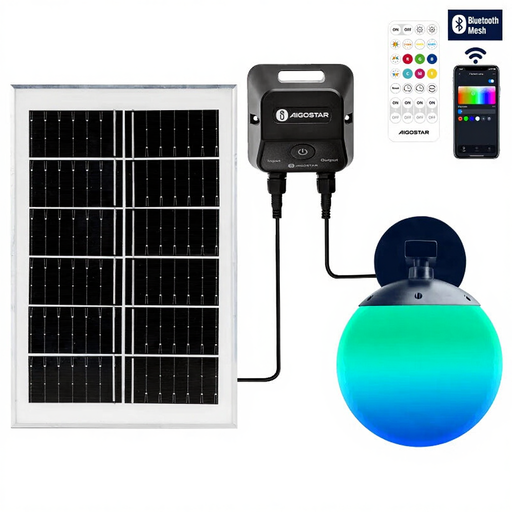
Why This Fits Their Persona: Ideal for homeowners who want to enhance their facade, entrance area, or a garden wall with atmospheric lighting effects. The installation is straightforward and requires no prior experience.
With its IP65 certification, this outdoor solar wall light is protected against heavy rain. The Bluetooth Mesh technology ensures a stable connection, even when multiple lights are distributed around the house.
Creates an up-and-down light effect. The 4Ah battery and monocrystalline panel provide a solid foundation for its runtime. Full RGBCCT colour control via app.
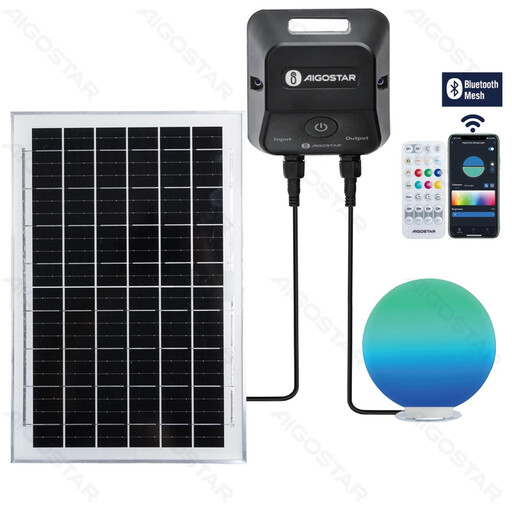
Why This Fits Their Persona: Perfect for users who want to brightly and reliably illuminate large trees, shrubs, or entire lawn areas. The high light output can replace conventional, wired spotlights.
Counteracts the problem of short runtimes. The large 10W monocrystalline solar panel and the powerful 8Ah lithium iron phosphate battery ensure long operation, even after days with less sun.
High brightness of 350 lumens for effective area illumination. Robust IP65 construction and stable control via Bluetooth Mesh.
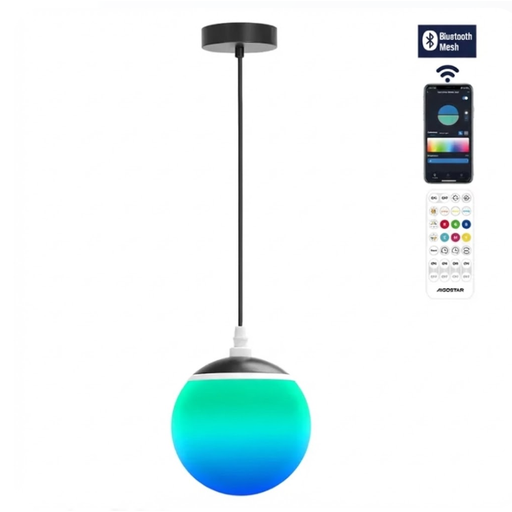
Why This Fits Their Persona: The solution for anyone needing light in places that don't receive direct sunlight, such as covered terraces, gazebos, summerhouses, or even indoors near a window.
The separate design of the light and solar panel solves the core problem of insufficient charging in shaded areas. The panel can be placed in full sun using the long cable, while the light hangs in the shade.
Maximum installation flexibility. The IP65 rating applies to both the light and the panel. Control is also managed via the reliable Bluetooth Mesh network.
We have compiled a complete, up-to-date list of products that fully meet these strict selection criteria and local safety regulations.
The runtime in winter is shorter than in summer because there is less solar radiation. Models with highly efficient monocrystalline solar panels and large battery capacities (e.g., 4000 mAh and above) have a clear advantage here. They can store enough energy for several hours of light even on short, overcast days. Many smart lights also offer a dimmable mode to extend the runtime at a lower brightness.
Yes, if they use the same technology. Lights based on Bluetooth Mesh are explicitly designed to operate in a network. You can group different types (e.g., wall lights, ground spots, pendant lights) from the same manufacturer in a single app, control them synchronously, and create shared schedules or lighting scenes.
No, the installation is one of the biggest advantages. Since no 230V power cables need to be laid, complex and costly groundwork is eliminated. Most lights are simply inserted into the ground with a spike or attached to a wall with a few screws. The setup in the app is usually completed in a few minutes via Bluetooth.