
Lieferung heute & morgen

Qualitätsgarantie

Willkommens-Angebote freischalten: KOSTENLOSE Lieferung | Bis zu 80 % RABATT | Kostenlose 30-Tage-JoyPlus-Testphase
App herunterladen
Thoughtful garden lighting not only creates an inviting atmosphere after sunset but also enhances safety on paths and stairs. However, installing conventional lights often involves complex installation and wiring. A smart solar garden light offers a flexible and eco-friendly alternative, combining the independence of solar energy with the convenience of modern control options.
This article serves as a guide. It explains the key features to look for when making your selection and presents various models that meet different functional and design requirements.
The range of solar-powered garden lighting is vast. To make an informed decision, several technical aspects are important.
The term "smart" primarily refers to the control options. While basic models simply turn on automatically at dusk, advanced lights offer significantly more flexibility.
The performance of a solar light depends directly on the quality of its energy system.
Since solar garden lighting is exposed to the elements year-round, the material and construction are crucial for its longevity.
Based on the criteria mentioned, we have compiled a selection of products that cover various applications.
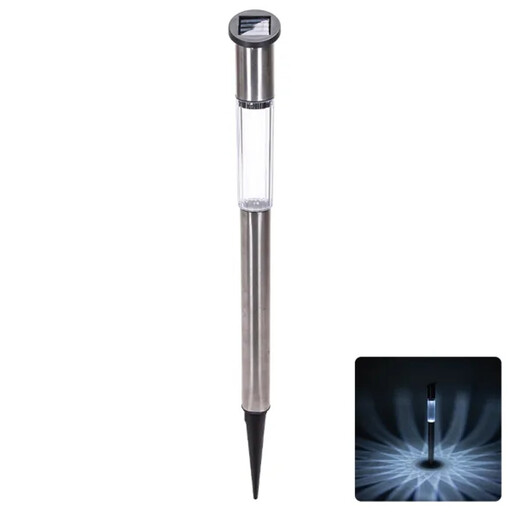
Why it stands out: This model focuses on the core function of a path light: reliable, automatic illumination without complex settings. Its stainless steel and plastic design is built for durability and discreet integration into the garden.
Features:
Who is it for? For users seeking a straightforward, low-maintenance lighting solution for garden paths, flowerbeds, or lawns who prefer a clear, white orientation light.
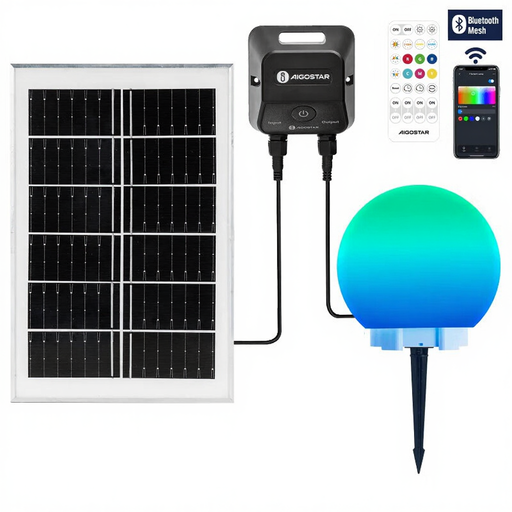
Why it stands out: This light combines solar technology with advanced connectivity. Thanks to Bluetooth Mesh, multiple lights can be networked stably over a larger distance and controlled in sync—ideal for illuminating entire garden areas.
Features:
Who is it for? For tech-savvy garden owners looking for a flexible and comprehensive colour-changing LED solar light to create custom lighting scenarios and conveniently manage multiple lights via an app.
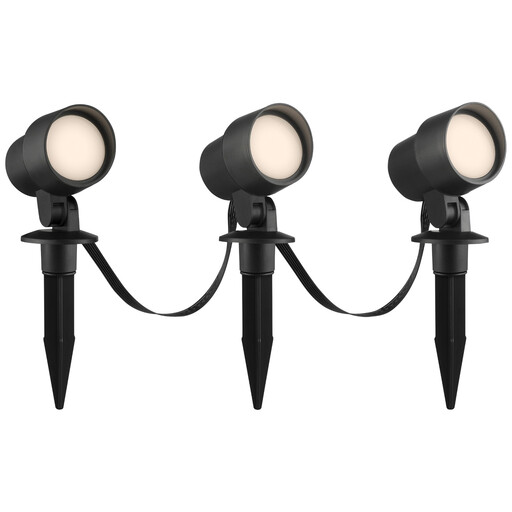
Why it stands out: This product comes as a set of 3, allowing for a uniform garden lighting design from the start. Its integration with the Tuya Smart system offers broad compatibility with other smart home devices and voice assistants.
Features:
Who is it for? For users planning cohesive lighting for flowerbeds, shrubs, or paths who value integration into an existing smart home ecosystem like Tuya.
The products featured cover common use cases for smart solar lights. However, if you have specific requirements, such as lighting for water features, or prefer wired systems with consistent power, other categories may be relevant.
Our range includes other specialised products. For example, explore our selection of Low-Voltage Outdoor Fountain Lights and other outdoor lighting solutions.
1. How long does a smart solar garden light last? The lifespan depends on several components. The LEDs themselves often have a rated life of 15,000 hours or more. The battery is subject to natural wear and tear, and its capacity may decrease after a few years. The durability of the housing is determined by the material and its weather resistance (IP rating). With proper care, high-quality models can function reliably for several years.
2. Do solar lights work in winter or on cloudy days? Yes, modern solar panels can generate energy even in diffuse light, albeit with reduced efficiency. On cloudy days or in winter, the charging performance is lower, which can lead to a shorter runtime at night. For optimal performance, the light should be placed in a location that receives as much direct sunlight as possible.
3. Can the battery in solar lights be replaced? This depends on the model. Some solar lights use standard battery types (e.g., AA or AAA NiMH) that are easily accessible and replaceable. In other models, especially more compact or fully sealed designs, the battery is built-in and cannot be easily replaced by the user. A look at the product description or manual will provide clarity on this.