
Lieferung heute & morgen

Qualitätsgarantie

Willkommens-Angebote freischalten: KOSTENLOSE Lieferung | Bis zu 80 % RABATT | Kostenlose 30-Tage-JoyPlus-Testphase
App herunterladen
Garden design doesn't end at daylight. Thoughtful lighting can secure pathways, highlight architectural details, and create an inviting atmosphere for evenings outdoors. However, installing conventional garden lamps often involves significant effort: cables must be laid, power sources found, and high energy bills accepted.
As your Joybuy Product Recommendation Officer, I see it as my mission to provide you with practical and well-researched information. This article focuses on smart solar garden lights—a modern solution that combines energy efficiency, easy installation, and intelligent control options. The goal is to give you the necessary criteria to make an informed decision for your outdoor lighting.
The market for solar lights is vast. To find the right solution for your needs, a few technical aspects are crucial.
Modern garden lighting goes beyond a simple on/off switch. Solar lights with app control offer the ultimate in convenience and customisation. They allow you to manage brightness, colours, and schedules directly from your smartphone.
A particularly advanced technology is Bluetooth Mesh. Unlike a simple Bluetooth connection that controls only one device, Mesh creates a network between multiple lights. Each lamp acts as a signal repeater, enabling stable, wide-ranging control of dozens or even hundreds of lights simultaneously—ideal for larger gardens or synchronised lighting effects.
The colour of the light has a significant impact on the atmosphere. There are clear differences here:
The durability of an outdoor light depends on its construction and protection from the elements.
Based on the criteria above, we have compiled a selection of products that cover different needs in terms of functionality and design.
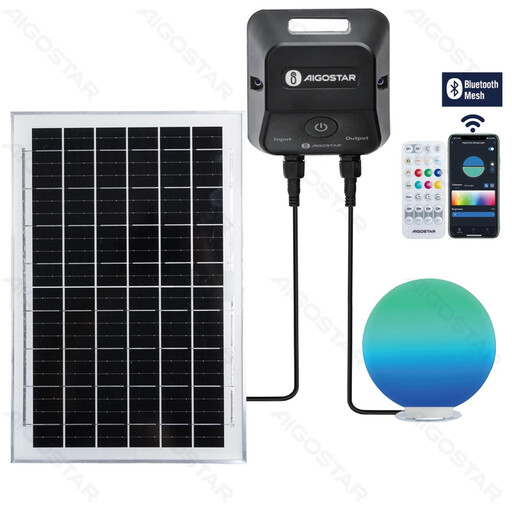
Why It Stands Out: This model combines a high light output of 350 lumens with the full flexibility of Bluetooth Mesh technology and RGBCCT colour control. The separate 10-watt monocrystalline silicon solar panel allows for optimal alignment with the sun, independent of the light's own location.
Advantages:
Who Is It For? For tech-savvy garden owners who want powerful, fully controllable lighting for patios, large flowerbeds, or accenting trees, and who value a stable network for multiple lights.
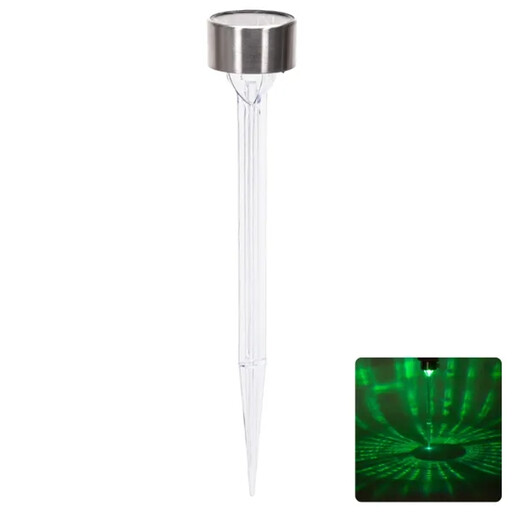
Why It Stands Out: This solar ground stake light focuses on decorative accents and ease of use. The stainless steel housing gives it a modern look, while the integrated RGB LED automatically cycles through a spectrum of colours, creating a dynamic atmosphere.
Advantages:
Who Is It For? For users looking for a straightforward and stylish solution for decorative lighting of garden paths or flowerbeds, who can do without app control.
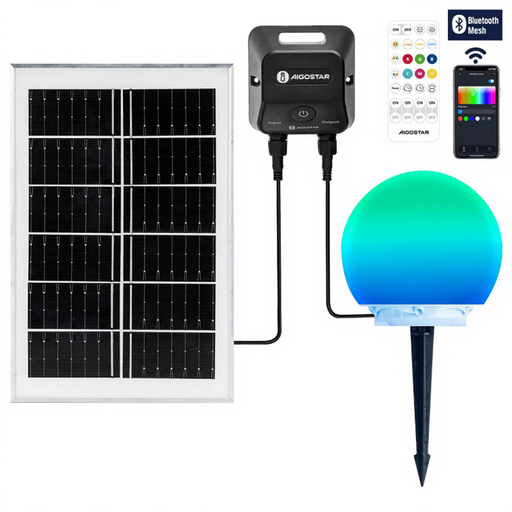
Why It Stands Out: This Aigostar solar light is a more compact alternative to the 35W model, also offering full connectivity via Bluetooth Mesh and RGBCCT colour control. Its special feature is a two-layer light design that creates a visually appealing effect. The solar panel is also separate here, allowing for flexible placement to maximise sun exposure.
Advantages:
Who Is It For? For users who want to leverage the benefits of smart, networked solar garden lighting with colour change in a more compact format for paths, smaller gardens, or for targeted accenting.
The models presented here cover functional and smart lighting options. If you are looking for a more playful or nature-inspired aesthetic, decorative lights in the shape of flowers could be an interesting alternative.
Discover our wider selection of solar flower lights for outdoors to find the perfect addition to your garden.
Smart solar lights contain a Bluetooth or Wi-Fi module. After installation, you download the manufacturer's corresponding app to your smartphone. Through the app, you can connect to the light and then conveniently control functions like brightness, colour, on/off switching, or schedules remotely. With Bluetooth Mesh systems, the lights also communicate with each other, which increases the range and stability of the network.
The IP (Ingress Protection) rating indicates how well a light's housing is protected against the ingress of foreign objects and water. The first digit represents protection against solids (e.g., dust), and the second represents protection against water.
Yes, solar lights can generally be used in the winter. However, sunlight exposure is significantly lower during the winter months in many regions, and the days are shorter. This means the battery may not fully charge, and the runtime per night will be correspondingly shorter. To optimise performance, you should place the light in a location that receives as much direct sunlight as possible and regularly clear the solar panel of snow or debris.