
Lieferung heute & morgen

Qualitätsgarantie

Willkommens-Angebote freischalten: KOSTENLOSE Lieferung | Bis zu 80 % RABATT | Kostenlose 30-Tage-JoyPlus-Testphase
App herunterladen
A beautifully illuminated garden or balcony enhances any outdoor space, but the setup often involves significant effort: laying cables, planning for outlets, and factoring in electricity costs. Smart solar lights for the garden offer a modern alternative. They combine the independence of solar power with the convenience of smart control.
As your Joybuy Product Recommendation Officer, my mission is to provide clear guidance in the growing market for garden lighting. This article explains the key features of smart solar lights and presents a selection of models for various applications, helping you make an informed decision.
Choosing the right light depends on your individual needs. The following three criteria will help you understand the technical specifications and make the right choice for your project.
The "smart" component of a solar light is defined by its connectivity. While basic models may only have a dusk-to-dawn sensor, advanced solar lights with app control allow for far more precise management.
A key technology here is Bluetooth Mesh. Unlike a standard Bluetooth connection that pairs a single device to your smartphone, Bluetooth Mesh builds a network between multiple lights. This means:
Modern solar lights offer much more than just on/off functionality. Look for the following light specifications:
Garden lighting without electricity must be able to withstand the elements.
Based on the criteria above, we have compiled a selection of versatile and functional models from the Aigostar Smart Home brand.
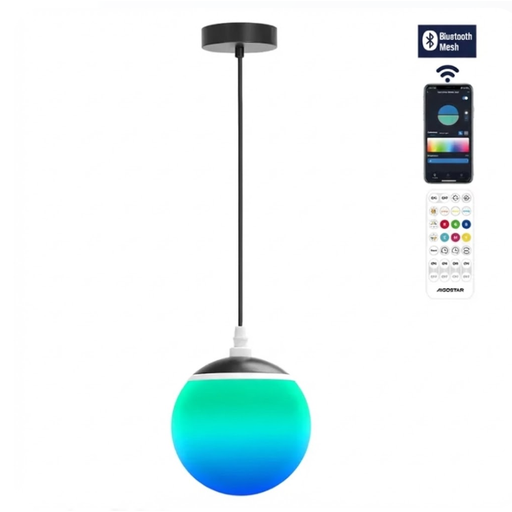
Why It Stands Out: With its separate design, this outdoor solar pendant light solves a common problem: it enables lighting for shaded areas like gazebos, covered patios, or even indoor spaces near a window. The spherical lamp provides even, 360-degree light distribution.
Pros:
Who It's For: Users looking for atmospheric and flexible lighting for covered outdoor areas like balconies, pergolas, or gazebos that don't receive direct sunlight.
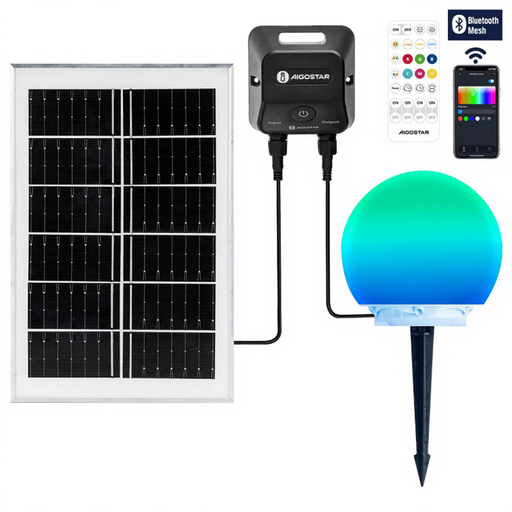
Why It Stands Out: This solar ground light is designed for accentuating paths and garden areas. Its design creates a two-layer light effect that adds visual depth. The robust construction and separate 5W monocrystalline solar panel ensure reliable performance.
Pros:
Who It's For: Ideal for garden owners who want to illuminate paths, driveways, or flowerbeds safely and stylishly with dynamic and synchronised light effects.
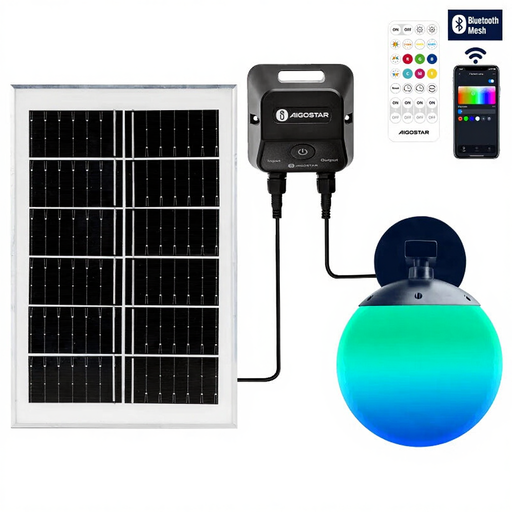
Why It Stands Out: This solar wall light creates an elegant up-and-down light effect that architecturally highlights building facades, fences, or entryways. It operates completely autonomously without a power connection and is easy to install.
Pros:
Who It's For: Homeowners looking for maintenance-free and stylish accent lighting for vertical surfaces without the need to run cables.
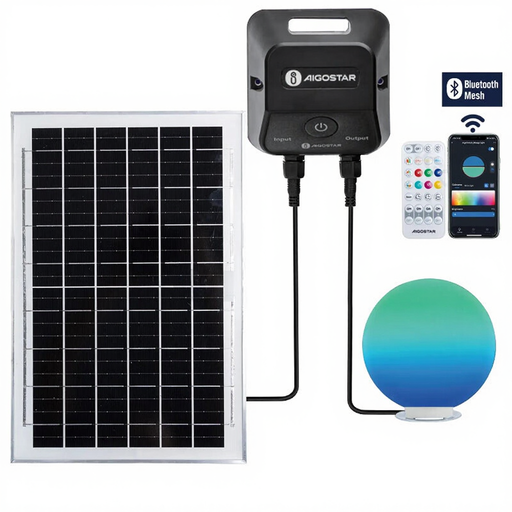
Why It Stands Out: At 50 cm tall and with a brightness of 350 lumens, this floor lamp makes a striking statement. It is perfect for illuminating larger areas on patios or in the garden. The powerful 12W solar panel and 8000mAh battery ensure high light output and a long runtime.
Pros:
Who It's For: Anyone seeking an eye-catching and powerful floor lamp to light up seating areas, patio edges, or to use as a design element in the garden.
Didn't find the perfect model for your project in this selection? Smart solar lights come in many other shapes and sizes, from string lights to in-ground spotlights.
Discover our entire collection of Solar Bulb Lights
Smart solar lights typically use Bluetooth or Bluetooth Mesh to connect to a smartphone app. Through the app, you can adjust features like brightness, colour, colour temperature, and schedules. With Bluetooth Mesh systems, the lights also communicate with each other, forming a stable, wide-area network.
Yes, the solar panel requires direct sunlight to charge the battery efficiently. A charging time of 4 to 8 hours on a sunny day is typical. Models with a separate solar panel connected by a cable offer the advantage of placing the light in a shaded area while the panel is positioned in the sun.
The lifespan depends on two main components: the LEDs and the battery. The LEDs in high-quality lights often have a lifespan of 30,000 hours or more. The lithium-ion battery is the component subject to wear and tear. Its lifespan is measured in charge cycles and depends heavily on usage and environmental conditions. Generally, you can expect them to function for several years.