
Lieferung heute & morgen

Qualitätsgarantie

Willkommens-Angebote freischalten: KOSTENLOSE Lieferung | Bis zu 80 % RABATT | Kostenlose 30-Tage-JoyPlus-Testphase
App herunterladen
A smart solar RGB garden light combines wireless installation, automatic dusk-to-dawn operation and individually controllable colours. For paths, flowerbeds, terraces or patios, this sounds like a straightforward solution at first. In practice, however, unclear information about battery life, ingress protection or app compatibility often leads to the wrong purchase.
If you want to enjoy your garden lighting for years to come, you should look beyond just the number of colours. What really matters is the intended location, the power supply, the protection rating and whether multiple lights can communicate with one another.
Many products can display colours, but don’t offer true CCT white light. For functional path or terrace lighting, this difference matters: warm white light at around 2,700 Kelvin feels more subdued, while cool white light up to about 6,500 Kelvin creates a more clinical effect.
If you’re simply after a decorative colour-changing lamp, you don’t necessarily need RGB-CCT. However, for a flexible smart outdoor light, the combination of RGB and adjustable colour temperature is far more practical.
The protection rating is indicated by the IP code. The first digit describes protection against solid objects and dust, while the second covers water resistance. IP65, for example, is designed for water jets from any direction, whereas IP67 additionally allows temporary immersion under the conditions specified in the standard.
This doesn’t mean every light can be left in water permanently. Cable connections, plugs and the solar panel must also be installed correctly. With a waterproof IP67 solar light, the ground should also be such that water doesn’t collect around the housing for long periods.
Claims like “up to 24 hours” or “8 to 12 hours” depend on the charge level, sunlight exposure, temperature, light mode and battery age. A shady spot under trees or against a north-facing wall reduces the available charging energy. A separately mountable solar panel can partly solve this problem if placed in a sunnier position.
For lights installed permanently outdoors, a clearly stated outdoor suitability and an appropriate IP rating are essential. IP44 is better suited to sheltered areas and decorative ground lights. IP65 offers higher protection against dust and water jets. IP67 is interesting for more demanding installation locations, provided the installation instructions are followed.
The material also matters. A stainless steel look can be made of plastic and is not the same as real stainless steel. For permanently installed spotlights, materials such as ABS, PE, polyurethane or coated metal may be used. What counts are the specific product details, not the description in the product name.
With solar lights, you should pay attention to the type and position of the solar module, the battery capacity and whether the battery can be replaced. A separate panel with an extension cable offers more flexibility than a module built into the light head.
For wireless garden lighting, it’s also important whether the light simply switches on and off automatically, or whether it supports brightness, scenes and schedules. These features can affect energy consumption.
A garden light with app control needs a suitable wireless connection. Wi-Fi lights often require a 2.4 GHz network. A Bluetooth mesh garden light, on the other hand, can communicate with other lights via a mesh network. Before buying, check how many devices can be connected and whether the control works without a permanent internet connection.
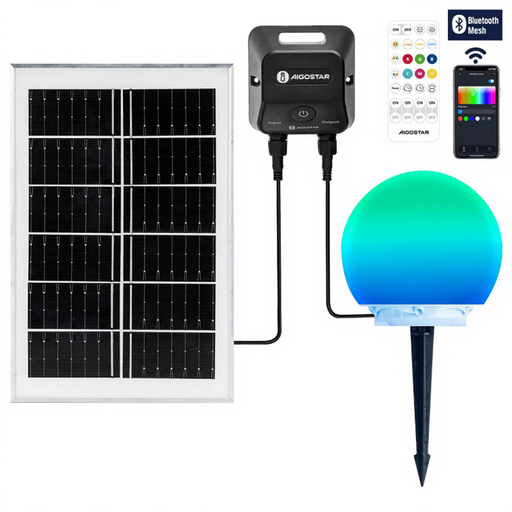
Why this product fits the profile: This solar recessed ground spotlight combines RGB colours with adjustable white light from 2,700 to 6,500 Kelvin. The separate positioning of the solar panel is practical for gardens with changing light conditions.
The stated IP67 protection rating and the separate 5W solar module address typical problems caused by weather and unfavourable installation locations. The Bluetooth mesh control is designed for synchronised groups.
According to the product description: 4,000 mAh lithium battery, up to 200 connectable lights and RGB-CCT light control.
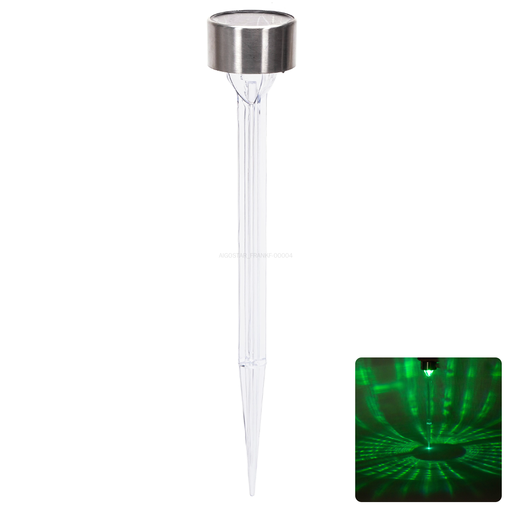
Why this product fits the profile: This compact solar light is ideal for paths, lawn edges and small flowerbeds when you want simple RGB decoration without app connectivity.
The product data clearly states IP44, a charging time of 4 to 6 hours and a lighting duration of 8 to 12 hours. This allows you to set realistic expectations for its use.
Wireless installation via ground spike, RGB light and stainless steel look. Suitable for decorative accents in sunny locations.
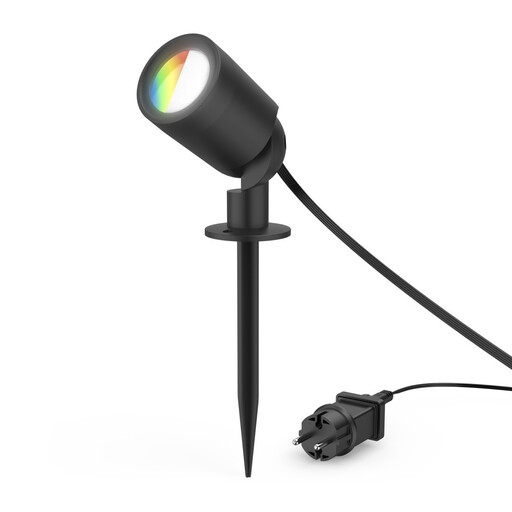
Why this product fits the profile: This Hama garden spotlight is ideal for smart home users who want Matter, Wi-Fi, voice control and app features all in one mains-powered solution.
This solution requires a 2.4 GHz Wi-Fi connection and a 220 V power supply. These requirements are clearly stated, but in return you eliminate the dependency on daily solar charging.
Matter compatibility, 16 million colours, stepless dimming and installation via ground spike, wall, ceiling or floor mounting.
We’ve put together a complete, regularly updated list of products that fully meet these strict selection criteria and the safety regulations in force in the EU.
Before installation, the location should receive several hours of direct sunlight. With a solar spotlight with colour change, keep the panel free of leaves, dust and shade. For a solar recessed ground light, you also need to check that the ground drains water and that the light won’t be driven over by vehicles or garden equipment.
For mains-powered models like the Hama spotlight, follow the electrical installation instructions. Work on 220-volt connections should be carried out by a qualified electrician in accordance with the manufacturer’s instructions and applicable regulations.
The run time varies by model and conditions. The product specifications for the Aigostar light mentioned above state up to 24 hours. Other decorative Aigostar solar lights are quoted at 8 to 12 hours. Low sunlight, cold temperatures, high brightness and frequent colour changes can reduce the actual duration.
Not always. It depends on the communication standard. Wi-Fi garden lights usually need a 2.4 GHz network. Bluetooth mesh lights work via their own wireless network between compatible devices. Before buying, check the app, range and maximum number of lights possible.
A solar light charges its battery via the solar panel and doesn’t need a mains connection in normal operation. The ongoing energy consumption from the household is therefore not comparable to a wired light. With mains-powered RGB-CCT garden lights, however, ongoing electricity costs arise, which depend on the power, brightness and operating time.