Presenters in long rooms
If you’re showing local history to an audience, photos and captions need to be readable even from the back row.


Check the screen size using an original slide from the furthest seat. Sony’s recommended minimum viewing distances for pixel perception do not guarantee that small captions will be readable. Then test how your files play on the specific model, as well as reflections and off-centre viewing in the room where you’ll be showing them. If slides will remain on screen for long periods repeatedly, bear in mind Sony’s warning about the risk of screen burn-in on OLED TVs. LCD or Mini LED may be more suitable, but only if your slides look good in a test.
If you’re showing local history to an audience, photos and captions need to be readable even from the back row.
If you want to show archive images without using the cloud, make sure your chosen files and their order work with the local playback method you plan to use.
If maps, text panels or photos will stay on screen for a while, consider the display technology, positioning and ongoing running costs together.
Start by checking readability from the furthest seat. Then test local playback, viewing conditions in the room and how the TV handles slides that remain on screen for a long time.
| Consideration | What to look for when buying | Who should pay particular attention? |
|---|---|---|
| Readability from the back row | Measure the viewing distance and look at a typical original slide with its smallest caption from the furthest seat. Sony’s viewing distance guidance relates to pixel perception; it does not guarantee that text will be readable. | If I want to show local history photos with small captions that can be read from the back row, readability is my main priority. Around 36% of consumers who cite readability as their top concern pay particular attention to it. |
| Local slide show | Test your own image files and the USB file system you plan to use on the specific model. Check the order and controls against the model’s manual. | If I want to show archive images from local storage without using the cloud, file selection and playback need to work. Around 29% of consumers prioritise local playback. |
| Room lighting and viewing angle | Assess light and dark test slides under the intended lighting, from the middle, back and sides of the room. | If my audience will be sitting to the side or in changing light, I need a picture that remains clear from those seats. Around 21% of consumers give the greatest weight to room lighting and viewing angle. |
| Long periods showing still images and running costs | Plan how long slides will remain on screen and how often they will be repeated. For OLED, follow the manufacturer’s guidance and check the declared energy consumption of comparable models on the EU energy label. | If maps or panels will repeatedly stay on screen for a long time, I need to consider display care and ongoing running costs. Around 14% of consumers’ main concern is still images and running costs. |
A viewing distance that describes when individual pixels can be perceived doesn’t tell you whether small captions will be readable from the back row.
Check the screen size and text using an original slide from the furthest seat.
Supported file types, codecs and selection options depend on the model and its interface. A USB connection alone doesn’t prove that your image files will appear in the order you want.
Test your original files and planned playback on the specific TV before making your choice.
If the files don’t play directly, you may need to export them in a different format or use another playback method.
Sony identifies static photos as a possible cause of screen burn-in on OLED TVs. If panels will repeatedly stay on screen for a long time, the actual usage pattern is therefore an important factor in your choice.
Consider how long slides will remain on screen and how often they will be repeated, and read the guidance for the specific OLED model. OLED is not automatically ruled out if the content changes regularly.
Even an impressive picture won’t tell you whether the TV can be installed safely or how its declared energy consumption compares with your planned use.
Check the installation instructions and mounting requirements for the specific model. For TVs used regularly, compare the figures on the EU energy label.
BRAVIA models such as the K-75XR95M2 may be worth considering, provided you check USB file playback, dimensions and viewing angles on the specific TV.
Large QNED models could be an LCD option to consider when assessing screen size and local media playback.
The German 75-inch Neo QLED GQ75QN90FATXZG is worth considering when assessing a large TV for a room with challenging lighting conditions.
Large QD Mini LED models such as the 75C7K are another range to consider. Check how they perform with standard photos and text panels.
The 75U7Q, documented for the German market, adds another large Mini LED LCD option to consider.
Here you’ll find large-format 4K TVs for presentation rooms. Check readability, local playback and viewing conditions on each model.
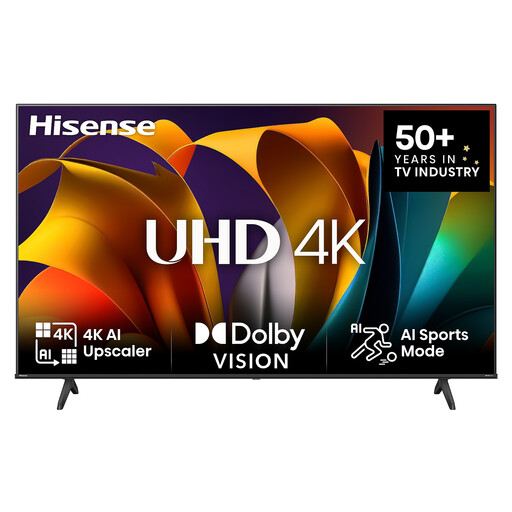 No image available
The listed 85-inch screen is a starting point for testing readability from the furthest seat. Check small captions using an original slide.
4K UHD; LED display; VIDAA Smart OS; energy efficiency class E.
 No image available
The listed 85-inch screen size can help you plan a large-format presentation. You’ll need to test it in the room to see whether slides and small text are readable.
4K Ultra HD; Mini LED; 144 Hz; VIDAA.
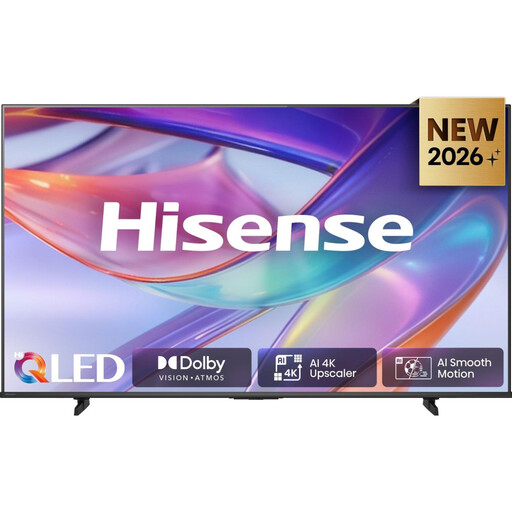 No image available
The listed screen size provides a large-format starting point. Assess your slides and captions from the seats your audience will actually use.
4K UHD; QLED; HomeOS 9.5.
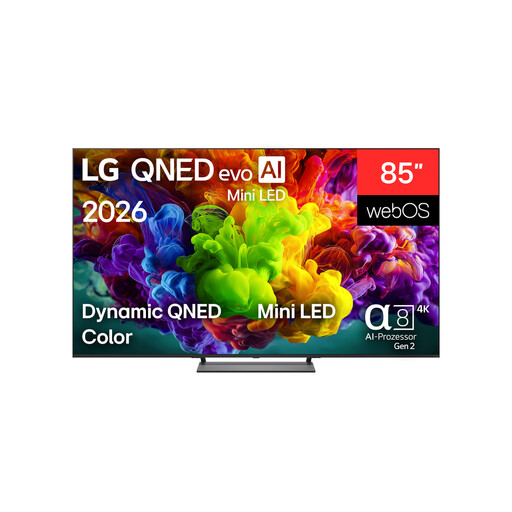 No image available
At 85 inches, this model offers a large-format option. Test whether small captions are readable from the furthest seat.
UHD 4K; Smart TV; QNED Evo.
For wall mounting, the product description recommends installation by a qualified professional.
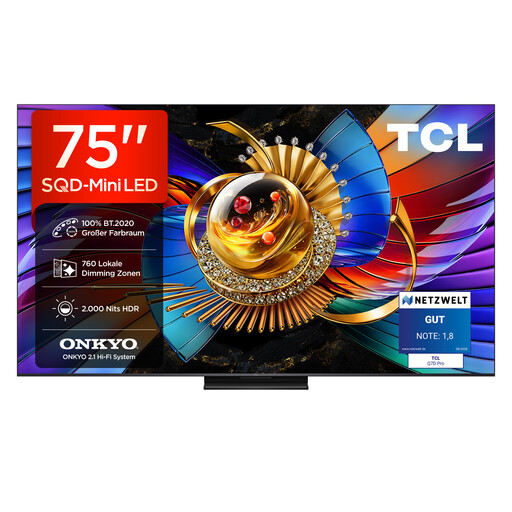 No image available
With this 75-inch screen, check that your slides and captions are clear from the seats you plan to use.
4K; SQD Mini LED; 144 Hz; Google TV. The product title also mentions “Anti-Reflection”.
No. Sony Germany describes this distance as an approximate minimum at which individual pixels should no longer be visible. For a historical slide with small text, you also need to test it from the furthest seat.
Don’t assume that you can. Sony lists JPEG and HEIF among the USB image formats supported by the K-75XR95M2; this doesn’t confirm that it has a PDF slide show mode. Export a small selection in an image format supported according to the model’s manual, then check the order and controls.
Check the weight, hole spacing, screws and wall suitability against the instructions for the specific TV and bracket. Sony warns of the risk of injury with the BRAVIA models covered here and recommends professional installation. This is a manufacturer recommendation, not a general legal requirement for professional installation established here.
The EU energy label shows declared energy consumption in kWh per 1,000 hours. To estimate your individual costs, you’ll also need your usage hours and electricity price. The Verbraucherzentrale distinguishes between your statutory rights against the seller and a voluntary guarantee, and explains changes for purchases from 31.07.2026, particularly in relation to repairs during the statutory guarantee period.
Not necessarily. Section 52 of the German Copyright Act (UrhG) permits the public performance of published works only under the conditions set out there, and provides for reasonable remuneration. Whether rights or a legal exception apply to your images and the specific event depends on the material and the type of event.