If there’s a spare LAN port on your router for the TV, you won’t need an additional switch. If you want to connect more devices to the same socket, a basic Gigabit switch is a good choice when all the devices should use the same network. Separating devices into VLANs, however, requires a configurable switch and a compatible router or gateway setup. TP-Link Germany describes the TL-SG105 as a plug-and-play model, while Omada Network Support explains the additional configuration needed for VLANs.
Which solution do you need?
A studio with too few LAN sockets
If you want to connect your TV and other devices through an existing network socket, the number of available ports matters. CHIP lists smart TVs and other wired devices as possible reasons for needing additional LAN connections.
A studio with separate user devices
If you want to keep personal devices separate from shared ones, decide which connections are needed and check whether the switch and router or gateway can be configured to support them. Germany’s Federal Office for Information Security explains how separate networks can be used.
A quiet TV workspace
If the switch will be near your seating or workspace, check the fan specifications for the exact model version and make sure it has enough ports. TP-Link Germany, D-Link Germany and NETGEAR list fanless models in their product information.
What should you look for when buying?
Direct connection to the router
Best for: Connecting just the TV via LAN when there’s a suitable spare port on your router.
Trade-off: You won’t need an extra device, but you won’t get any additional LAN ports either.
Unmanaged Gigabit switch
Best for: Connecting your TV and other devices through the same network socket.
Trade-off: Plug-and-play models don’t need to be configured, but they won’t create network separation on their own.
Configurable switch with a router or gateway
Best for: Keeping devices belonging to different users separate, provided your existing network equipment supports VLANs.
Trade-off: Setup is more involved. Your gateway and access rules need to support the internet and media access you want.
| Priority |
What to check when buying |
Who is it important to? |
| Extra LAN ports |
Count the TV, other devices and the router uplink; first check how many spare ports your router has. On a five-port switch, the uplink leaves four ports available for other devices. |
If I want to connect several devices by cable at the TV, I need to know whether a router port will be enough and how many switch ports will remain after the uplink. Around 40% of consumers prioritise extra LAN ports. |
| Separate access |
Decide which devices should be able to communicate with each other, then check the VLAN features and whether your router or gateway can be configured to support them. |
If personal devices need to stay separate from shared ones, I want to decide in advance whether the TV can access local media devices. Around 30% of consumers prioritise network separation. |
| Quiet placement |
Check the fan specifications for the exact model version and make sure there are enough ports for where you plan to put it. |
If the switch is near my seating or workspace, I want to make sure the fan won’t be distracting and that there are enough ports. Around 20% of consumers put quiet operation first. |
| TV service features |
Check which TV service you use and whether you have a receiver; only consider IGMP snooping if multicast is relevant to your setup. |
If my particular TV service needs a specific network feature, I want to check the requirements before buying. Around 10% of consumers prioritise compatibility with the TV service they use. |
Common buying mistakes
-
Buying a switch when a router port would do
A switch gives you more wired connections, but you don’t need one to connect a TV to a spare port on your router.
First, count the spare ports on your router and all the devices you plan to connect near the TV.
An extra device takes up space and needs power; you may also need a suitable LAN cable.
-
Assuming “managed” means automatic network separation
VLANs and the internet or media access you want depend on how your whole network is configured. Strict separation may prevent the TV from accessing local media devices.
Decide which connections should be allowed and check your router’s compatibility before choosing extra equipment for VLANs.
-
Assuming every streaming device needs IGMP snooping
IGMP snooping relates to multicast traffic; using a smart TV alone doesn’t mean you need this feature.
Check which TV service you use and whether you have a receiver before treating this feature as a deciding factor.
Key brands at a glance
TP-Link
For a TV setup, TP-Link Germany documents both basic and configurable switch models.
- TP-Link Germany says the TL-SG105 is fanless and ready to use without configuration; the TL-SG105E is listed with management features and IEEE 802.1Q support.
- These features apply to the models listed. VLAN separation also requires a compatible configuration.
D-Link
According to D-Link Germany, the DGS-105 is a five-port option for adding connections near your TV.
- D-Link lists plug-and-play setup, fanless operation and IGMP snooping for the DGS-105.
- The model specifications alone don’t mean you need IGMP snooping or have a configured network separation.
NETGEAR
The GS305v3 is a documented example of a basic five-port switch.
- NETGEAR lists five Gigabit ports, plug-and-play setup and fanless operation for the GS305v3.
- Check that the listing is for the exact GS305v3 model version, so the specifications match the device you choose.
Joybuy products for your TV connection
This selection includes Gigabit switches for adding LAN connections, as well as models with management features for setting up network separation alongside a compatible router or gateway.
 No image available
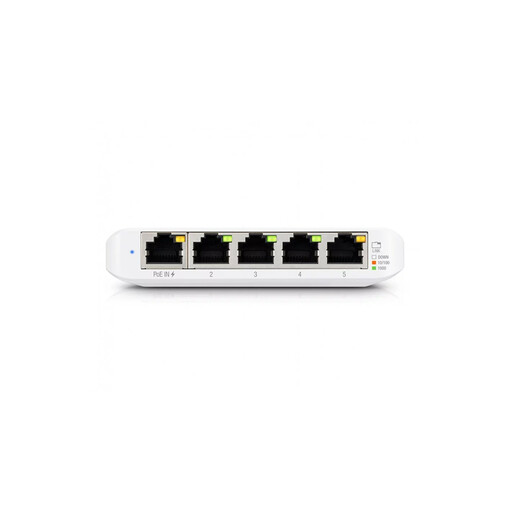
Ubiquiti UniFi Switch Flex Mini USW-FLEX-MINI-EU, 5-port Gigabit switch
If you’re planning to connect several wired devices and create network segments, check that the listed VLAN and port isolation features work with your gateway and the access you want.
- Five Gigabit ports
- Powered via USB-C or 802.3af/at PoE
View at Joybuy
 No image available
D-Link DGS-1005P/E, 5-port Gigabit desktop switch
This model may suit a shared wired network if you also need PoE for compatible devices.
- Four PoE+ ports
- PoE budget: 60 W
- Fanless design and plug-and-play setup
Check that the connected devices support PoE and that the TV has a separate power supply.
View at Joybuy
 No image available
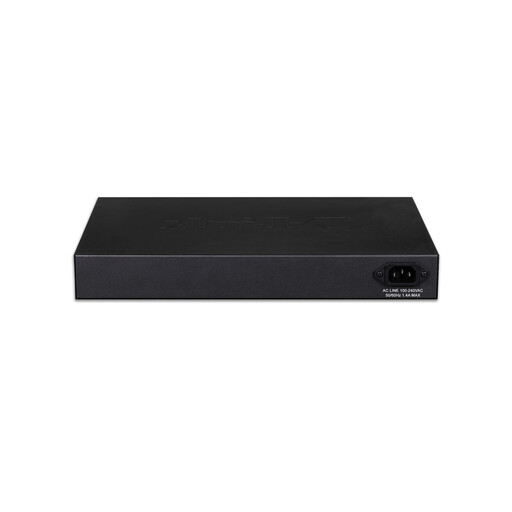
D-Link DGS-1210-10/E, 10-port Gigabit smart managed switch
If you’re planning to separate your network, first check that the VLAN management features and your gateway support the access you want.
- Eight Gigabit RJ-45 ports and two SFP slots
- L2/L3 management
- Fanless design
VLANs and the internet access you want require a compatible gateway and IP address configuration.
View at Joybuy
 No image available
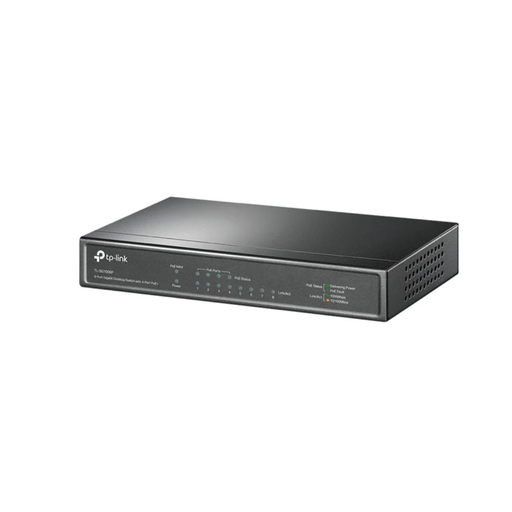
TP-Link TL-SG1008P, 8-port Gigabit Ethernet switch with PoE
If several devices need to share a wired network, an eight-port model gives you connections for more devices than a five-port switch.
- Unmanaged Gigabit Ethernet
- PoE function
Check the listing for the specific model to see which ports provide PoE and whether your connected devices are compatible.
View at Joybuy
 No image available
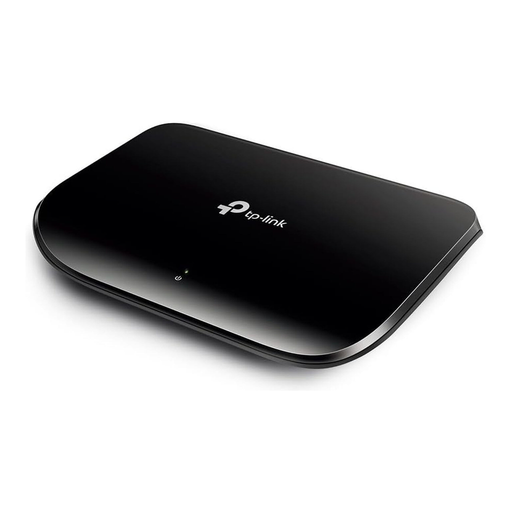
TP-Link TL-SG1005D, 5-port Gigabit desktop switch
A five-port model may suit a TV and other devices on the same LAN if you do need a switch; one port will be used to connect it to the router.
- Five 10/100/1000 Mbps RJ-45 ports
- Auto-negotiation and Auto-MDI/MDIX
View at Joybuy
Frequently asked questions
How do I connect a switch to my TV?
Connect one of the switch’s ports to a suitable LAN port on your router, then connect the TV to another port. The plug-and-play models documented by TP-Link Germany don’t need to be configured. Also check the TV’s connection type and how the switch is powered.
Does a VLAN switch replace the router in a shared studio?
No. For separate VLANs to provide the internet access or controlled connections you want, the gateway and IP address configuration need to be set up accordingly. Omada Network Support explains that devices on separate VLANs can’t communicate with each other automatically. So first decide whether you want the smart TV to access local media devices.
Do I need a PoE switch to connect my TV via LAN?
No. A TV’s LAN connection alone doesn’t mean you need PoE. PoE only matters if a connected device is designed to use it. Reolink Support explains that the RLA-PS1 won’t power devices that aren’t designed for PoE. Check the specifications for your particular switch and TV.
What should I check about cables and power before buying?
Check that a LAN cable will reach the TV and that there’s a nearby socket. Also check the specific listing to see whether it includes any cables, a power supply or mounting hardware you need.


