What should you look for when buying?
First, measure the viewing distance and test typical film scenes, including subtitles, from the back row. Then you can check the room lighting and viewing angles, as well as file playback and the planned operating time.
| What matters |
What to look for when buying |
Who it matters most to |
| Clear viewing from a long distance |
Measure the distance to the back row and the width of the wall; check picture details and subtitles using typical content from the intended viewing position. |
If I need to make out faces and subtitles from the back, I’ll test the picture from the actual seat. Around 36% of consumers put visibility from a distance first. |
| Room lighting and group viewing |
Take light sources and the screen’s position into account; check reflections and the viewing angles of the specific model. RTINGS recommends considering viewing angles when seating is spread out. |
With windows or side-on seating, I want to avoid distracting reflections and a change in picture quality at the edges. Around 29% of consumers prioritise bright rooms and side-on seating. |
| Reliable film playback |
Test an original file, including its audio; check the HDMI ports and how easy it is to use with a computer or player. USB support varies by model. |
If volunteers need to play different existing films, I want to be able to check the process using the original files. Around 21% of consumers put playback of existing films first. |
| Longer operating times and running costs |
Consider the planned running time and any static images on screen; compare the EU energy label for each model. You’ll also need the hours of use and your electricity price to estimate running costs. |
For regular screenings, I want to take energy consumption and long periods with a static image into account. Around 14% of consumers prioritise running time and operating costs. |
Joybuy products to consider
An 83-inch Joybuy OLED smart TV with 4K resolution for film screenings where viewers will be sitting a long way from the screen.
 No image available
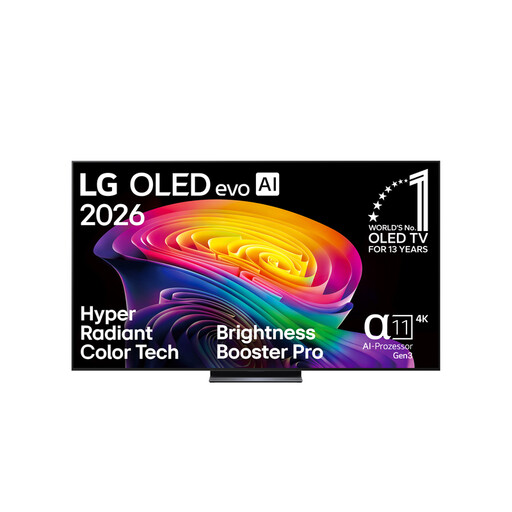
LG OLED83C67LA OLED Evo AI 4K smart TV, 83 inches
The 83-inch screen and 4K resolution are useful selection criteria for screenings where viewers will be sitting a long way from the screen; still, check that the picture is clear from the intended seats.
OLED Evo, AI and smart TV.
For long, recurring periods with static images, you’ll need to weigh up the risk of burn-in associated with OLED. If you’re wall-mounting the TV, check that you have a compatible VESA 400 × 400 mm bracket; according to the product details, it is sold separately.
View at Joybuy
Frequently asked questions
How do I choose a screen size for the back row?
Measure the distance from the planned screen position to the back row and check the available wall width. RTINGS’ viewing distance calculator can be a useful starting point; what matters is whether typical film scenes and subtitles are clear from the back seats.
Can I simply play museum films via USB?
Only if the exact TV model supports the file system and video and audio formats used by your files. Test an original file or connect a suitable external player via HDMI.
What should I check before wall-mounting the TV?
Check the dimensions and weight, and make sure the bracket is compatible with the exact model. For example, Sony lists a VESA mounting pattern of 30.0 × 30.0 cm and a weight of around 38.3 kg without the stand for the Sony K-75XR70; these specifications don’t apply to other models.
How can I compare ongoing electricity costs?
Compare the EU energy label figures for SDR and, where applicable, HDR. To estimate your own costs, you’ll also need the planned hours of use and your electricity price.
Can films made by volunteers be shown publicly without checking anything else?
Not simply because they were made by volunteers. The German Patent and Trade Mark Office lists films as possible protected works and explains that usage rights can be granted through licence agreements. Before screening, check who has the rights to the film, music and any other third-party material, and what rights cover your planned use; you can’t assume that a particular exception applies in every case.


