
Lieferung heute & morgen

Qualitätsgarantie

Willkommens-Angebote freischalten: KOSTENLOSE Lieferung | Bis zu 80 % RABATT | Kostenlose 30-Tage-JoyPlus-Testphase
App herunterladen
A wallbox with app control transforms charging an electric vehicle from a passive task into an actively managed process. The ability to schedule charging times, monitor energy consumption, and control access not only offers convenience but also significant potential for cost optimisation. By using off-peak electricity tariffs or aligning charging with solar power availability, the cost-effectiveness of e-mobility at home can be significantly increased. This article analyses the key technical parameters for selecting a smart home charging station and presents a selection of models with different feature sets.
Choosing the right home charging station depends on several technical factors. An informed decision is based on compatibility with your home's electrical system, your vehicle, and your individual usage needs.
Charging power, measured in kilowatts (kW), determines the charging speed. Common values are 11 kW and 22 kW.
A wallbox with load management is a key feature for households with multiple high-consumption appliances (e.g., a heat pump, an instantaneous water heater). The system measures the home's total power consumption in real-time and dynamically adjusts the wallbox's charging power. This prevents overloading the home's electrical connection while ensuring the maximum available power is always used for charging.
The core component of a smart wallbox is its connectivity, usually via Wi-Fi. The companion app should offer the following features:
A wallbox with RFID (Radio-Frequency Identification) allows you to authorise charging sessions using a special card or fob. This is particularly useful if the wallbox is installed in a publicly accessible area (e.g., a carport near the street) to prevent unauthorised use.
In Europe, the Type 2 wallbox connector (IEC 62196-2) is the standard for AC charging. Look for certified safety features like fault current protection (DC fault current detection), overheating and overvoltage protection, and a high protection rating (e.g., IP65 or IP66) for outdoor installation.
Based on the technical criteria above, we have compiled a selection of wallbox models that stand out for their functionality and specifications.
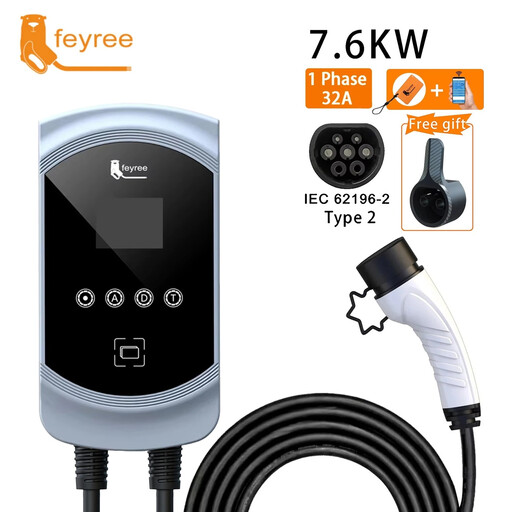
Why we recommend this product: This model provides a solid foundation for smart charging at home. It combines charging power optimised for single-phase connections with essential app features for control and monitoring. Integration into the Tuya Smart Home ecosystem allows for centralised management.
Advantages:
Who it's for: Homeowners with a single-phase electrical connection looking for a reliable and cost-effective 32A EV charging station with essential smart features and access security.
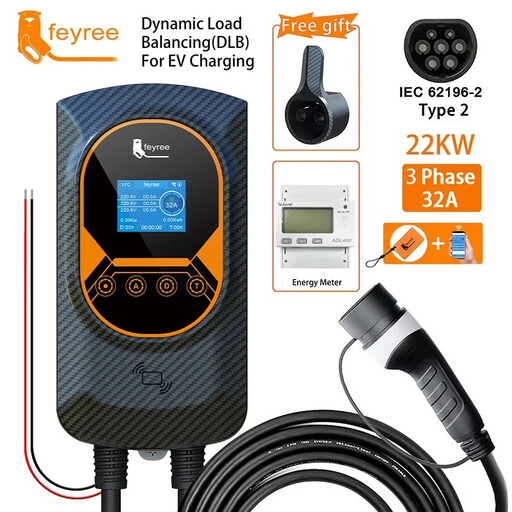
Why we recommend this product: This three-phase model is designed for users who need maximum charging power and intelligent energy management. The Dynamic Load Management (DLB) feature is its key characteristic, ensuring optimal use of the home's electrical connection without the risk of overload.
Advantages:
Who it's for: Users with a 3-phase power connection who are looking for a future-proof wallbox with load management to charge their vehicle quickly while intelligently managing their household's energy flow.
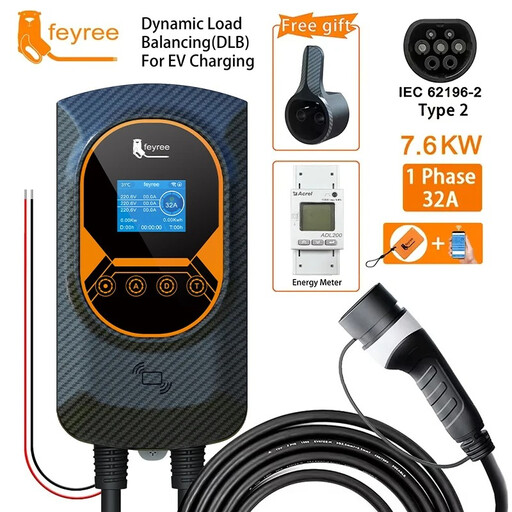
Why we recommend this product: This model fills an important gap: it brings the advanced feature of dynamic load management to the single-phase, 7.6 kW charging station category. It is the ideal solution for households without a three-phase connection that still want the benefits of intelligent energy management.
Advantages:
Who it's for: Tech-savvy homeowners with a single-phase power connection who want to intelligently integrate the charging process into their energy management and proactively prevent overloading their home's connection.
If the models presented here do not exactly meet your requirements, or if you are looking for specific accessories like longer charging cables or mounts, you can find a wider selection of charging solutions in our main category. Discover more options in the Automotive Electrical Parts section.
1. What are the specific advantages of a wallbox with app control? A wallbox with app control allows you to schedule charging sessions during off-peak hours with cheaper electricity rates (e.g., at night), monitor energy consumption for cost control, perform remote diagnostics for issues, and adjust the charging power. Additionally, you can conveniently track the charging progress from your smartphone.
2. What is dynamic load management in a wallbox? Dynamic Load Management (DLB) is a smart feature that measures a building's total power consumption. When other large appliances (like an oven or a heat pump) are turned on, the wallbox automatically reduces its charging power to prevent overloading the home's connection and tripping the main breaker. As soon as more power becomes available, the wallbox increases the charging power on its own.
3. Can I operate a 22kW wallbox on any home electrical connection? No. A 22kW wallbox requires a three-phase power connection (high-voltage/three-phase current) with appropriate circuit protection. The installation must be carried out by a qualified electrician. Furthermore, depending on your region, approval from the local grid operator may be mandatory before commissioning. Single-phase home connections are not designed for this level of power.