
Lieferung heute & morgen

Qualitätsgarantie

Willkommens-Angebote freischalten: KOSTENLOSE Lieferung | Bis zu 80 % RABATT | Kostenlose 30-Tage-JoyPlus-Testphase
App herunterladen
Smart Glasses combine glasses, smartphones and digital assistants. Depending on the model, users can enjoy a private display, open speakers, real-time translation, navigation through their glasses or access to an AI assistant. However, this product category is not uniform: audio smart glasses work differently from AR glasses or XR glasses designed for gaming.
Anyone who focuses only on terms such as “AI glasses” or “real-time translation” may overlook important limitations. The following points will help you assess marketing claims objectively and choose a model for everyday use, work, travel, sport or entertainment.
Some smart glasses with a display show text, notifications or translations. Other models are primarily designed as a private screen for games and videos. Some audio glasses, meanwhile, do not have a visible display at all.
Before buying, you should therefore check:
A large virtual image, such as the one specified for XR glasses, is not in itself proof of a fully overlaid AR environment.
Figures such as “128 languages” or “145 languages” generally refer to the available translation function, according to the product description. Other factors are also important, including the supported translation directions, recognition in ambient noise, response time and the cloud connection required.
For business conversations and travel, buyers should check whether:
“Up to two days” may refer to light use. With the display, phone calls, recording, translation or navigation activated, battery life is often shorter. With audio smart glasses, you should also distinguish between usage time and standby time.
Pay attention to the specific figures for active use, charging time and the charging case. For commuters and business travellers, a case with additional capacity is often more practical than a high standby figure.
For smart glasses with a display, resolution, brightness, field of view and refresh rate are all relevant. According to the product details, the VITURE Pro 2 features a 1080p display, up to 120 Hz, 1600 nits and a 50-degree field of view. It requires compatible devices with USB-C video output. An iPhone, laptop or games console is therefore not automatically compatible.
For AR glasses such as the INMO GO3, the supplier states that they feature a Micro-LED waveguide display with 1500 nits and translation in more than 98 languages. Such figures should always be considered alongside app support, visibility in sunlight and regional availability.
Glasses with open speakers generally allow you to remain more aware of your surroundings than in-ear headphones. However, audio may be less clear on public transport or in windy conditions. For phone calls, the number and position of the microphones, as well as noise reduction, are crucial.
According to the product description, the LAWAKEN AI Chat City features Bluetooth 5.3, two speakers, two microphones, IPX4 water resistance and up to twelve hours of usage time. IPX4 means protection against splashing water, not submersion.
Camera-free smart glasses can raise fewer social and privacy-related concerns in meetings, offices and public spaces. According to the product description, the Even G2 is offered without a camera and features a private Micro-LED display. Other models, including the LAWAKEN LAWK ONE, have a camera for recording and sports data, according to the stated specifications.
Before buying, check:
CE, UKCA and RoHS statements refer to the specified conformity or environmental requirements. They do not replace checking the app’s specific privacy terms.
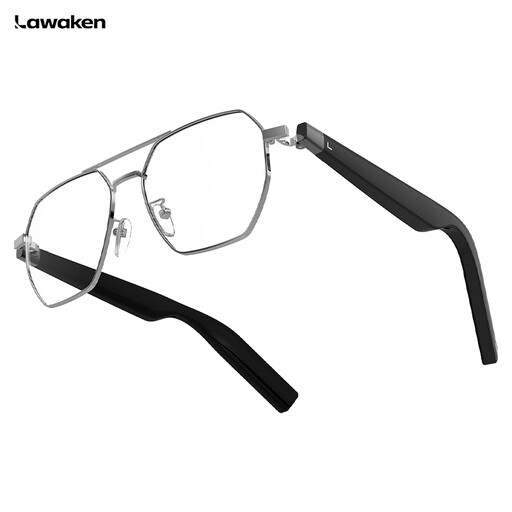
Why they’re suitable: For users who want to combine audio, calls, translation and AI features without a display, whether at home or when travelling.
The product details clearly specify open speakers, Bluetooth 5.3 and up to twelve hours of usage time. This makes it easier to compare them with display models.
33 grams without lenses, compatible with prescription lenses, IPX4 and support for iOS and Android, according to the product description.
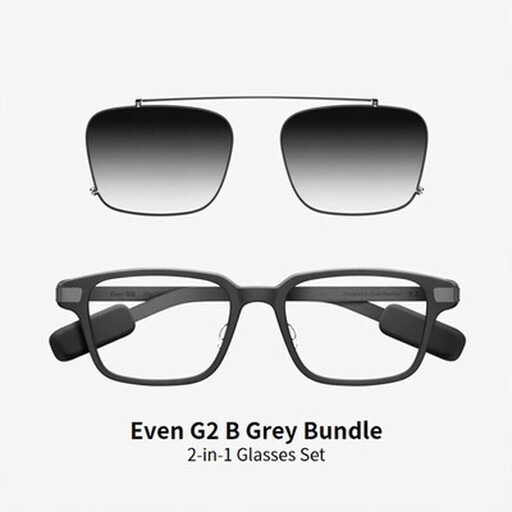
Why they’re suitable: For professionals, business travellers and presenters who need information discreetly displayed in their field of vision.
According to the product details, these glasses have no camera. This clearly distinguishes them from models with photo and video recording.
36 grams in weight, Micro-LED display, teleprompter, translation in more than 35 languages and up to two days of regular use, according to the product description.
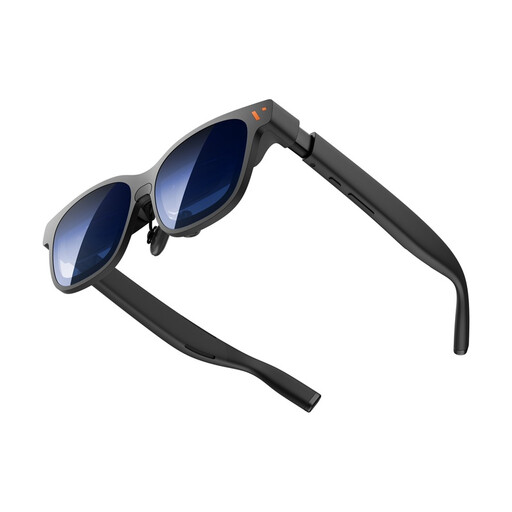
Why they’re suitable: For gaming, streaming and mobile working with compatible USB-C devices, such as on a train, in a hotel or on a plane.
The product description states that USB-C video output is required and points out that additional adapters may be needed for certain devices.
Sony Micro-OLED, 1080p, up to 120 Hz, adjustment from 0 to -5.0 dioptres and support for the SpaceWalker app, according to the product details.
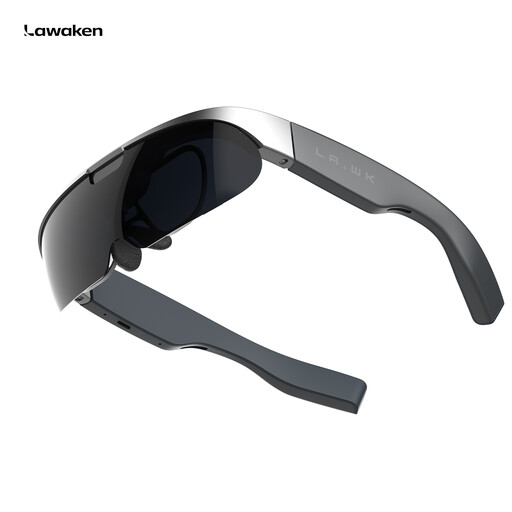
Why they’re suitable: For cyclists and users who want to combine AR navigation, sports data, open audio and recording.
The camera, display, IPX4 protection and stated battery life are listed separately. This makes it easier to assess the recording function and weather protection realistically.
8-megapixel camera, 4K recording, 30-degree display field of view, Bluetooth 5.3 and up to eight hours of use, according to the product description.
We’ve put together a current selection of products that take these selection criteria and the stated EU safety requirements into account.
It depends on the model. Audio smart glasses often require a Bluetooth connection and a smartphone app. According to the product details, XR glasses such as the VITURE Pro 2 require a compatible device with USB-C video output. Some AI and translation features also use cloud services.
Their technical lifespan depends on the battery, hinges, software support and daily use. Lithium-ion batteries gradually lose capacity over charging cycles. You should therefore check the available warranty, replacement parts, charging accessories and whether prescription lenses or nose pads can be purchased separately.
Use must not distract you. Visible prompts, navigation or audio should only be used when the traffic situation remains safe. Display functions should not be operated while driving. With sports models, splash protection, a secure fit and an unobstructed view are also more important than having the longest possible list of features.