
Lieferung heute & morgen

Qualitätsgarantie

Willkommens-Angebote freischalten: KOSTENLOSE Lieferung | Bis zu 80 % RABATT | Kostenlose 30-Tage-JoyPlus-Testphase
App herunterladen
Smart LED lighting can adapt rooms, work areas and vehicle interiors to suit different situations. However, products vary considerably in terms of app control, voice commands, RGB colours, white light and motion sensors. If you focus only on a wide range of colours or low wattage, you may end up buying a light that is not compatible with your existing smart home system, mounting surface or intended use.
This selection guide from the Joybuy Product Recommendation Officer explains the most important technical specifications and shows which solutions suit different user profiles.
These terms describe different types of connectivity. A Wi-Fi LED bulb usually connects directly to your home network, often via the 2.4 GHz band. Depending on the model, it may also be accessible remotely. Bluetooth Mesh lighting, on the other hand, initially communicates via Bluetooth. A compatible hub may be required for remote access, voice control or connecting multiple devices.
Matter-compatible lighting makes it easier to integrate devices with platforms such as Apple Home, Google Home, Amazon Alexa or Samsung SmartThings. However, Matter does not automatically replace every accessory. Depending on the product, app and smart home hub, additional setup steps may be required.
RGB LEDs create coloured light from red, green and blue. For functional room lighting, white light is also important. An RGBW LED bulb or a light with an adjustable colour temperature can provide warm and cooler white light separately.
You should therefore look for specifications such as 2700 to 6500 Kelvin, lumens and colour rendering index. A high number of colours alone says nothing about brightness or whether the light is suitable as the main source of illumination.
LED light strips require a clean, grease-free surface and enough space for the controller and power supply. For recessed LED spotlights, however, the cut-out size, installation depth and connection type are crucial. A light with IP20 is intended only for dry indoor areas. In areas exposed to splashing water, the stated IP rating must be suitable for the installation location.
Fixed-wired ceiling lights and recessed spotlights should be installed by a qualified electrician in accordance with the manufacturer's instructions.
Before buying, check the following:
Switching systems can be time-consuming if several lights have already been set up in a particular app. For a consistent smart home, a shared platform is often more practical than the widest possible range of functions.
Brightness is measured in lumens, while power consumption in watts describes how much electricity the light uses. For running costs, the simplified formula is:
Power in kW × operating hours × electricity price = energy costs
A 10 W light running for four hours a day uses less energy in calculations than a 36 W ceiling light used for the same length of time. However, the appropriate wattage depends on the room size, installation height and desired lighting level.
Dimmable LED lighting should be controlled using the specified app, remote control or hub. Some smart lights are not compatible with external wall dimmers. This limitation must be checked before installation.
For recessed spotlights, the ceiling cut-out size and installation depth are essential specifications. For example, an Aigostar 9 W model requires a cut-out of approximately 120 to 130 millimetres and has an IP20 rating, making it suitable for dry indoor areas.
For an LED cabinet light with a motion sensor, sensor range, battery capacity and mounting method are more important. One available 20-centimetre model uses a PIR sensor, offers three colour temperatures and charges via USB. Adhesive mounting surfaces only adhere reliably to suitable, clean surfaces.
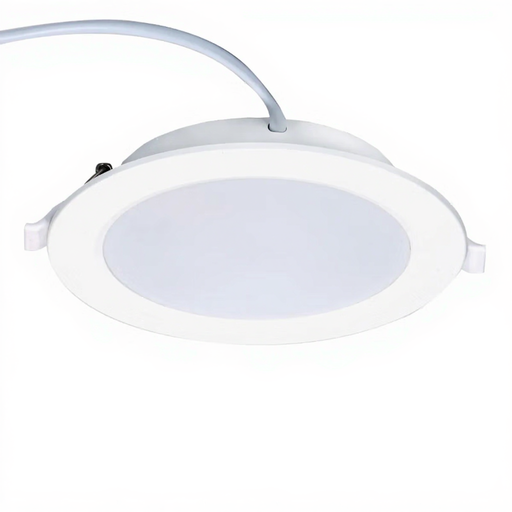
Why this product suits this profile: This 9 W recessed LED spotlight has a relatively compact design for hallways, rooms and other dry indoor areas. Its colour temperature can be adjusted from 2700 to 6500 Kelvin.
The technical specifications state the cut-out size, IP20 rating, luminous flux and Bluetooth Mesh connectivity. This allows you to check the installation location and any required accessories before buying.
9 W, 780 lumens, a 120-degree beam angle and a stated lifespan of 30,000 hours.
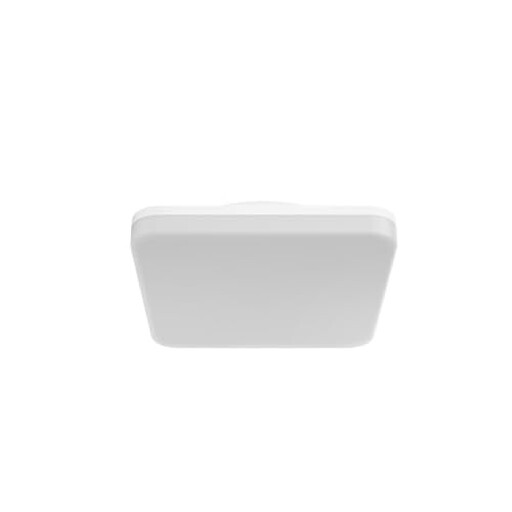
Why this product suits this profile: This smart LED ceiling light is designed for households that want to combine RGBW, stepless dimming and several smart home platforms in one permanently installed light.
Compatibility with Matter, Wi-Fi and the relevant platforms is clearly specified. The product also lists IP54, 18 W, up to 1800 lumens and a range of 2700 to 6500 Kelvin.
App and voice control, RGBW lighting, stepless dimming and splash protection in accordance with IP54.
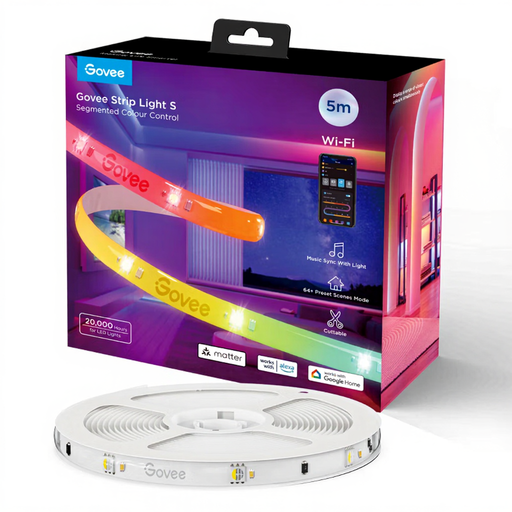
Why this product suits this profile: The 5-metre LED light strip is ideal for desks, TV areas and gaming zones when segmented colour effects and integration with several smart home platforms are required.
The protective coating, recommended indoor use and instructions on unrolling the strip help prevent incorrect decisions during installation and operation.
RGBIC segment control, Matter, Wi-Fi and Bluetooth, plus 24 pre-set scenes according to the product specifications.
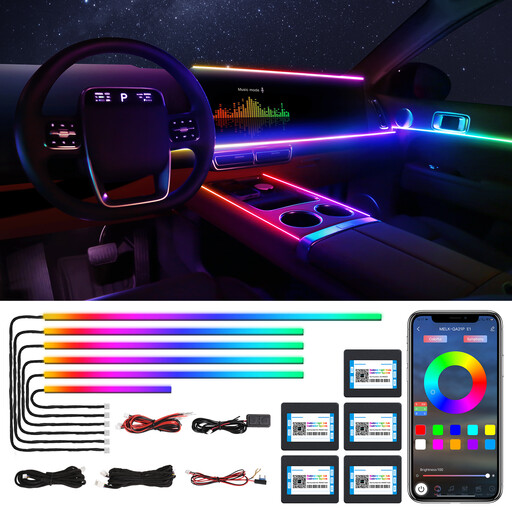
Why this product suits this profile: This set is aimed at drivers and tuning enthusiasts who want to install customisable interior car lighting with app control, music mode and several illuminated sections.
The set specifies a 12 V operating voltage, short-circuit protection, six LED strips, four footwell lights and four door-handle lights. When shortening the strips, make sure you cut at the specified end.
Bluetooth app, static colours, dynamic modes, integrated sound sensor and flexible DIY installation for vehicles.
We have put together a complete, regularly updated list of products that fully meet these strict selection criteria and the safety regulations applicable in the EU.
Bluetooth bulbs can often be controlled locally using a smartphone. Depending on the model, remote access, cloud features or voice control require an internet connection or a hub. Matter devices need a compatible smart home hub or platform for integration.
Its lifespan depends on the model, operating time, heat dissipation and ambient temperature. Some of the products mentioned, for example, specify 30,000 operating hours. This figure is a technical guide, not a guarantee of a specific service life in the home. Adequate ventilation and operation within the specified voltage range are important.
The key factors are power consumption, daily operating time and your electricity tariff. With a power consumption of 10 W and four hours of daily use, the calculated consumption is 0.04 kWh per day. For an accurate calculation, multiply this figure by your current unit price and the number of days the light is used. Standby consumption from power supplies or hubs can also be included.