
Lieferung heute & morgen

Qualitätsgarantie

Willkommens-Angebote freischalten: KOSTENLOSE Lieferung | Bis zu 80 % RABATT | Kostenlose 30-Tage-JoyPlus-Testphase
App herunterladen
If you’re looking for an iPhone 16 privacy screen protector, you’ll usually want it to do two things: protect the display from scratches and everyday knocks, while making it harder for people to see your screen on the train, at work or in a café. However, not every screen protector described as ‘privacy’ or ‘tempered glass’ does both equally well.
The term ‘360° privacy protection’ usually refers to a filter that limits visibility from the sides. How much it darkens the screen depends on the viewing angle, screen brightness and surroundings. The display should still be readable when viewed from the front. By contrast, a screen protector that makes the display very dark even when viewed head-on can affect usability and readability.
Look for specific details about the privacy angle, and don’t treat the product description as a guarantee against every kind of prying eye. A privacy filter also isn’t a substitute for locking your device or using secure app settings.
The iPhone 16, iPhone 16 Plus, iPhone 16 Pro and iPhone 16 Pro Max have different dimensions and display shapes. An iPhone 16 privacy screen protector won’t necessarily fit a Pro or Plus model. Camera cut-outs, edge coverage and compatibility with a protective case can also vary.
Before buying, check the exact model name in your iPhone settings under ‘General’ and ‘About’. A detail such as 6.7 inches isn’t enough on its own, as several models may have a similar screen size.
A rating such as 9H tempered glass screen protector describes a standardised hardness classification for the material; it doesn’t mean the glass is unbreakable. Drops onto edges, concentrated pressure or a hard impact can damage even 9H tempered glass. Replace a broken screen protector, as cracks can affect its protective performance and make it less safe to handle.
An iPhone 16 privacy screen protector usually uses a filter structure to reduce visibility from the sides. Check these three points:
According to the product details, the VoxorAI model for iPhone 16 offers 360-degree privacy protection. It’s also described as having an AR anti-reflective coating and high light transmittance. These details come from the product description and should be treated as technical claims made by the manufacturer.
Tempered glass for the iPhone 16 usually feels different from a thin plastic screen protector. Key features include:
A scratch-resistant iPhone screen protector won’t necessarily prevent screen damage from every drop. For more comprehensive protection, it’s worth pairing tempered glass with a suitable case.
Dust trapped under the glass is one of the most common causes of bubbles and adhesion problems. A simple fitting tool, cleaning wipes and a dust remover are therefore useful items to have in the box. Fit the protector in as dust-free an environment as possible, and clean the display thoroughly before applying it.
A good screen protector shouldn’t noticeably affect touchscreen use. However, claims such as ‘high touch sensitivity’ or ‘ultra-clear’ are product promises. Your experience may depend on how clean the display is, how carefully the protector is fitted and which case you use.
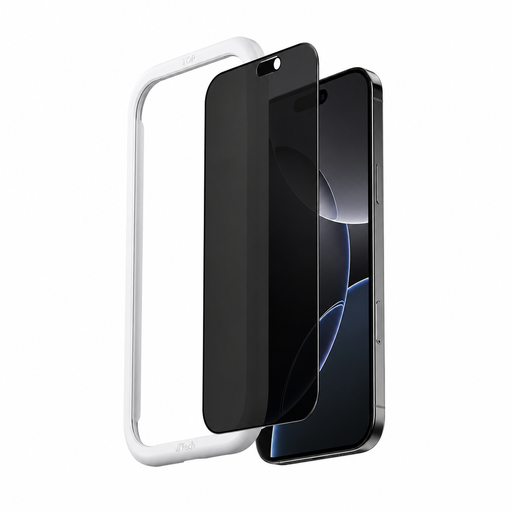
Why this product suits this profile: According to the product details, this model is designed for iPhone 16 and combines privacy protection with a self-adhesive design. It’s aimed at people who want to keep private messages or passwords less visible when out and about.
The product is explicitly listed as compatible with iPhone 16. This makes it easier to avoid the common mistake of confusing it with the Plus, Pro or Pro Max versions.
According to the product description: 9H tempered glass, 360-degree privacy protection, anti-fingerprint coating and a fitting tool.
Why this product suits this profile: This version is listed for iPhone 16 Pro. It’s a good option if you have a Pro model and value privacy protection, a glass surface and smooth touchscreen use.
Make sure you don’t confuse this version with the standard iPhone 16. The stated model compatibility helps you choose the right display size.
According to the product details: 9H tempered glass, hydrophobic and oleophobic coating, AR treatment and a fitting tool.
Why this product suits this profile: The Plus version is for iPhone 16 Plus users who often use their device on the train, in an open-plan office or in public places.
The product name explicitly states that it’s for iPhone 16 Plus. Buy this version only if that’s the exact model you have.
According to the product description: 9H tempered glass, privacy coating, anti-fingerprint properties and self-adhesive fitting.
We’ve put together a complete, regularly updated list of products that meet these strict selection criteria and fully comply with the safety regulations in force in the EU.
Don’t use abrasive cleaners or solvents. Replace the glass if it’s cracked or lifting at the edges. According to the product details, repeatedly peeling it off and reapplying it can put a strain on the display’s oleophobic coating.
A privacy screen protector uses a filter structure that limits visibility from the sides. The screen remains generally readable from the front, while the content may look darker when viewed from the side. The effect depends on the viewing angle, screen brightness and ambient light.
There’s no set lifespan that applies to every screen protector. It depends on how you use your phone, knocks, scratches, cleaning habits and how well the edges stay adhered. Replace it if it cracks, chips or starts to lose its grip noticeably.
A well-fitting screen protector should normally allow you to use the touchscreen as usual. However, dust, areas that haven’t adhered fully, a case that’s too thick or incorrect fitting can affect responsiveness. So make sure you choose one that’s compatible with your exact model and fit it carefully, taking care to avoid bubbles.