
Lieferung heute & morgen

Qualitätsgarantie

Willkommens-Angebote freischalten: KOSTENLOSE Lieferung | Bis zu 80 % RABATT | Kostenlose 30-Tage-JoyPlus-Testphase
App herunterladen
A smartphone gimbal can deliver much smoother movements when vlogging, travelling or livestreaming. However, devices vary considerably in terms of stabilisation, tracking, battery life and compatibility. An affordable phone gimbal is not automatically unsuitable, while a model with lots of additional features will not be the best choice for every type of use.
The Joybuy Product Recommendation Officer explains which details matter before you buy and how to avoid common marketing traps.
A gimbal with AI tracking or gimbal with face recognition can automatically keep people in the frame. However, this works differently depending on the model:
If you mainly use TikTok, Instagram, YouTube or video-conferencing apps, check whether tracking only works in the manufacturer’s app or also in other applications.
A 3-axis gimbal compensates for movement in three directions. This is fundamentally important for smooth footage while walking. However, buyers should also consider the permitted payload, design and usable range of movement.
A heavier smartphone with a case, additional lens or microphone can put greater strain on the motors. If the stated payload is exceeded, stabilisation may become unreliable. Some models also require manual balancing or calibration.
An integrated smartphone selfie stick, tripod, fill light or power bank can replace separate accessories. However, what matters is whether the overall weight and dimensions suit your intended use. A longer extendable pole can be helpful for group shots, for example, while a heavier device may be less convenient when travelling.
For footage recorded while moving, a genuine 3-axis design provides an important technical foundation. It is also worth looking at the roll motor, tilt and pan ranges, and support for portrait and landscape formats.
A smartphone stabiliser with an extended range of movement is useful for low camera angles, panoramic shots and dynamic vlogs. The specification “335° rotation”, for example, describes the available rotation range of a particular model, not necessarily full 360-degree tracking.
Before buying, check:
A model with a payload of up to 400 g offers more flexibility for larger smartphones and accessories. With devices featuring a magnetic mount, you should also check whether the included clamp fits your smartphone.
For longer days out, runtimes of around 10 to 18 hours according to the product specification are worth considering. Actual battery life depends on factors including tracking, lighting and smartphone weight.
A reverse-charging function can power your smartphone while you are out and about. For travellers, packed size is also important: a foldable smartphone gimbal is easier to stow in a bag. Also check the level of moisture protection. Not every model is waterproof; some devices may only be exposed to splashes.
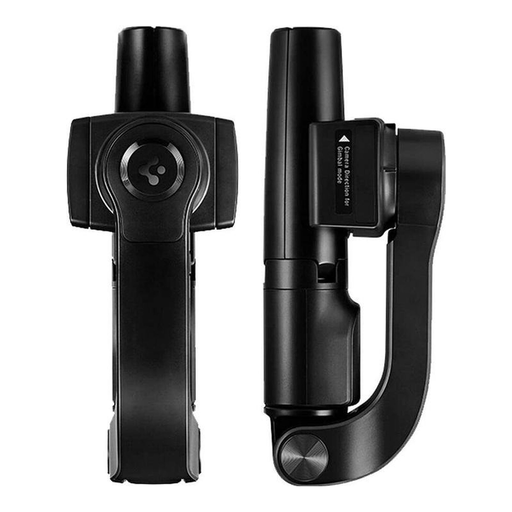
Why this product suits this profile: This compact model supports iOS and Android and combines gimbal, selfie-stick and tripod functions. Weighing 220 g, it is suitable for occasional filming and travel.
Its features are clearly focused on basic smartphone filming. Buyers do not necessarily pay for extensive AI or app functions they may not need.
Bluetooth remote control, tripod function, wrist strap and a maximum length of 54 cm.
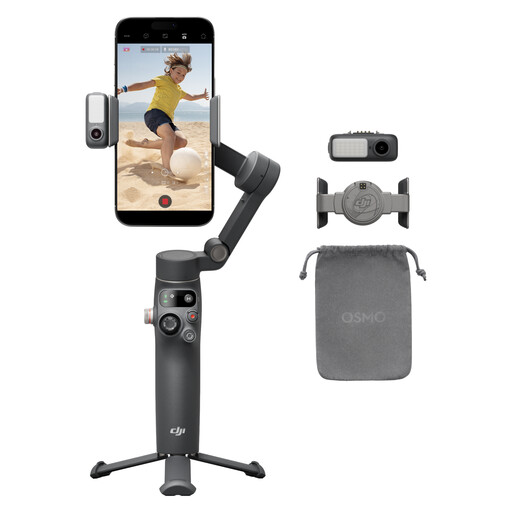
Why this product suits this profile: Content creators and vloggers get 3-axis stabilisation, an integrated extendable pole and a tripod. The system is designed for iPhone and Android users.
The features are clearly specified: DJI Mimo, ShotGuides, Quick Launch and a multifunctional module. This makes it easier to assess in advance whether the app and accessory requirements are suitable.
Up to 10 hours of runtime, an integrated extendable pole, tripod and support for charging a smartphone via the multifunctional module.
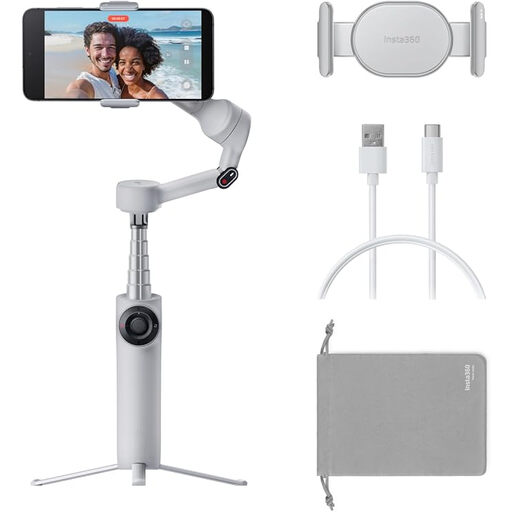
Why this product suits this profile: Travellers, families and social media users benefit from AI tracking for multiple people and animals, an integrated tripod and selfie stick in a foldable design.
The manufacturer’s specifications state compatibility, a 15x zoom tracking range and the required app. This allows buyers to check whether their smartphone and intended use are supported.
3-axis stabilisation, gesture control, 9-point composition assistance and up to 10 hours of battery life according to the product description.
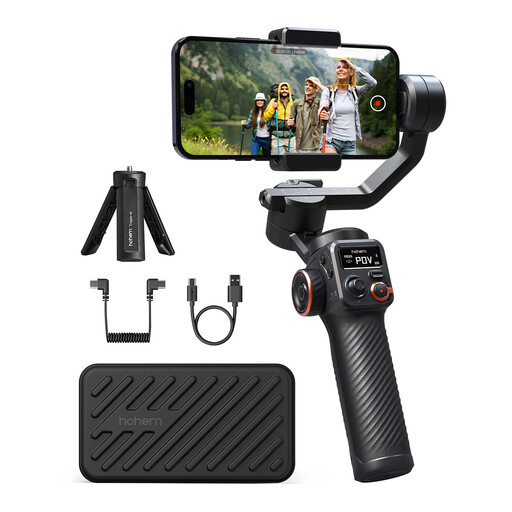
Why this product suits this profile: For long vlogs, livestreams and mobile productions, this gimbal offers a stated runtime of up to 18 hours and a payload of up to 400 g.
The OLED display, stated payload and IPX5 splash resistance provide specific points to check. However, the device must not be submerged or used in heavy rain.
335° tilt rotation, reverse charging, OLED status display and four 1/4-inch threads for accessories.
We have put together a complete, regularly updated list of products that fully meet these strict selection criteria and the safety regulations applicable in the EU.
Open the gimbal fully, place the smartphone centrally in the holder and make sure it is securely clamped. With 3-axis models, the phone should be as well balanced as possible before the motor starts. Then connect the device via Bluetooth or the appropriate app. Depending on the model, gesture and tracking functions may need to be activated separately.
Battery life depends on motor power, tracking, lighting and smartphone weight. The product specifications in this selection range from around 10 hours to up to 18 hours. A shorter runtime is sufficient for occasional filming, while larger battery reserves are useful for livestreams or full days of travelling. Charge the device in a dry environment and allow it to cool down after extended use.
A gimbal with AI tracking is particularly useful if you are filming alone, moving around a room or do not have a second person to operate the camera. Before buying, check whether face recognition, animal or multi-person tracking is supported and whether the feature works with your preferred app. For simple selfies, however, a smartphone selfie stick with a Bluetooth remote control may be all you need.