
Lieferung heute & morgen

Qualitätsgarantie

Willkommens-Angebote freischalten: KOSTENLOSE Lieferung | Bis zu 80 % RABATT | Kostenlose 30-Tage-JoyPlus-Testphase
App herunterladen
A smartphone gimbal can reduce shaky footage when walking, panning or filming handheld. However, not every model is suitable for every use. Some products are advertised as versatile all-in-one solutions but offer only a basic holder. Others come with extensive app features whose compatibility with your smartphone must be checked in advance.
For content creators, vloggers, travellers, students and smartphone photographers, three typical purchasing and marketing pitfalls are particularly relevant:
A 3-axis gimbal typically stabilises tilt, roll and panning. The number of axes is not the only important factor: the specified payload is crucial too. Heavy smartphones, large protective cases, additional lenses or a clip-on microphone can put greater strain on the motors.
You should therefore check:
A magnetic phone holder is practical, but should only be used if the smartphone, case or metal ring is suitable for it. For products with magnets, observe the warnings regarding pacemakers, credit cards, magnetic storage media and small objects.
A motorised smartphone gimbal needs power for stabilisation and, where applicable, for tracking or lighting. The stated runtime is a guideline and may vary depending on motor load, Bluetooth connection and accessory use.
For longer filming days, models with a stated battery life of 10 to 18 hours are worth considering. An additional charging function for your smartphone can be useful when you are out and about, but it may reduce the gimbal’s remaining operating time. For lithium batteries, follow the manufacturer’s instructions regarding charging, heat, moisture and storage.
A foldable phone holder or compact smartphone tripod is easy to carry for travelling, the school run and spontaneous filming. For stationary livestreams, an extendable tripod with a 1/4-inch thread may offer greater flexibility.
Look out for:
A selfie stick with tripod is suitable for group photos and static shots. However, it cannot replace a smartphone gimbal for moving camera shots.
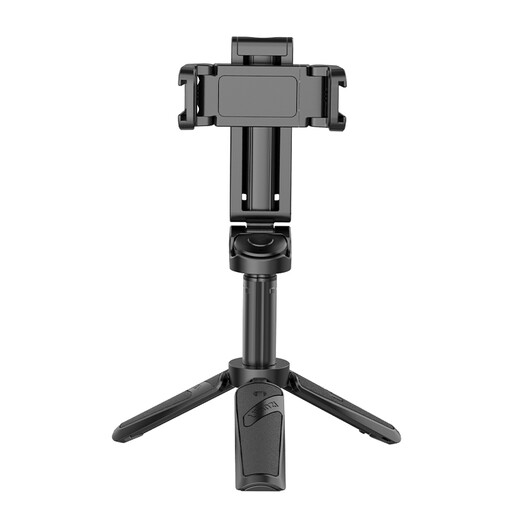
Why this product suits this profile: This 3-in-1 phone holder combines a grip, selfie stick and mini tripod. It is therefore suitable for simple selfies, video calls and stationary smartphone filming without motorised stabilisation.
The product description highlights secure attachment and a stable surface. This makes it clear that it is a holder, not a 3-axis gimbal.
Bluetooth remote control, extendable design and two cold-shoe mounts for compatible accessories.
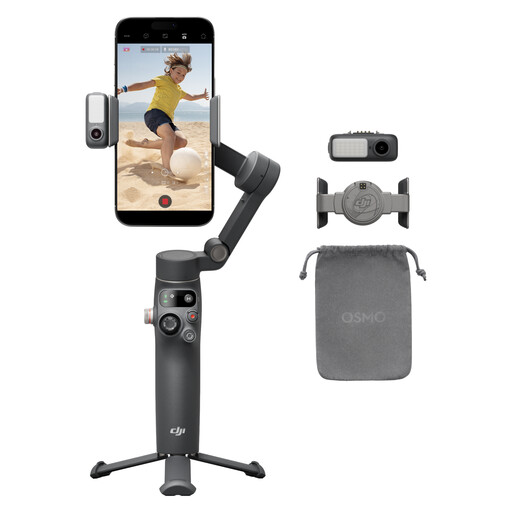
Why this product suits this profile: This gimbal combines 3-axis stabilisation with an integrated extension rod, tripod and multifunctional module. It is well suited to vlogs, travel and planned social media filming.
The product details specify compatibility with iPhone and Android, as well as the required DJI Mimo app. These points should be checked against your own device before buying.
Stated operating time of up to 10 hours, integrated extension rod and tripod, plus intelligent tracking.
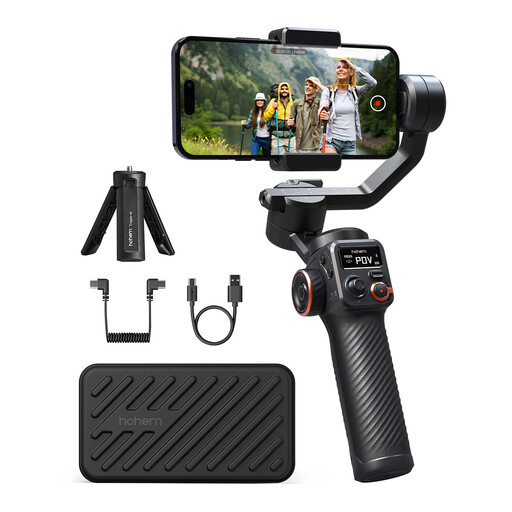
Why this product suits this profile: For longer filming days, livestreams and changing perspectives, this model offers several operating modes, an OLED display and ports for accessories.
The stated payload of up to 400 g makes checking the weight straightforward. The product also specifies an IPX5 protection rating, which does not mean that it can be immersed or used in heavy rain.
Stated battery life of up to 18 hours, OLED display, 335-degree rotation and four 1/4-inch threads for accessories.
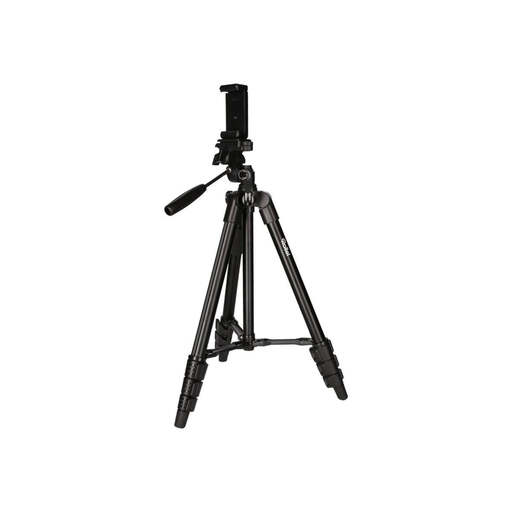
Why this product suits this profile: As a smartphone tripod, this model is suitable for interviews, livestreams, landscape shots and group photos where a stable position is more important than motion compensation.
The product details specify a maximum load of 2 kg and state that the tripod is intended for smartphones. This helps prevent incorrect use with heavy camera equipment.
Height range from 39 to 120 cm, integrated spirit level, Bluetooth shutter release with a range of up to 10 m and a folded length of 39 cm.
We have put together a complete, regularly updated list of products that fully meet these strict selection criteria and the safety regulations applicable in the EU.
A phone gimbal uses motors to stabilise the smartphone while it is moving. A phone tripod keeps the device in one fixed position. A smartphone stabiliser is therefore suitable for walking videos, while a tripod is often the better choice for interviews or livestreams filmed from a fixed position.
Many models are designed for both platforms. However, the exact functionality depends on the smartphone’s size, weight, operating system and app. Before buying, check the compatibility list, payload and required application.
Runtime varies depending on the model and how it is used. The selection includes stated runtimes of up to 10, 11 or 18 hours. Tracking, lighting and charging the smartphone can reduce the actual operating time. For longer filming sessions, a power bank or fully charged spare battery is recommended, provided this is supported by the manufacturer.