
Lieferung heute & morgen

Qualitätsgarantie

Willkommens-Angebote freischalten: KOSTENLOSE Lieferung | Bis zu 80 % RABATT | Kostenlose 30-Tage-JoyPlus-Testphase
App herunterladen
Shaky and blurry smartphone videos can significantly degrade the quality of your footage, whether it's for a professional vlog, travel memories, or family events. A smartphone gimbal is a tool designed to solve this exact problem by mechanically compensating for movement and ensuring smooth, stable shots.
However, choosing the right model can be a challenge given the vast array of features and technical specs. This guide presents a selection of different models and explains the key criteria to help you decide on the perfect smartphone stabilizer for your needs.
Before you decide on a model, you should consider a few fundamental features that determine performance and user experience.
A gimbal's core function is stabilization. Most models on the market are designed as 3-axis gimbals. This means they compensate for movement on three axes: tilt, pan, and roll. This allows for exceptionally smooth footage, even during fast movements or while walking. For more static shots, or if budget is a key consideration, a selfie stick with a tripod and basic stabilization features can also be a practical phone mount for videos.
For travelers and content creators on the go, portability is a crucial factor. A foldable gimbal can be collapsed into a compact form, fitting easily into a bag or backpack. Pay attention to the device's weight and dimensions. Lighter models are more comfortable during longer shoots, while more robust constructions often offer a higher payload capacity for larger smartphones or additional accessories like microphones.
Modern gimbals offer more than just stabilization. Features like a gimbal with AI tracking allow the camera to automatically follow a person or object. Gesture control, integrated apps with editing templates, and the ability to quickly switch between portrait and landscape modes are especially useful for creating content for social media. Also, check the battery life and whether the device can be used as a power bank to charge your smartphone during operation.
Here you'll find a curated selection of products that cover different needs and use cases.
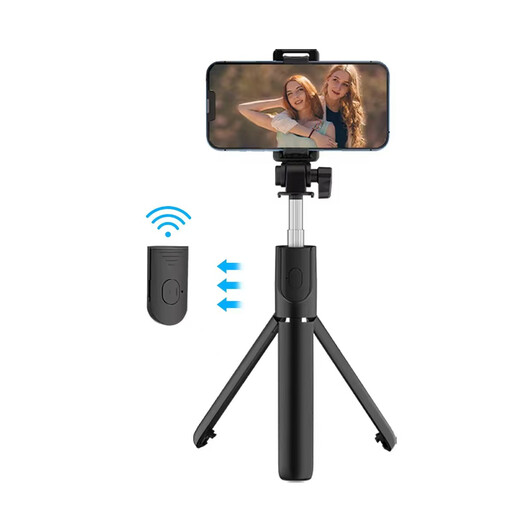
View Product: Verbex New K50 Black Dual-Light Remote Control Selfie Stick
Why It Stands Out: The Verbex K50 is a multi-functional solution that combines an extendable selfie stick, a sturdy phone tripod, and a Bluetooth remote. With an impressive maximum length of approx. 193 cm and integrated fill lights, it is excellently suited for group photos, live streaming, or shots from elevated perspectives.
Pros:
Who Is It For? This model is ideal for users looking for a flexible and straightforward all-in-one solution for static shots, group photos, and simple video recordings. It is less of a gimbal for motion stabilization and more of an extremely versatile selfie stick with a tripod.
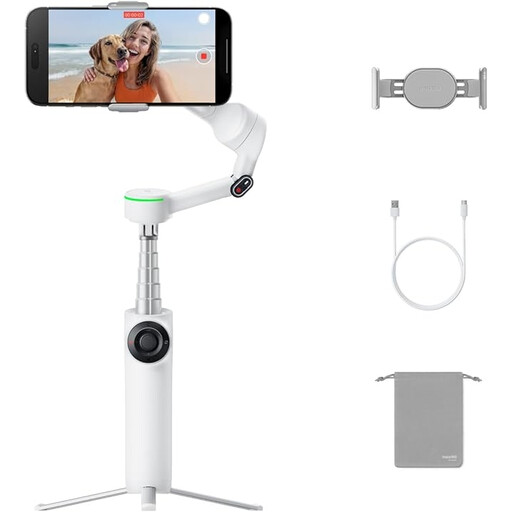
View Product: Insta360 Flow 2 Pro Bundle Ice White - Foldable AI Phone Gimbal
Why It Stands Out: The Insta360 Flow 2 is a highly advanced foldable gimbal designed specifically for content creators. It combines precise 3-axis stabilization with an advanced gimbal with AI tracking. According to the manufacturer, the system can track people, animals, and even objects at up to 15x zoom.
Pros:
Who Is It For? The Insta360 Flow 2 is aimed at ambitious vloggers, YouTubers, and TikTokers who need professional stabilization and intelligent tracking features to create high-quality video content.
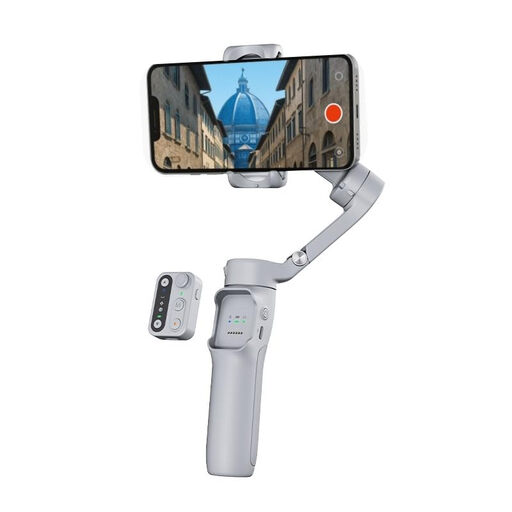
View Product: hohem Smartphone Gimbal Stabilizer – 3-Axis Anti-Shake
Why It Stands Out: This model from hohem offers reliable 3-axis stabilization with the iSteady 8.0 system, which ensures the motors don't appear in the frame, even during wide-angle shots. A special feature is the detachable remote control, which allows for shooting from up to 10 meters away.
Pros:
Who Is It For? The hohem gimbal is an excellent choice for hobbyist videographers and travelers seeking a balanced combination of strong stabilization performance, long battery life, and portability at an attractive price point.
If the models presented here don't quite meet your expectations or if you're looking for specific accessories, you might find the right product in our broader selection.
? Discover more models and accessories in the Photo Remote & Stabilizers category here
1. What is the difference between a gimbal and a selfie stick with a tripod? A 3-axis gimbal uses motors to actively compensate for movement in real time, resulting in extremely smooth video footage. A selfie stick with a tripod primarily serves to position the smartphone—either in your hand or on a fixed surface. It offers no active motion stabilization but is often lighter and more versatile for static photos and videos.
2. Do I absolutely need a 3-axis gimbal? For dynamic shots like walking, running, or filming sports, a 3-axis gimbal is highly recommended to achieve professional-looking, shake-free results. If you mainly film from a fixed position, record vlogs at a desk, or take group photos, a high-quality phone tripod with a remote control may be sufficient.