
Lieferung heute & morgen

Qualitätsgarantie

Willkommens-Angebote freischalten: KOSTENLOSE Lieferung | Bis zu 80 % RABATT | Kostenlose 30-Tage-JoyPlus-Testphase
App herunterladen
Shaky videos can ruin even the most beautiful moments. Whether you're vlogging, traveling, or creating content for social media, steady camerawork is crucial for a professional result. While modern smartphones have built-in image stabilizers, a smartphone gimbal is often the better solution for truly smooth and dynamic shots.
A smartphone stabilizer mechanically compensates for movement, enabling cinematic pans, tilts, and tracking shots. However, the market offers a wide variety of models with different features. This guide will help you understand the technical specifications and make an informed decision that suits your needs.
Choosing the right gimbal depends on your individual needs. Here are three key criteria to consider in your decision.
A gimbal's core function is stabilization. Most models on the market are designed as 3-axis gimbals. This means they compensate for movement on three planes:
A 3-axis system ensures comprehensively stabilized footage, even during fast movements or while walking. For content creators and anyone who values high video quality, this is the recommended standard.
For vloggers and travelers, size and weight are critical factors. A foldable gimbal can be collapsed into a compact form, fitting easily into a backpack or even a jacket pocket. Pay attention to the weight of the gimbal itself, as well as its maximum payload, to ensure it is compatible with your smartphone (and any potential accessories like external microphones or lenses). Models with a built-in gimbal with a tripod offer additional flexibility for stationary shots or time-lapses.
Modern gimbals are more than just stabilizers. Many offer intelligent features that significantly simplify the recording process. An AI tracking gimbal, for example, can automatically keep a person or object in focus, which is especially useful for solo creators. Other practical features include gesture control to start recording, automatic rotations for panoramic shots (SpinShot), or integrated templates in the companion app that help create engaging video clips.
Based on the criteria above, we have compiled a selection of models that cover different use cases.
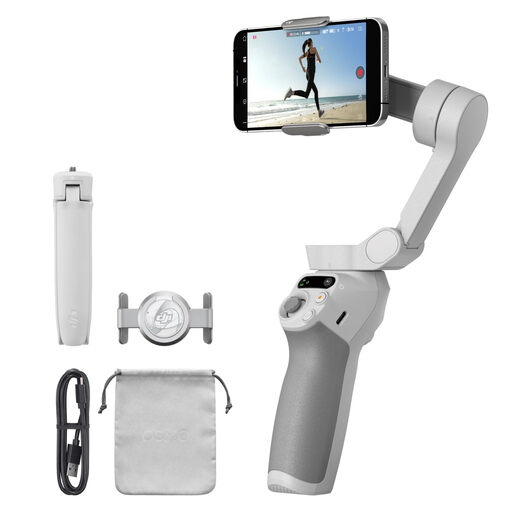
Why it stands out: The DJI Osmo Mobile SE is distinguished by its compact, foldable design and DJI's proven stabilization technology. According to the manufacturer, the ActiveTrack 6.0 feature enables reliable subject tracking even from a greater distance and during fast movements.
Pros:
Who is it for? This model is an excellent choice for travel enthusiasts and content creators looking for a reliable, portable, and easy-to-use device. The ShotGuides in the DJI Mimo app also offer guidance for beginners.
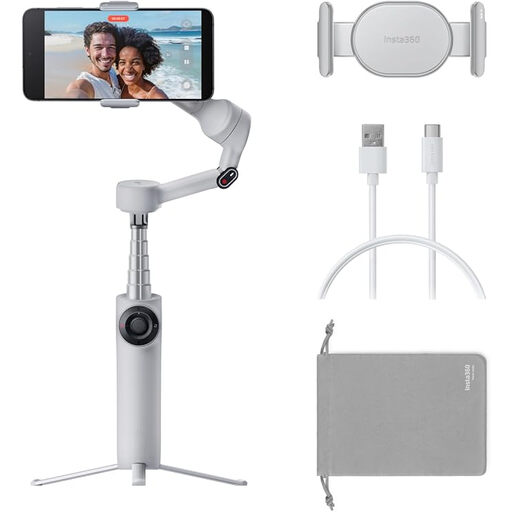
Why it stands out: The Insta360 Flow 2 is an all-in-one device that combines a gimbal, a selfie stick, and a tripod into a single foldable body. Its AI-powered tracking feature is designed to re-acquire subjects even if they are temporarily obscured from view.
Pros:
Who is it for? Ideal for vloggers and travelers seeking a maximally portable and versatile solution. The combination of a gimbal, tripod, and selfie stick makes it a handy companion for spontaneous shots.
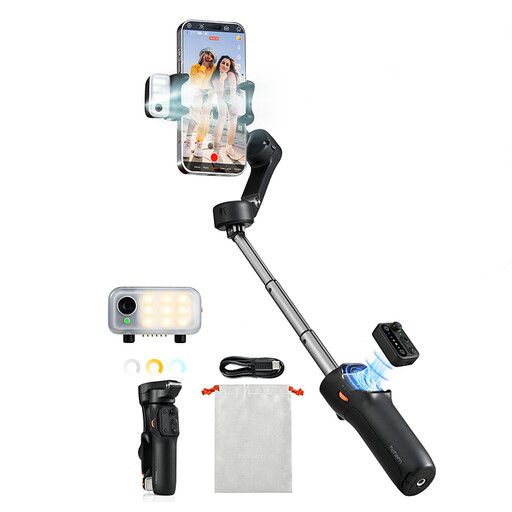
Why it stands out: This model from hohem integrates several useful features into one device, including a magnetic AI tracking module with a fill light. According to the manufacturer, the tracking works without Bluetooth or an app and can be operated via gesture control.
Pros:
Who is it for? This vlogging stabilizer is particularly interesting for content creators who often film alone and can benefit from the gesture control, fill light, and remote control.
The models presented here already cover a broad spectrum of features. However, if you are looking for specific characteristics or other alternatives, there is an even larger selection to discover.
Explore our full range of gimbals
A 3-axis gimbal is a stabilization system that uses motors and sensors to compensate for unwanted movements on three axes (tilt, pan, roll). This results in significantly smoother and more professional-looking video footage compared to handheld shooting or digital stabilization alone.
Most modern smartphone gimbals are designed to be compatible with a wide variety of smartphones, including popular gimbal for iPhone and Android models. However, it is important to check the manufacturer's specifications regarding supported smartphone dimensions (width, thickness) and weight to ensure flawless operation.
While the basic stabilization function often works without an app, the manufacturer's proprietary apps (e.g., DJI Mimo, Insta360 App) unlock the full feature set. This typically includes smart shooting modes, AI tracking, firmware updates, and video editing tools. Some models, like the featured hohem gimbal, offer certain AI functions that the manufacturer claims can be used without an app connection.