
Lieferung heute & morgen

Qualitätsgarantie

Willkommens-Angebote freischalten: KOSTENLOSE Lieferung | Bis zu 80 % RABATT | Kostenlose 30-Tage-JoyPlus-Testphase
App herunterladen
A smartphone screen protector helps protect your display from scratches, fingerprints, dust and minor knocks. In practice, choosing the right one often comes down not to the material, but to model compatibility, the fit or how easy it is to install. Display size, camera area, speaker cut-out and curved edges can all vary, particularly between iPhone and Samsung Galaxy models.
A 9H screen protector label usually refers to the hardness rating of the surface. This is mainly relevant to scratch resistance, but it does not guarantee complete protection against drops or breakage. Even an impact-resistant screen protector can be damaged by a strong impact.
That’s why it’s important to consider the following together:
A full-screen protector with a black border can cover most of the display. But if the glass sits too close to the edges, a snug case may lift it. This can lead to dust getting underneath, the protector peeling away or air bubbles forming.
A case-friendly screen protector is designed to leave a little space around the edge for your case. It may not look as edge-to-edge, but it reduces the risk of the case shifting the screen protector. So check that the product description clearly states whether it’s compatible with cases.
A privacy screen protector limits the viewing angle from the sides. This is useful on the train, in a café or at work, but it can make the display look darker when viewed at an angle. The screen may also seem less bright overall. If you often edit photos or watch videos with other people, consider whether you’d prefer privacy or a more open viewing experience.
Searching for “iPhone screen protector” or “Samsung screen protector” alone isn’t enough. You need to check the exact model, such as iPhone X, iPhone 11 Pro, iPhone 16 Pro Max, iPhone 17, iPhone 17 Air, Samsung Galaxy A55 or Galaxy S23 FE.
Before buying, check:
A screen protector for a phone of a similar size won’t necessarily fit. Even a difference of just a few millimetres can affect touch response or adhesion.
Tempered glass provides a hard surface and is often advertised with a hardness rating of 9H. This is a useful technical specification, but it doesn’t guarantee protection against every kind of damage. Flexible nano or hybrid glass, on the other hand, may fit slightly curved surfaces more closely.
An anti-fingerprint coating, also known as an oleophobic coating, can make the screen easier to clean. Its effectiveness depends on how you use your phone and may wear off over time. Claims such as “scratch-resistant screen protector” should therefore be understood as protection against everyday wear and tear, not as a guarantee that the glass is completely scratch-proof.
Full-surface adhesive spreads contact across the display. This helps the protector adhere evenly and can reduce visible bubbles. Even so, bubble-free installation depends largely on preparing the screen in a dust-free environment, aligning the protector accurately and pressing it down evenly.
Useful features include:
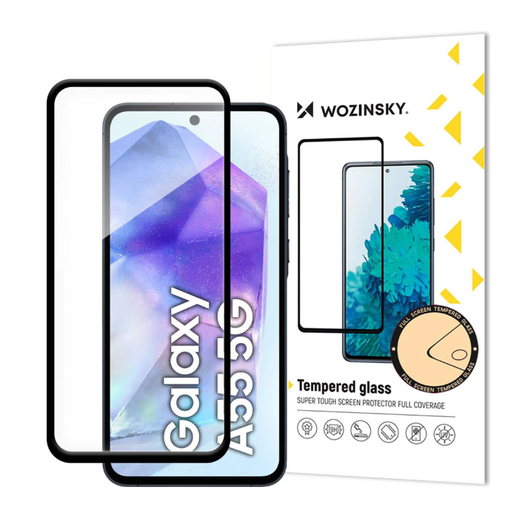
Why this product suits this user: Designed for the Samsung Galaxy A55, this screen protector combines 9H glass with full-surface adhesive. It’s a good choice if you want a precise fit for your model without extra specialist features.
Its specific compatibility with the Galaxy A55 reduces the risk of buying a protector that’s a similar size but doesn’t fit. The full-glue design also helps address potential adhesion issues.
9H hardness, black border, full-surface adhesive and, according to the product details, bubble-resistant installation.
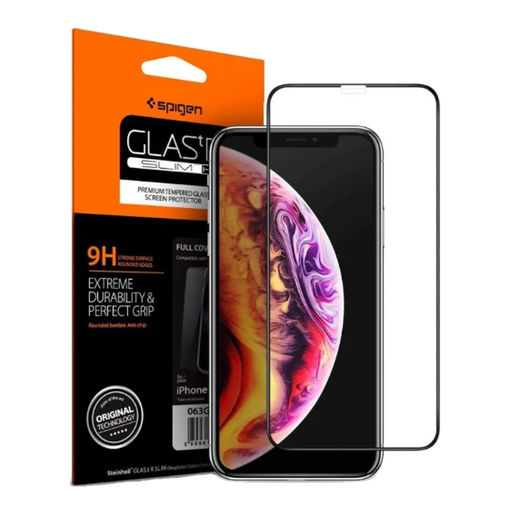
Why this product suits this user: This protector is for owners of the iPhone models listed who value a clear display, rounded edges and a precise cut-out for the speaker and sensors.
Clearly stated compatibility helps you avoid choosing a protector based on screen size alone. The anti-fingerprint surface also helps with visible oil and fingerprint marks.
According to the product details: 9H hardness, clear glass, rounded edges and touchscreen compatibility.
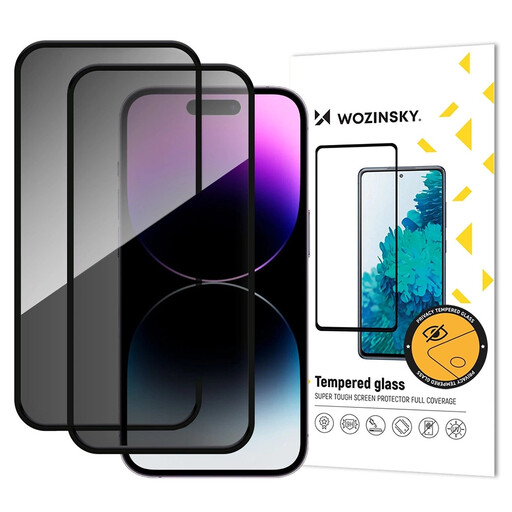
Why this product suits this user: This set is for people who use their phone frequently while out and about and want to limit side views. It also includes a spare screen protector for later replacement.
It’s clearly identified as a privacy glass protector, so you can weigh up the reduced side viewing angle against the possibility of lower screen brightness before you buy.
9H glass, black border, anti-spy filter, touchscreen compatibility and a 2-pack, according to the product description.
We’ve put together a complete, regularly updated list of products that meet these strict selection criteria and fully comply with the safety regulations in force in the EU.
For the cleanest possible, bubble-free installation, follow these steps:
If the glass is damaged, cracked or lifting at the edges, it should be replaced. Removing it may create sharp glass fragments, so take your time and handle it carefully.
There’s no reliable fixed lifespan that applies to every product. It depends on daily wear, rubbing against items in your pockets or bag, knocks and the condition of the coating. Replace the protector if you notice cracks or chips, or if it no longer adheres properly.
No. 9H is a hardness rating, not an indication of model compatibility. A 9H screen protector may still be unsuitable for the wrong iPhone or Samsung Galaxy model. Always check the model name, display shape and case compatibility.
You can fit many screen protectors yourself at no extra cost, particularly if cleaning wipes or an applicator are included. A shop can fit it for you for a fee. A 2-pack also gives you a spare if the first fitting doesn’t go to plan or the glass is damaged later.