
Lieferung heute & morgen

Qualitätsgarantie

Willkommens-Angebote freischalten: KOSTENLOSE Lieferung | Bis zu 80 % RABATT | Kostenlose 30-Tage-JoyPlus-Testphase
App herunterladen
A good smartphone tripod is the foundation for stable videos and sharp photos. However, the market is flooded with models of varying quality. A hasty decision often leads to frustration: your expensive smartphone topples over, the shot is shaky, or the tripod breaks after just a few uses. As your Joybuy Product Recommendation Officer, I'll help you identify the crucial features and steer clear of common purchasing pitfalls.
Many products promise more than they can deliver. Pay close attention to these three weak points to avoid making a bad purchase:
To avoid the problems mentioned above, you should check three technical aspects before buying. These determine the durability, stability, and flexibility of your new tripod.
The material is crucial for stability and weight.
The load capacity indicates how much weight the tripod can safely support. Plan for a buffer: the weight of your smartphone plus its case, and potentially an external microphone or light.
The tripod head connects the tripod to your device and allows you to position it. A standard 1/4-inch thread is the universal connector here, ensuring compatibility with most cameras, smartphone mounts, and accessories like ring lights.
A flexible head is essential for creative shots. A ball head allows for quick, free movement in all directions, while a 3-way pan-and-tilt head offers more precise, separate control of each axis. For a vlogging tripod or a tripod for iPhone, a head that can quickly switch between portrait and landscape orientation is particularly practical.
Consider the primary purposes for which you'll use the tripod.
Based on these objective criteria, we have identified several models that represent a well-thought-out solution for specific user groups.
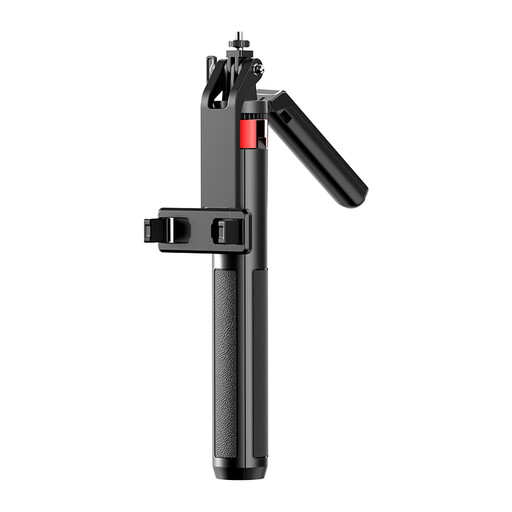
Why This Fits Their Persona: Ideal for vloggers and content creators who need a tall yet portable solution. The four-leg structure provides a wider, more stable base than traditional tripods, which is crucial for outdoor shooting.
The four-leg design directly addresses the problem of instability at maximum height. The solid clamp and rechargeable remote prevent the frustration of dropped phones or fumbling with self-timers.
Reaches a working height of 180 cm. Combines the function of a selfie stick with a full-fledged tripod. Includes a rechargeable remote control.

Why This Fits Their Persona: Perfect for travellers who want maximum flexibility with minimal luggage. The octopus-style bendable legs can be attached to branches, fences, or handlebars, while the magnetic mount allows for lightning-fast setup with MagSafe iPhones.
Instead of relying on wobbly telescopic legs, this flexible tripod provides a secure grip on uneven surfaces. The combination of a strong magnet and a standard 1/4-inch thread makes it both universal and reliable.
Extremely compact and lightweight. Bendable legs for creative mounting options. Compatible with MagSafe and other devices via the 1/4-inch thread.
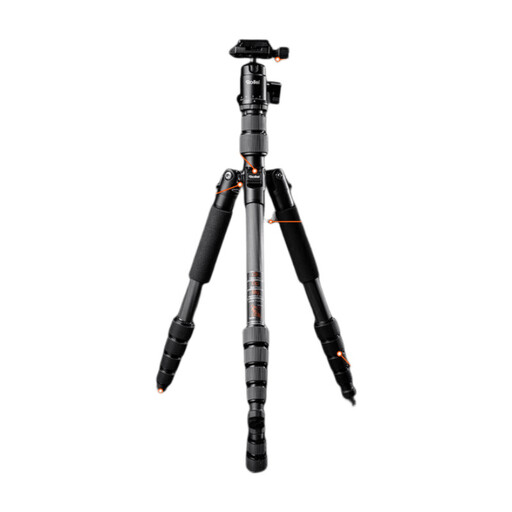
Why This Fits Their Persona: Designed for photographers who use a mirrorless or DSLR camera in addition to their smartphone. The carbon fibre material ensures low weight with high rigidity and vibration damping, which is essential for long exposures or heavy lenses.
With a load capacity of 8 kg, it avoids the trap of underpowered tripods. The carbon construction and solid twist-locks provide the necessary stability that cheaper models lack, even at full extension.
Very high load capacity of 8 kg at a weight of only 961 g. Can be converted into a monopod. Arca-Swiss compatible 360° ball head for professional demands.
We've compiled a complete, up-to-date list of products that fully meet these strict selection criteria and adhere to rigorous safety standards.
You should never max out the stated load capacity. A good rule of thumb is that the weight of your equipment (smartphone, case, microphone, etc.) should not exceed 50-70% of the tripod's maximum load capacity. This ensures a stable footing and protects against unexpected tipping, especially outdoors.
A ball head has a single knob to loosen the ball and move the camera freely in any direction. This is fast and flexible, but less precise. A 3-way pan-and-tilt head has a separate handle for each axis of movement (horizontal, vertical, and side tilt). This allows for slower but more exact adjustments, which is particularly beneficial for architectural or product photography.
A tripod with a remote control is extremely practical. It allows you to trigger photos or videos without touching your smartphone, which prevents camera shake at the start of the recording. Furthermore, for group photos or self-portraits, you are no longer dependent on the timer and can capture the perfect moment. Most remotes connect easily to your smartphone via Bluetooth.