
Lieferung heute & morgen

Qualitätsgarantie

Willkommens-Angebote freischalten: KOSTENLOSE Lieferung | Bis zu 80 % RABATT | Kostenlose 30-Tage-JoyPlus-Testphase
App herunterladen
By Joybuy Product Recommendation Officer, August 29, 2026
A good smartphone tripod can be the difference between a shaky snapshot and a professional-looking shot. But the market is flooded with products whose marketing promises often oversell their technical capabilities. Before you invest, it's crucial to understand the common pitfalls that lead to frustration and buyer's remorse.
Many buyers get frustrated with tripods that become unusable after a short time. Here are the most common problems to watch out for:
To make an informed decision, you should focus on a few crucial technical specs. These determine the durability and practical utility of your tripod.
The material is the foundation for shake-free shots. Basic models are often made of plastic, while higher-quality versions are crafted from aluminium or even carbon fibre. Aluminium offers a great sweet spot between stability and weight. Always pay attention to the specified maximum payload capacity. This should not only cover the weight of your smartphone but also account for potential accessories like an external microphone or a video light. A tripod operated at its load limit is prone to instability.
The tripod head determines how flexibly you can adjust your shooting angles. A ball head allows for quick and free positioning in almost any direction, while a 3-way pan-and-tilt head permits more precise, separate control over horizontal and vertical movement.
The mounting system is just as important:
Size requirements vary depending on the application. For a vlogging tripod, which is often used while standing, a sufficient maximum height is important. A smartphone travel tripod, on the other hand, should have the smallest possible packed size and weight so it doesn't become a burden in your luggage. This is often a trade-off: very tall tripods are rarely ultra-compact. Consider which feature is your priority. A good mini smartphone tripod may be perfectly adequate for tabletop shots or low-angle perspectives.
Instead of presenting an overwhelming list, we have matched a few models to typical use cases.
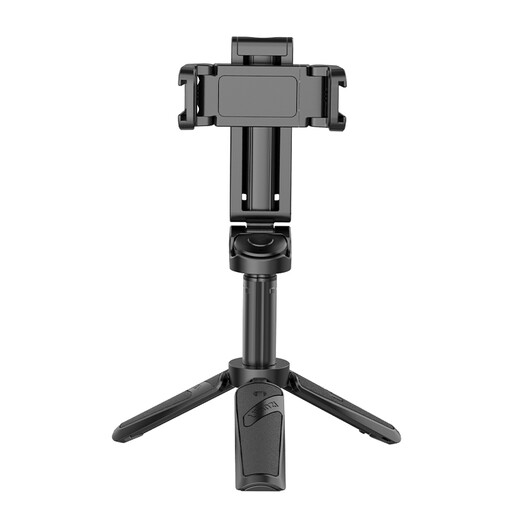
Why This Fits Their Persona: This model is ideal for users who want a straightforward and versatile solution for everyday situations—from group photos with friends to spontaneous video recordings. It combines a handgrip, a selfie stick with tripod, and a smartphone tripod with remote into one compact device.
It avoids the pitfall of superfluous features by focusing on three core applications and executing them reliably. The design is optimised for portability and quick deployment, not maximum height, which ensures stability within its intended scope.
The 3-in-1 design eliminates the need for separate devices. The integrated Bluetooth remote allows for shots from a distance without having to rely on a self-timer.
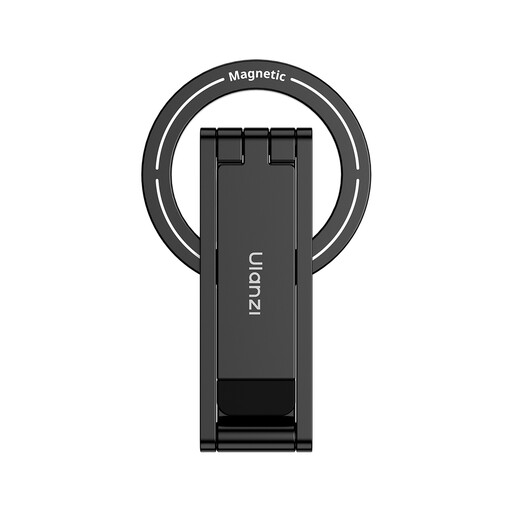
Why This Fits Their Persona: Perfect for travellers and users who value minimal gear and quick setup. As a MagSafe tripod, it attaches to compatible iPhones in seconds. The foldable aluminium design makes it an extremely compact and lightweight mini smartphone tripod.
This tripod sidesteps the instability trap by not trying to achieve a great height. Its focus is on providing a solid, low-to-the-ground base. The aluminium construction, instead of cheap plastic, ensures the necessary durability at a low weight.
The dual-sided magnetic mount and extremely compact, foldable design are its main advantages. It fits in any pocket and is ready to go in an instant, making it an ideal smartphone travel tripod.
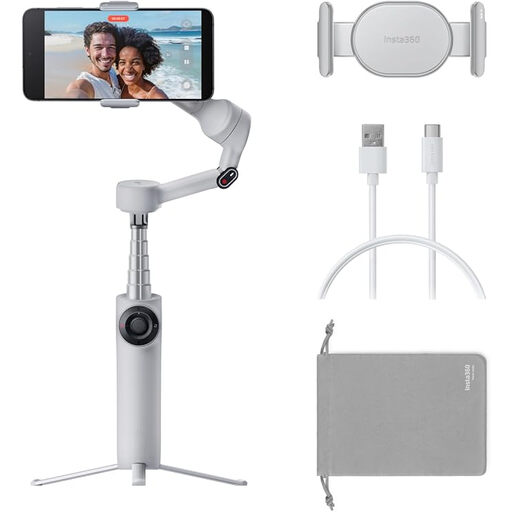
Why This Fits Their Persona: For content creators who want to shoot smooth, dynamic videos, a smartphone gimbal is the right choice. This model stabilises movement on three axes and offers AI-powered tracking to automatically keep subjects in focus. It's a specialised tool for a professional result.
While many budget products advertise unreliable tracking, this device comes from an established manufacturer in the 360-degree and action camera space. The AI features here are mature and field-tested. It's not an all-purpose tripod but a specialised device that excels at its core task: stabilisation.
The 3-axis stabilisation delivers cinematic, fluid motion. The built-in tripod and selfie stick extend its versatility, creating a complete vlogging tripod setup.
We've compiled a complete, up-to-date list of products that fully meet these strict selection criteria.
That depends on the use case. A regular tripod provides a stable, stationary base and is ideal for static shots like time-lapses, long exposures, or interviews. A smartphone gimbal, on the other hand, actively stabilises the user's movements and is therefore the right choice for capturing smooth video while walking or panning.
Check the connection type (usually Bluetooth) and its range. The remote's battery is also important: is it a replaceable coin-cell battery or a rechargeable one? Also, ensure that the remote is compatible with your smartphone's operating system (iOS/Android).
Prices vary widely depending on the material, size, and feature set. Simple mini tripods or selfie sticks with a tripod function are often available for a low price. Sturdy travel tripods made of aluminium are in the mid-range price bracket. Electronic gimbals with motorised stabilisation represent the upper price tier and are an investment for users with a clear focus on video quality.