
Lieferung heute & morgen

Qualitätsgarantie

Willkommens-Angebote freischalten: KOSTENLOSE Lieferung | Bis zu 80 % RABATT | Kostenlose 30-Tage-JoyPlus-Testphase
App herunterladen
Shaky videos, blurry group photos where someone is always missing, or a smartphone awkwardly propped up by books during video calls—many of us have been there. A smartphone tripod promises an easy solution. However, the market is flooded with products of widely varying quality. Before you make a decision, it's crucial to know the most common pitfalls that can lead to buyer's remorse.
As a Joybuy Product Recommendation Officer, I analyse product data to give you objective and practical advice. This guide will help you separate the wheat from the chaff and find a tripod that reliably serves its purpose.
To avoid a bad purchase, you should focus on verifiable technical specifications rather than marketing promises.
A good travel tripod for your smartphone strikes a balance between portability and stability.
The requirements for a tripod vary depending on its intended use.
Here are some recommendations tailored to specific user profiles and their needs.
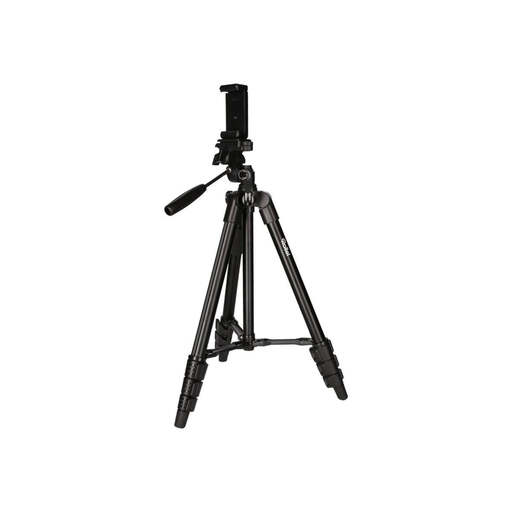
Why It's a Match: This tripod is tailored to the needs of travellers who want a lightweight yet reliable solution. It's ideal for landscape shots, group photos on holiday, or stable videos on city trips.
It bypasses the stability trap with solid aluminium legs and durable twist locks. At 595 g, it's heavy enough for a secure stance, yet still highly portable with a packed size of 39 cm.
An integrated spirit level for precisely aligned shots and an included Bluetooth remote control complete the package.
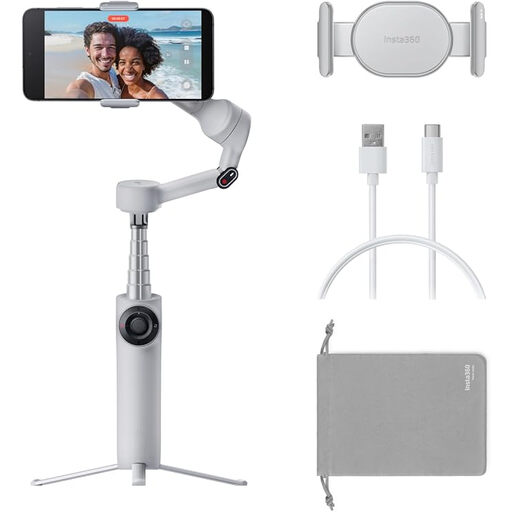
Why It's a Match: For anyone who wants to do more than just static shots. This device is an all-in-one tool for professional-looking, smooth videos, ideal for vlogs, action scenes, or creative social media content.
It's a true smartphone gimbal with 3-axis stabilisation that actively compensates for movement. This avoids the disappointment of products that offer only rudimentary or digital stabilisation.
Smart AI tracking automatically keeps subjects in the frame. Plus, a selfie stick, tripod, and power bank are already integrated, making it a complete on-the-go production tool.
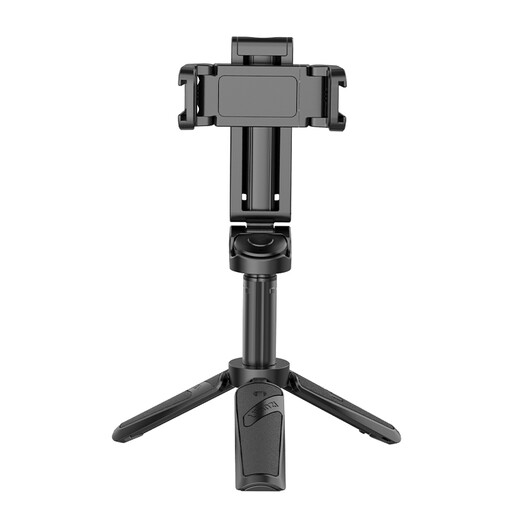
Why It's a Match: This 3-in-1 device is a pragmatic all-rounder. It serves as an ergonomic handgrip, an extendable selfie stick with tripod, and a stable desk stand for video calls or watching media.
It focuses on robust and thoughtful multifunctionality without over-the-top promises. The solid construction and secure clamp mount avoid the typical weak points of cheaper models.
Two integrated cold shoe mounts allow for easy expansion with accessories like an external microphone or a video light, making it highly flexible for content creators.
We have compiled a complete, up-to-date list of products that fully meet these strict selection criteria and UK safety regulations.
A smartphone tripod provides a fixed, stationary base to stabilise the phone. It is ideal for static shots like group photos, time-lapses, or video calls. A smartphone gimbal, on the other hand, is an active stabilisation system. It uses motors and sensors to compensate for the user's movements (e.g., while walking) in real-time, ensuring smooth, professional-looking video footage. Many modern gimbals have an integrated tripod.
Stability depends less on weight alone and more on the construction. Look for legs made of aluminium, a sufficient diameter for the leg segments, and high-quality twist locks. A good smartphone travel tripod should provide a secure footing even in a light breeze, as long as it is not extended to its maximum height. As a rule of thumb: the wider the legs can be spread, the more stable the stand.
Most tripods and phone mounts use a standard 1/4-inch screw thread. This means that mounts and tripods from different manufacturers are generally compatible with each other. However, the crucial factor is the clamping range of the phone mount itself. Check if it is wide enough for your smartphone, especially if you use a large model (e.g., an iPhone Pro Max) or a thick protective case.