
Lieferung heute & morgen

Qualitätsgarantie

Willkommens-Angebote freischalten: KOSTENLOSE Lieferung | Bis zu 80 % RABATT | Kostenlose 30-Tage-JoyPlus-Testphase
App herunterladen
A smartphone tripod can make taking photos, videos, livestreams and group shots much easier. But not every model is right for every use. Some holders are designed only for flat surfaces, while others need a compatible action camera mount. Terms such as ‘magnetic’, ‘360°’ or ‘AI tracking’ don’t, on their own, tell you how practical a product will be in everyday use.
A mini tripod for a smartphone or small action camera isn’t automatically suitable for an interchangeable-lens camera, lens or LED light. The key factors are load capacity, centre of gravity and mounting type. Exceeding the permitted load can cause the tripod to tip over or damage the mount.
If you’re considering a camera tripod with a 1/4-inch thread, check that your equipment is actually designed for this type of mount. Claims such as ‘suitable for cameras’ should always be considered alongside the maximum load capacity.
A flexible tripod can be wrapped around railings, branches or poles. Make sure the legs are firmly secured and support the weight as centrally as possible. Even a flexible model can become unstable on soft, sloping or highly vibrating surfaces.
Wind, the exterior of a vehicle and platforms subject to strong vibrations can all pose problems for lightweight designs. Always check that the device is securely mounted before letting go.
A MagSafe tripod or magnetic mini tripod needs a compatible smartphone, a suitable case or an appropriate magnetic ring. A magnetic connection doesn’t remove the need to check that the device is held securely. The phone may come loose if it’s moving, vibrating or positioned at an angle.
Magnets should also be kept away from medical implants, bank cards and magnetic storage media. Keep small magnets out of children’s reach.
Many smartphones need an adjustable phone clamp. Check the stated width range and whether it can accommodate a case. Depending on the model, action cameras may need special adapters. A GoPro tripod or action camera tripod may therefore need a different mount from a phone tripod.
The widely used 1/4-inch thread works with many cameras, mounts and accessories. However, it doesn’t mean that every camera can be used safely with every tripod. For DJI Osmo Pocket accessories, such as those for the DJI Osmo Pocket 3 or 4, make sure the correct adapter is specifically listed.
A tabletop tripod or mini tripod is compact and well suited to a desk, kitchen or hotel room. A travel tripod offers more working height, but is longer and often heavier when folded. Check:
A lightweight travel tripod is easy to carry, but may tip over more easily in the wind. If you’re using a camera with larger accessories, you’ll need a camera tripod with a suitable load capacity.
A Bluetooth remote control lets you take photos from a distance. Ranges of up to 10 or 30 metres are manufacturer claims and depend on the surroundings, smartphone and connection. You’ll need to pair the remote before use. Keep button-cell batteries out of children’s reach.
A smartphone gimbal uses motorised axes to compensate for movement. It’s a different type of product from a passive tripod. The Insta360 Flow 2, for example, combines a gimbal with a pop-out tripod and selfie stick. For longer shoots, also check battery capacity, charging time and app compatibility.
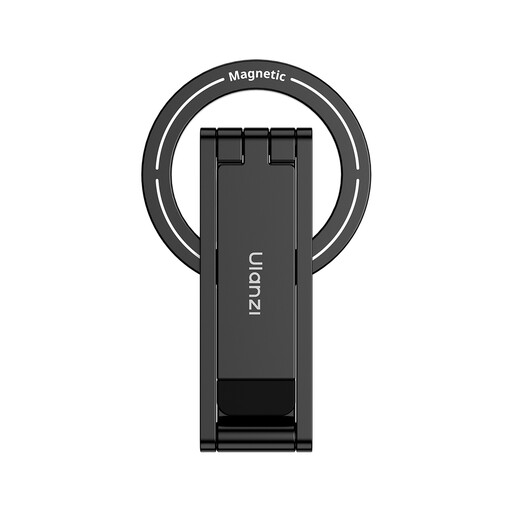
Why it’s a good match: This foldable 3-in-1 model combines a magnetic phone mount, mini selfie stick and tabletop tripod. It’s a good option if you want to carry fewer accessories and mainly use a compatible iPhone or MagSafe device.
Compatibility with MagSafe devices is clearly specified. You should still check that the magnet, case and smartphone work securely together before use.
Foldable design, magnetic attachment and the option to use it as a mini selfie stick.
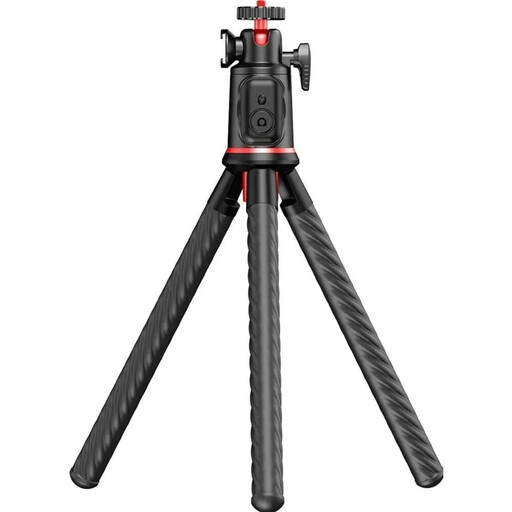
Why it’s a good match: This model combines three flexible legs, a 360° ball head, an extendable selfie stick and a phone holder. A cold shoe mount lets you add a microphone or LED light for vlogs and video shoots.
The specifications state a maximum load of 2 kg and a height range of 25 to 46 cm. This makes it easier to check whether the design suits the way you plan to use it.
Bluetooth 5.4 with a stated range of up to 10 m, a 1/4-inch thread and a detachable phone holder.
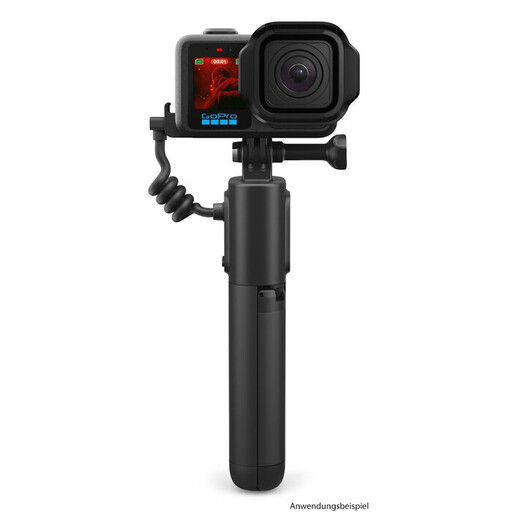
Why it’s a good match: For GoPro users, this accessory combines a battery grip, tripod and wireless remote control. Its stated battery capacity is 5,800 mAh, and compatibility is limited to specific GoPro models.
The list of compatible models makes it easy to check compatibility. The product also clearly distinguishes between weather-resistant and waterproof.
Built-in controls, LED display, USB-C charging and wireless control with a stated range of up to 30 m.
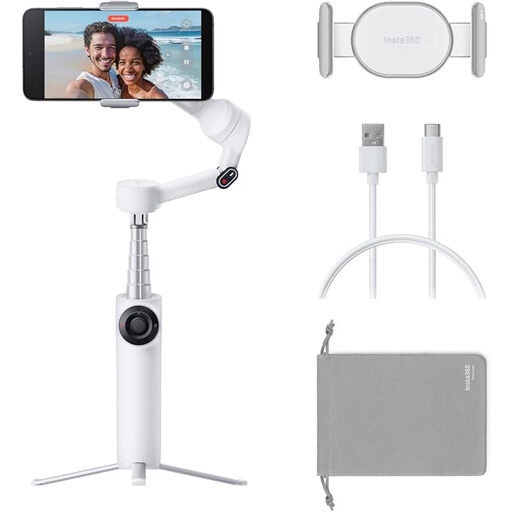
Why it’s a good match: This foldable gimbal is designed for anyone who wants to combine on-the-go smartphone filming with built-in stabilisation, a selfie stick and a tripod. You’ll need a compatible iPhone or Android device and the required app.
The product information sets out the app, device and usage requirements. You can check before buying whether your smartphone is supported.
3-axis stabilisation, an integrated tripod and a stated battery life of up to 10 hours.
We’ve put together a complete, regularly updated list of products that meet these strict selection criteria and fully comply with the safety regulations in force in the EU.
Before each shoot, check the leg locks, screw connection and centre of gravity. For electronic models such as gimbals or motorised quadpods, you’ll also need to check the charge level, firmware and app compatibility.
A compact travel tripod, foldable mini tripod or selfie stick with a tripod function is a good choice for travelling. Size when packed and weight are key. If you also want to take photos from further away, look for a compatible Bluetooth remote control.
Its lifespan depends on the materials, joints, load and how it’s used. Aluminium designs with properly locked legs can be suitable for regular use. Avoid keeping flexible legs overstretched. Electronic models also have a battery, so battery life and charging performance affect how long they can be used in practice.
Only if the thread, load capacity and centre of gravity are suitable for the camera. A lightweight phone tripod isn’t automatically designed for a DSLR or a heavy lens. Action cameras, DJI Osmo Pocket devices and small compact cameras often need a suitable adapter.