
Lieferung heute & morgen

Qualitätsgarantie

Willkommens-Angebote freischalten: KOSTENLOSE Lieferung | Bis zu 80 % RABATT | Kostenlose 30-Tage-JoyPlus-Testphase
App herunterladen
A smartphone tripod can make photos, videos, livestreams and video calls significantly easier. However, phone tripods, smartphone tripods and vlogging tripods differ considerably in stability, height, mounting options and handling. Anyone who focuses solely on maximum reach or an especially extensive feature set may end up buying a model that wobbles in everyday use, is too heavy for travel or does not securely fit their smartphone.
An extendable selfie stick with tripod can reach an impressive height. However, the farther the telescopic pole is extended, the more strongly wind, movement and a heavy smartphone can affect stability. A compact model is often sufficient for indoor use. For full-body shots outdoors, a stable base, secure locking mechanisms and an appropriate load limit are crucial.
A phone tripod with Bluetooth remote enables you to take photos and videos from a distance. Before buying, however, you should establish which battery it uses, what range the product specifications claim and whether the remote is compatible with your smartphone. A remote cannot replace a stable setup. Before every recording, check the mount, joints and feet.
A magnetic phone tripod is particularly suitable for smartphones and cases with MagSafe-compatible mounting. Other devices may require a compatible magnetic case or magnetic ring. The magnetic connection should be tested before letting go of the smartphone. Products containing small magnets should also be kept out of children’s reach and away from pacemakers, credit cards and magnetic storage media where specified in the safety instructions.
Three dimensions are especially relevant for everyday use:
A travel tripod should not merely fold down to a compact size. Also check whether the extended legs lock securely and whether the centre of gravity remains stable with the smartphone mounted.
The stated maximum load capacity must not be exceeded. With a dedicated smartphone tripod, the load limit should not be confused with suitability for heavy cameras. Aluminium constructions are often lightweight. However, lighter models can tip more easily in windy conditions. Non-slip feet and a durable tilt head are therefore practical features.
According to the product specifications, the Rollei Smartphone Traveler Tripod supports up to 2 kg of load; at the same time, it is explicitly intended for smartphones rather than heavy cameras. Its four-section aluminium legs extend via twist locks. Before attaching your device, make sure all locks are fully tightened.
A phone holder for video recording should grip the smartphone securely without obstructing controls or camera lenses. Also check:
A smartphone gimbal serves a different purpose from a conventional tripod. Its motorised three-axis stabilisation is designed for filming while moving. A gimbal, however, requires a battery, potentially an app and the smartphone must be balanced correctly.
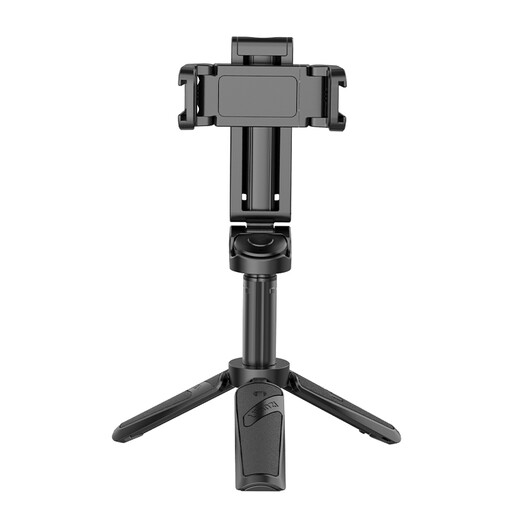
Why This Fits Their Persona: This 3-in-1 model combines a grip, selfie stick and mini tripod, making it suitable for first selfies, short videos and mobile tabletop recordings.
The design is built for compact applications rather than promising a height that could become unstable on a small base.
Bluetooth remote, extendable design and two cold shoe mounts according to the product description.
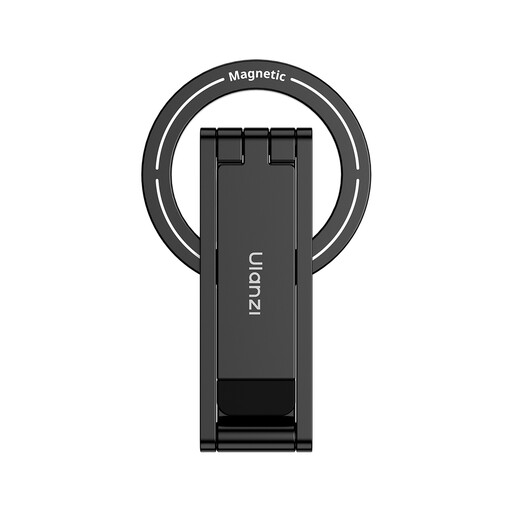
Why This Fits Their Persona: For users with a compatible iPhone or MagSafe accessories, this foldable mini tripod provides quick mounting on a desk, in the kitchen or in travel luggage.
This recommendation assumes verified compatibility: without a MagSafe connection or suitable case, the magnet should not be treated as a universal solution.
3-in-1 design, foldable aluminium housing and, according to the product name, dual-sided magnetic mounting with 14 N of force.
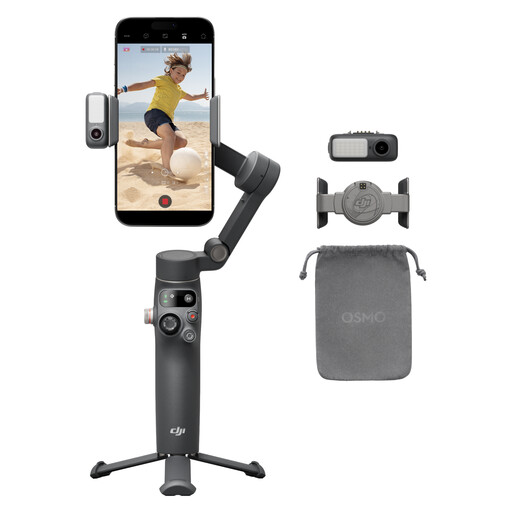
Why This Fits Their Persona: A smartphone gimbal is aimed at users who move while recording and want features such as tracking, an extension pole or an integrated tripod.
Three-axis stabilisation is designed for moving shots and therefore serves a different purpose from a stationary mini tripod. Check app availability before use.
Three-axis gimbal, integrated extension pole, tripod and up to 10 hours of operating time according to the product specifications.
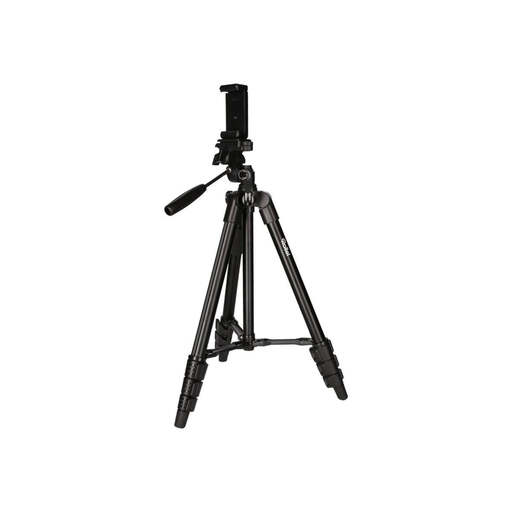
Why This Fits Their Persona: Weighing 595 g, with a folded length of 39 cm and a maximum height of 120 cm, it is designed for travel, landscape photography and vlogging from a fixed position.
The product data clearly states the weight, folded size, load capacity and leg extensions. This makes it easier to assess whether its portability and stability suit the intended location.
Bluetooth shutter release with a range of up to 10 m, integrated spirit level and 75% recycled components according to the manufacturer.
We have put together a current selection of products that can be compared by design, mounting method, height adjustment and intended use.
For static shots, a conventional phone tripod or travel tripod with an adjustable holder is usually sufficient. If you move while filming, a smartphone gimbal may be more suitable, as it is designed for motorised stabilisation. The choice therefore depends more on the type of movement involved than on the product label.
A mini tripod should be fully opened on a level, solid surface. Look for non-slip feet, a secure smartphone clamp and a centre of gravity that does not sit significantly outside the base. For windy conditions, uneven ground or elevated positions, a larger model with a wider base is generally the better choice.
A mechanical tripod normally involves no ongoing costs. Models with Bluetooth remotes may occasionally require a battery replacement. A gimbal needs to be recharged regularly; depending on the app, downloading it, creating an account or device compatibility may also be relevant. Check these points in the respective product information before buying.