
Lieferung heute & morgen

Qualitätsgarantie

Willkommens-Angebote freischalten: KOSTENLOSE Lieferung | Bis zu 80 % RABATT | Kostenlose 30-Tage-JoyPlus-Testphase
App herunterladen
The video quality of modern smartphones is impressive, but the audio quality from their internal microphones often can't keep up. Background noise, wind, or too much distance from the sound source can render an otherwise great recording unusable. For content creators, vloggers, and journalists, however, a clear audio track is essential. An external wireless microphone for your smartphone is an effective solution.
This article serves as a guide. It explains the most important criteria to consider when choosing a wireless microphone and presents a selection of models with different features to help you make an informed purchasing decision.
Choosing the right microphone depends on your specific needs. The following three points will help you evaluate the relevant features.
The most important requirement is that the microphone is compatible with your recording device.
A wireless microphone kit typically consists of one or more transmitters (the microphones) and a receiver that connects to the recording device.
Modern wireless microphones offer more than just basic audio transmission.
Based on the criteria above, we have compiled a selection of wireless microphones suitable for various use cases.
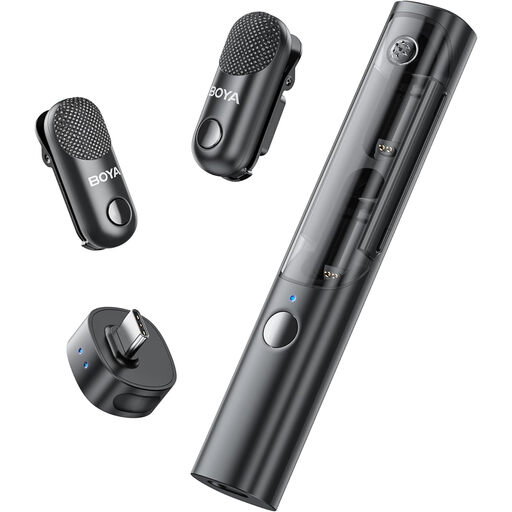
What Makes This Model Stand Out The BOYA Magic-05 stands out with its versatile design. The receiver can be plugged directly into a smartphone as a USB-C microphone or attached to a camera with an adapter. The kit includes two transmitters, making it flexible for interviews.
Pros
Who is it for? This kit is a great choice for content creators who film with both a smartphone and a camera and need a flexible solution for solo recordings and interviews.
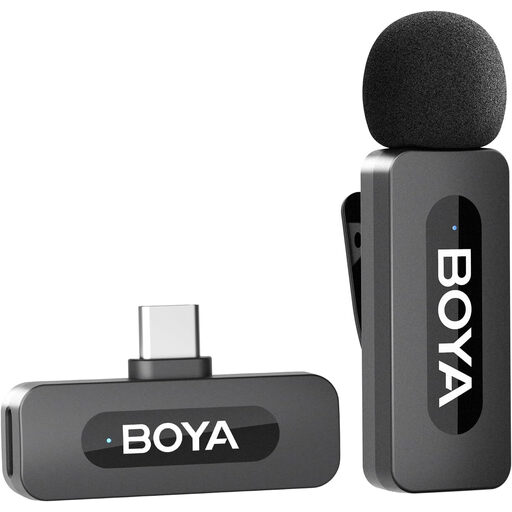
What Makes This Model Stand Out The BOYA microphone BY-V10 is designed for maximum simplicity and portability. With just one transmitter and an ultra-compact USB-C receiver, it's a straightforward plug-and-play solution. The noise cancellation can be activated with a single click.
Pros
Who is it for? Ideal for vloggers, journalists, and social media creators looking for an extremely compact, lightweight, and ready-to-use audio solution for their Android microphone or a newer iPhone microphone.
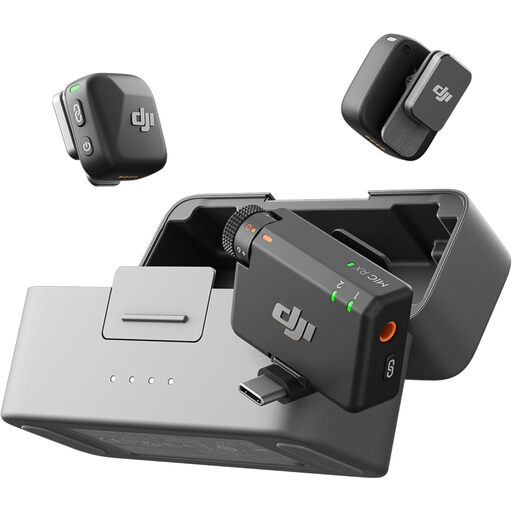
What Makes This Model Stand Out The DJI Mic Mini is known for its compact design and high audio quality. Weighing only 10g (according to the manufacturer), the transmitters are extremely lightweight and discreet to wear. The system delivers robust performance even in demanding environments.
Pros
Who is it for? This kit is aimed at demanding users and professional creators who value minimal weight, maximum battery life, and reliable audio quality, whether for vlogs, interviews, or live streaming. It is suitable as both a wireless camera microphone and for smartphones.
The selection presented here covers common use cases. However, if you are looking for specific adapters, extensions, or complementary accessories like video cables to complete your setup, you can find more products in our corresponding category.
Discover more accessories in the Video Cables category
1. How do I connect a wireless microphone to my smartphone? Most modern wireless microphones for smartphones use a plug-and-play connection. The receiver is plugged directly into the phone's USB-C or Lightning port. The system usually pairs automatically. For older devices or cameras, the receiver is connected via a 3.5mm jack cable.
2. What is the difference between a lavalier microphone and a clip-on microphone? The terms are often used interchangeably. A wireless lavalier microphone is a type of wireless clip-on microphone. Both refer to a small microphone that is attached to clothing to enable a close and clear voice recording. The models presented here are all clip-on microphones.
3. Does a wireless microphone for smartphones also work with a camera? Many kits, like the BOYA Magic-05 or the DJI Mic Mini, are designed as hybrids. Their receivers have a 3.5mm output that can be connected to the microphone input of most cameras using an appropriate TRS cable. Check the compatibility and contents of the respective model before purchasing.