
Lieferung heute & morgen

Qualitätsgarantie

Willkommens-Angebote freischalten: KOSTENLOSE Lieferung | Bis zu 80 % RABATT | Kostenlose 30-Tage-JoyPlus-Testphase
App herunterladen
A smartphone tripod should hold your phone securely, keep it properly aligned and take up as little space as possible when you are out and about. In practice, however, several common purchasing decisions can lead to disappointment. A small mini tripod for your phone may tip over on uneven ground, a magnet may not hold reliably if compatibility is wrong, and a gimbal requires more maintenance and power than a purely mechanical phone tripod.
This buying guide from the Joybuy Product Recommendation Officer explains the key differences objectively. That makes it easier to decide whether a smartphone tripod, a smartphone gimbal, a MagSafe solution or a car phone holder is right for your needs.
A foldable design is practical for travelling and vlogging. However, what matters is how wide the base is, whether the legs have a firm, non-slip grip and how high the centre of gravity is once your smartphone is mounted. A lightweight travel tripod can tip over more easily in windy conditions or on uneven ground. This is particularly true when the centre column is extended.
A MagSafe holder is primarily designed for compatible iPhone models. With other devices, an additional metal ring is often required. Before buying, you should therefore check the smartphone model, case and magnetic contact surface. A thick or non-magnetic protective case can weaken the connection.
A smartphone gimbal uses motors and an integrated battery. If the permitted total weight of the smartphone and accessories is exceeded, stabilisation may fail or the motors may be placed under greater strain. A gimbal should also not be switched on without a correctly mounted smartphone if the manufacturer warns against doing so.
Look for a specific maximum load capacity and compare it with the weight of your smartphone, including its case, additional lens or microphone. Aluminium is a common material for many tripods and offers relatively low weight. Plastic can be suitable for holders and compact grips, but the connections and joints should be well finished.
With a traditional smartphone tripod, the following points are also important:
For Reels, TikTok videos and livestreams, switching between portrait and landscape orientation is important. A 360-degree rotation usually describes the possible range of movement of a joint or holder, not automatically fully motorised image stabilisation.
A simple phone tripod with a ball head is sufficient for static shots. A selfie stick with tripod combines a handgrip, extension and stand function. A flexible smartphone tripod with bendable legs can be attached to suitable railings or branches, but it needs a secure point of contact and sufficient load capacity.
A mechanical tripod does not require a battery. Bluetooth remote controls, on the other hand, often use a coin cell, while gimbals have an integrated lithium battery. You should therefore check:
With a camera gimbal for iPhone and Android, tracking, time-lapse and special shooting modes may depend on the relevant app. Your smartphone should also be sufficiently charged if you are planning longer livestreams or travel videos.
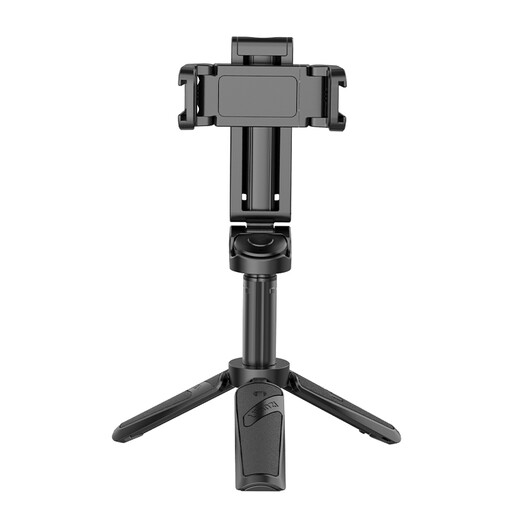
Why this product suits this use case: The 3-in-1 design combines a phone grip, selfie stick and mini tripod. The Bluetooth remote lets you take photos and videos without pressing directly on your smartphone.
The stand function is not limited to a single fixed shooting position. Even so, it should be placed on a stable surface with the smartphone securely attached.
Compact 3-in-1 function, Bluetooth remote control and support for iPhone and Android smartphones.
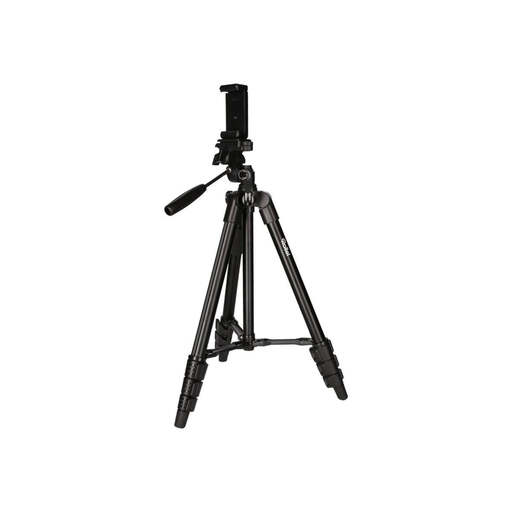
Why this product suits this use case: This aluminium tripod offers an adjustable working height of 39 to 120 cm, a smartphone holder and an integrated spirit level for accurate positioning.
Specific information about packed dimensions, weight and maximum load makes it easier to check suitability before buying. At 595 g, it remains portable, but should be monitored in windy conditions.
Maximum load of 2 kg, four aluminium leg sections, Bluetooth shutter release with a range of up to 10 m and a packed length of 39 cm.
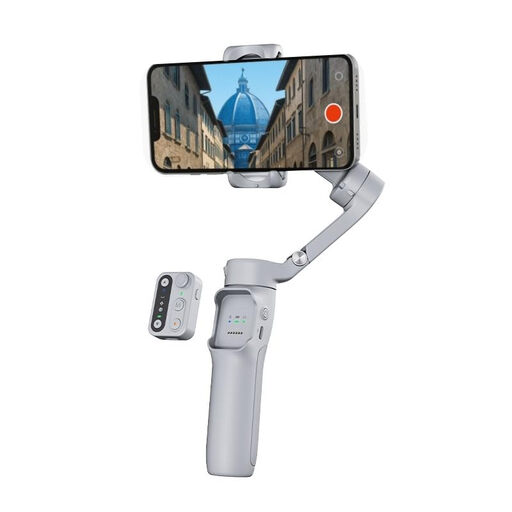
Why this product suits this use case: The motorised 3-axis stabilisation is aimed at vloggers, livestreamers and travellers who want to film while walking or capturing moving subjects.
The product information states a maximum operating time of 11 hours and explicitly highlights load, moisture and charging limits.
3-axis system, detachable remote control, foldable design and support for both portrait and landscape orientation.

Why this product suits this use case: The slim ring can be used as a grip or stand for portrait and landscape orientation. It is ideal for users who do not want to carry a lot of additional accessories.
Compatibility is clearly defined: iPhone 12 and newer with MagSafe; other smartphones require a suitable metal ring, which is not included.
360-degree rotation, 180-degree folding, N52 magnets and use while charging wirelessly, according to the product information.
We have put together a complete, regularly updated list of products that fully meet these strict selection criteria and the safety regulations applicable in the EU.
For travelling, a small packed size, low weight and a secure holder are essential. A foldable mini tripod or a selfie stick with tripod is suitable for short recordings and tabletop situations. For full-body shots, an adjustable travel tripod offers greater flexibility.
Not automatically. Check the stated smartphone width, weight limit and app compatibility. Cases, additional lenses and microphones must be included in the total load. With a motorised gimbal, the smartphone should be inserted and balanced correctly.
Its service life depends on the materials, joints, locks, transport and load. Mechanical models do not have a battery and usually only require regular checks of the screws and locks. With gimbals, the condition of the integrated battery is also important. Storing the tripod in a dry place and following the manufacturer’s instructions can help support its intended lifespan.