
Lieferung heute & morgen

Qualitätsgarantie

Willkommens-Angebote freischalten: KOSTENLOSE Lieferung | Bis zu 80 % RABATT | Kostenlose 30-Tage-JoyPlus-Testphase
App herunterladen
The search for a new smartwatch can quickly become overwhelming. Especially when you want a specific feature like blood oxygen monitoring (SpO2), you're confronted with a flood of models and marketing promises. As your Joybuy Product Recommendation Officer, I'll help you distinguish important features from unimportant ones and avoid the common pitfalls that often lead to a poor purchase decision.
This guide focuses on the objective criteria that define a good smartwatch with blood oxygen monitoring and shows you what to look for before making a purchase.
Before we dive into the recommended features, it's important to understand the typical problems that plague many models on the market.
multifunctional wristwatch if it needs to be charged daily or constantly loses its Bluetooth connection to your smartphone? A stable connection and practical, real-world battery life are crucial, especially when using a smartwatch with calling function or receiving notifications.To avoid the problems mentioned above, you should focus on a few crucial technical features in your selection process.
The heart of any health watch is its sensors. For measuring blood oxygen and heart rate, PPG (Photoplethysmography) sensors are typically used, which measure the reflection of blood at the wrist using light. The quality of these sensors and—even more importantly—the algorithm that processes the raw data determine the reliability of the measurements. This isn't about medical diagnoses, but about identifying personal trends. For example, a good watch with sleep tracking uses this data to analyse sleep stages. Look for models that provide consistent measurements throughout the day and night.
Manufacturer specifications for battery life often refer to an idealized standby mode. What's relevant for you, however, is the runtime during everyday use. This includes continuous heart rate tracking, occasional use of sport modes (e.g., as a running watch with GPS), and syncing notifications. A solid fitness smartwatch should last at least 5 to 7 days on a single charge with mixed usage. Models that need to be plugged in after just one or two days significantly limit their everyday utility.
The smartwatch itself is only half the equation. The companion smartphone app is the control center where all your data comes together. The app must be fully compatible with your operating system (iOS or Android). Key criteria include a clear presentation of health data, intuitive navigation, and, most importantly, no paywalls for basic analysis functions. A good fitness tracker with heart rate monitoring should make all historical data available in the app for free.
Based on the criteria above, we have identified a few models that are well-suited for different user profiles.
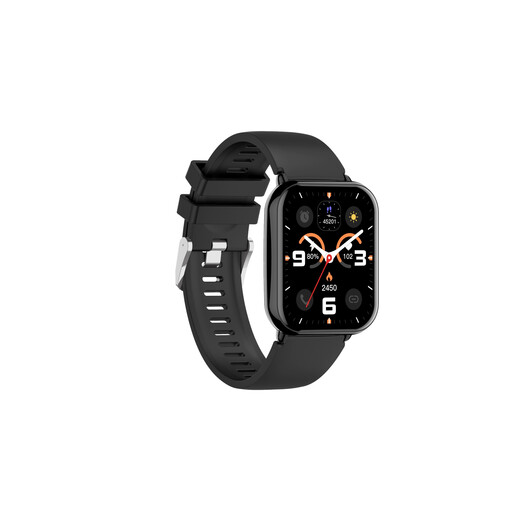
Why it's a match: This model is ideal for users who want a comprehensive feature set for daily life and occasional sports without a large budget. It covers all essential health and connectivity functions.
Offers transparent functionality without hidden subscription costs. The battery life is designed for everyday use, avoiding the frustration of daily charging.
The combination of a Bluetooth calling feature and comprehensive health tracking (SpO2, heart rate, sleep) at an accessible price point.
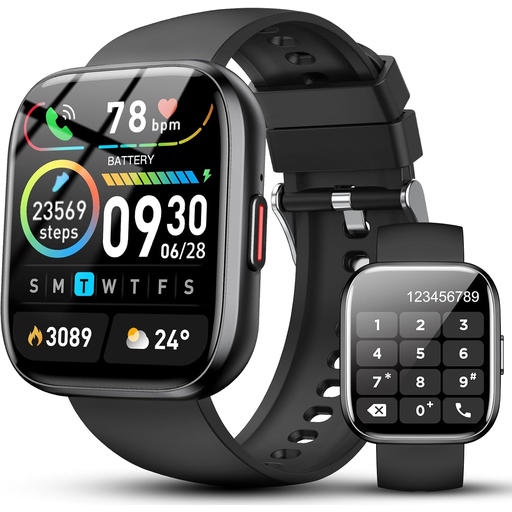
Why it's a match: For anyone who sees their watch as an extension of their smartphone. The focus is on a stable connection for calls and notifications, supplemented by reliable health metrics for a daily overview.
This model avoids the trap of frequent connection drops with stable Bluetooth pairing. The companion app is clearly structured and free of paywalls for core functions.
A reliable notification and calling function that ensures seamless communication in your professional and personal life, without neglecting essential health tracking features.
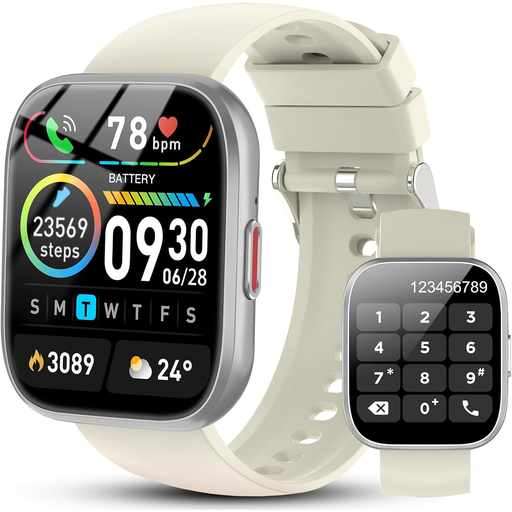
Why it's a match: For users where aesthetics play just as big a role as functionality. This model offers the same solid technical foundation as the black version, but in a design that works as a fashion accessory.
Proves that an accessible price doesn't have to mean compromising on aesthetics. The sensors deliver consistent data for personal trend tracking, thus avoiding the trap of useless measurements.
An elegant design that is equally suitable as a sports watch for both men and women and blends seamlessly into various outfits without compromising on core technical features.
We've compiled a complete, up-to-date list of products that meet these strict selection criteria.
The SpO2 measurement on a smartwatch should be considered a wellness and fitness tool, not a medical diagnostic device. It provides estimates that help you observe personal trends over a longer period. For personal fitness monitoring, the consistency of the measurements is more important than absolute, clinical accuracy. If you have health concerns, you should always consult a doctor.
The models presented here, and most watches in Joybuy's assortment, rely on companion apps whose core functions are free to use. We recommend carefully checking the product description before purchasing to ensure there are no hidden subscription costs for the features that are important to you.
Battery life varies depending on the intensity of use. With average use, including continuous heart rate monitoring and notifications, most solid models last 5 to 10 days. If you frequently use GPS for activities like running or cycling (functioning as a running watch), the battery life will decrease accordingly. For intensive sports use, expect a battery life of 2 to 4 days, which is still a good value compared to many models that require daily charging.