
Lieferung heute & morgen

Qualitätsgarantie

Willkommens-Angebote freischalten: KOSTENLOSE Lieferung | Bis zu 80 % RABATT | Kostenlose 30-Tage-JoyPlus-Testphase
App herunterladen
A smartwatch with calling capabilities promises a new level of freedom—your smartphone stays in your pocket while you take calls directly from your wrist. However, the market is flooded with models whose marketing claims prove problematic upon closer inspection. Before you make a decision, it's crucial to understand the common pitfalls that often lead to disappointment and a sense of buyer's remorse.
Two of the most frequent issues are unrealistic battery life and vaguely worded health features. Manufacturers often advertise standby times of several weeks, while the watch needs charging after just a few days of everyday use. Similarly, features like blood pressure monitoring are promoted, but their readings often serve only as a rough guideline and are not comparable to medical-grade devices.
To make an informed decision, you should focus on the technical specifications that are relevant to your daily use. Instead of being swayed by marketing buzzwords, the following three criteria will help you separate the wheat from the chaff.
Long battery life is a crucial criterion for many users. Don't just look at the manufacturer's stated standby time; pay attention to the battery's capacity, measured in milliampere-hours (mAh), and the specified duration for "typical use."
A smartwatch with a calling feature can be implemented in two ways, and the difference is significant:
Modern smartwatches often double as a fitness watch or heart rate monitor. The quality of the built-in sensors determines the accuracy of the measurements.
Here are some recommendations tailored to different needs and budgets.
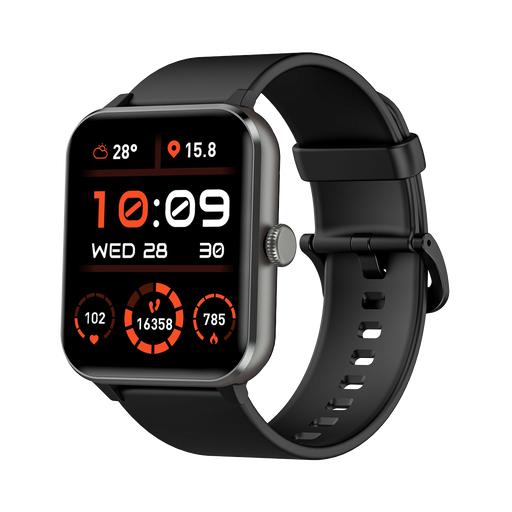
Why This Fits Their Persona: Ideal for users looking for a reliable everyday smartwatch without breaking the bank. It offers core features like Bluetooth calls, notifications, and basic fitness tracking for Android & iOS in a solid package.
The manufacturer provides a realistic usage time of 5–7 days instead of just advertising the 25-day standby time. The features are clearly focused on Bluetooth calls and standard health monitoring, without making exaggerated claims.
Large 1.85-inch display for excellent readability. Comprehensive compatibility with Android and iOS. Over 100 sport modes cover a wide range of activities.
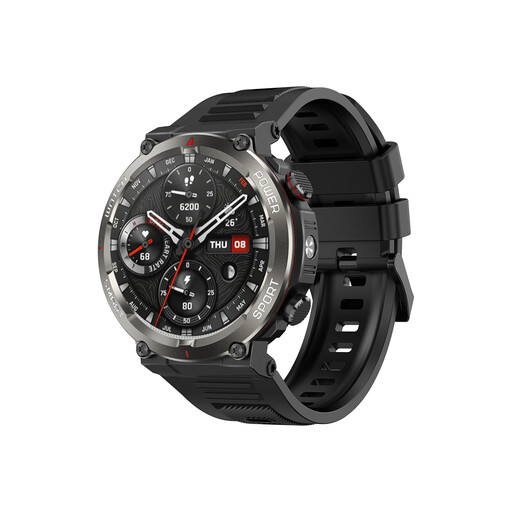
Why This Fits Their Persona: For anyone who wants a rugged sports watch for men or women and doesn't want to constantly worry about charging. Perfect for long hikes, travel, or intensive training weeks where long battery life is the top priority.
This model bypasses the battery life pitfall with an exceptionally large 960 mAh battery. The claim of up to 30 days of normal use is plausible due to the high capacity and clearly sets it apart from models that only advertise standby times.
Extremely long battery life. Rugged design with a built-in compass and flashlight. IP68 certification for a waterproof smartwatch suitable for everyday use.
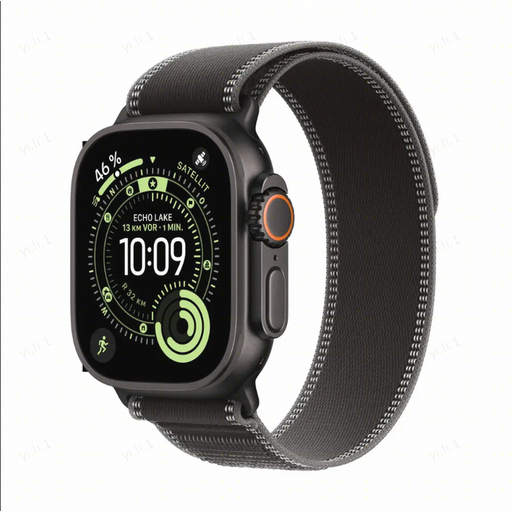
Why This Fits Their Persona: For users seeking uncompromising performance and independence from their smartphone. With integrated cellular, precision dual-frequency GPS, and premium materials, it's a tool for sports, adventure, and a connected lifestyle.
This model offers true, standalone calling via eSIM, thus bypassing the limitations of Bluetooth-only calls. The health features, such as high blood pressure notifications, are clearly accompanied by disclaimers that define their scope and avoid making false promises.
Independent cellular connectivity. Robust titanium case and sapphire crystal display. Precision dual-frequency GPS for exact tracking.
We have compiled a complete, up-to-date list of products that fully meet these strict selection criteria.
The blood pressure monitoring function on most commercially available smartwatches is based on photoplethysmography (PPG) sensors, which use light to detect changes in blood volume under the skin. From this, blood pressure is estimated. This method is not comparable to the accuracy of a medical-grade measurement with an upper-arm cuff. The values serve as a general guideline for wellness purposes but should not be used for self-diagnosis or to manage medical treatment.
Most smartwatches are designed to be compatible with both Android and iOS smartphones. Basic functions like displaying notifications, syncing fitness data, and handling Bluetooth calls generally work on both platforms. However, certain advanced features, such as replying to messages with predefined texts or integration with specific operating system apps, may work better or exclusively on one platform. Therefore, always check the manufacturer's specifications for compatibility with your specific smartphone version before purchasing.
The IP (Ingress Protection) rating classifies a device's enclosure against the intrusion of foreign objects (first digit) and water (second digit). IP68 means: