
Lieferung heute & morgen

Qualitätsgarantie

Willkommens-Angebote freischalten: KOSTENLOSE Lieferung | Bis zu 80 % RABATT | Kostenlose 30-Tage-JoyPlus-Testphase
App herunterladen
By a Joybuy Product Recommendation Officer, August 29, 2026
Mandatory smoke detector regulations in Germany have made the purchase of fire alarms a necessity. Many people seek a low-maintenance solution and opt for models with an advertised 10-year battery life. However, the market is crowded, and not every product delivers on its promise. False assumptions often lead to unnecessary expenses or, worse, a false sense of security.
Before you make a decision, you should be aware of the most common pitfalls that await when choosing such a device:
An informed choice not only protects your home but also your wallet.
To find a suitable and compliant smoke detector, you should check three core aspects. These parameters define a model's reliability and real-world practicality.
The European product standard DIN EN 14604 is the most important quality seal for smoke alarms. It ensures that the device meets fundamental requirements. These include:
Be sure to look for this mark on the packaging or in the product description. This is the only way to guarantee that the detector is approved for use in residential properties in Germany.
A smoke detector with a 10-year battery is equipped with a permanently installed lithium battery. The main advantage is the reduced maintenance: the annual or semi-annual battery changes are eliminated. Instead, the entire device is replaced after about 10 years. This is a safety-critical feature, as the sensor's sensitivity decreases over the years. A device with a sealed long-life battery ensures that you always have a fully functional unit of sensor and power supply in operation.
For larger apartments or multi-story houses, networked systems are a sensible upgrade. There are two common technologies here:
The choice of the right smoke detector depends on your living situation and personal needs. Here are some models that are suitable for different user profiles.
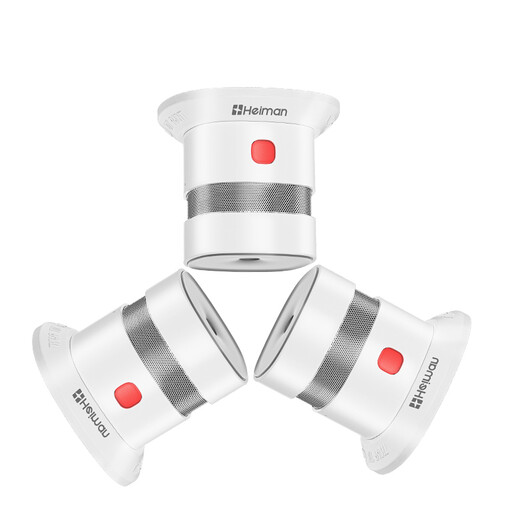
Why This Fits Their Persona: This set offers a straightforward and cost-effective solution for complying with smoke detector regulations in a standard apartment. The mini smoke detector is inconspicuous and can be discreetly mounted on the ceiling thanks to its compact size.
It is certified according to EN 14604 and T?V and features a sealed 10-year battery. This ensures that both legal requirements and the desire for low maintenance are met.
The photoelectric smoke detector sensor reduces false alarms. The 3-pack covers the master bedroom, children's room, and hallway.
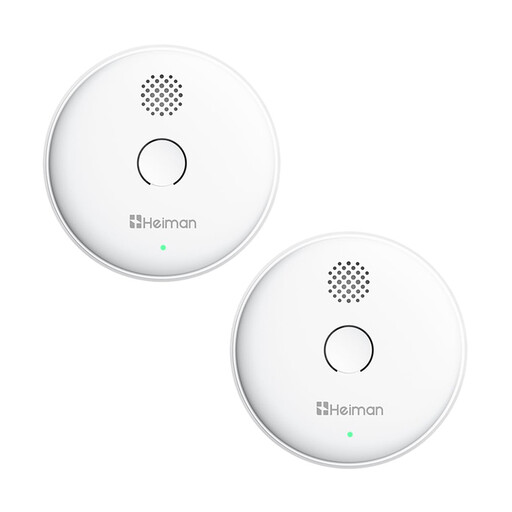
Why This Fits Their Persona: In a multi-story house, it's crucial that an alarm is heard everywhere. This smoke detector set with radio interlinking ensures that when smoke is detected in one room, all detectors simultaneously trigger an 85 dB alarm.
This system goes beyond basic requirements by addressing the specific problem of alerting across multiple floors. Certification to EN 14604 and the 10-year battery are also included.
Allows for the interconnection of up to 40 devices for comprehensive coverage. A mute button allows for easy deactivation of false alarms.
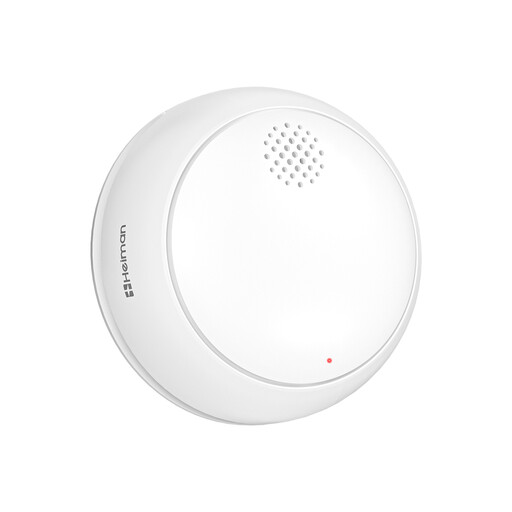
Why This Fits Their Persona: This Wi-Fi smoke detector is ideal for users who want to be informed about their home's status while on the go. It allows landlords to monitor the safety of their properties without needing to be on-site.
It combines smart features with the fundamental safety standard EN 14604. The app notification is a supplement to the loud local alarm, not a replacement, thus providing an additional layer of security.
Real-time notifications to your smartphone upon smoke detection. This model uses a replaceable battery, giving flexibility to users who prefer it.
We have compiled a complete, up-to-date list of products that fully meet these strict selection criteria and German safety regulations.
The legal requirement for smoke detectors is regulated in the state building codes (Landesbauordnungen). As a general rule for all federal states, bedrooms and children's rooms, as well as hallways that serve as escape routes from living areas, must be equipped with at least one smoke detector. It is recommended to inform yourself about the specific regulations in your state.
Even low-maintenance models require minimal care. Press the test button once a month to check the function of the electronics, alarm, and battery. Additionally, the housing should be regularly cleaned of dust, about every six months, with a soft cloth or a vacuum cleaner brush to keep the smoke entry vents clear. A battery change is not intended; the entire device is replaced after 10 years.
A photoelectric smoke detector, also known as an optical smoke detector, works with an infrared light source and a sensor inside a sensing chamber. When smoke particles enter the chamber, the light beam is scattered and directed onto the sensor, which triggers the alarm. This technology is particularly sensitive to smoldering fires, which develop a lot of smoke slowly. It is considered reliable and is less prone to false alarms from steam or cooking fumes than older ionization technologies.