
Lieferung heute & morgen

Qualitätsgarantie

Willkommens-Angebote freischalten: KOSTENLOSE Lieferung | Bis zu 80 % RABATT | Kostenlose 30-Tage-JoyPlus-Testphase
App herunterladen
The mandatory smoke detector law in Germany ensures that apartments and houses are equipped with the necessary warning systems. A smoke detector with a 10-year battery offers a low-maintenance, long-term solution that makes regular battery changes obsolete. This article serves as a guide to help you select a suitable model and to explain the most important features.
Choosing the right smoke alarm depends on your living situation and personal requirements. Here are three key points that can influence your decision.
The most important characteristic of a smoke detector is its reliability. The European standard DIN EN 14604 defines the minimum requirements for product characteristics, testing procedures, and performance criteria for smoke alarms. Always look for this certificate when making a purchase. It ensures that the detector meets fundamental safety and quality standards, such as an alarm volume of at least 85 dB and reliable smoke detection.
For smaller apartments or individual rooms, a standard smoke detector is often sufficient. In larger houses, across multiple floors, or in complex layouts, wireless interconnected smoke detectors offer a significant safety advantage. When one interconnected detector detects smoke, it not only triggers its own alarm but also sends a radio signal to all other linked detectors in the house. This ensures that an alarm from the basement is also clearly heard on the top floor.
Modern smoke detectors often offer more than just the basic warning function. A smoke detector with a hush button is particularly useful near kitchens or bathrooms. This feature allows you to temporarily deactivate a false alarm, triggered by cooking fumes or water vapour, for a few minutes without having to remove the battery. For a discreet installation, for example in modern living spaces or smaller rooms, a mini smoke detector is ideal, offering full functionality despite its compact size.
Based on functionality, certification, and use cases, we have compiled a selection of models suitable for different needs.
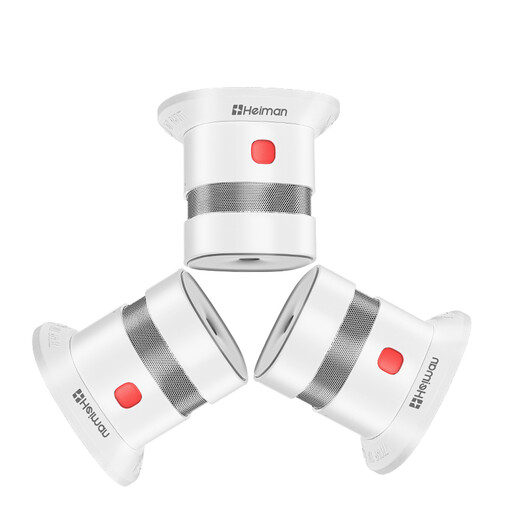
Why it stands out: This smoke detector set is ideal for the initial setup of an apartment or for retrofitting several rooms at once. The compact design ensures a subtle look on the ceiling without compromising on safety.
Advantages:
Who is it for? This set is a practical solution for tenants and homeowners who need to equip multiple rooms such as bedrooms, children's rooms, and hallways in accordance with the smoke detector law and prefer a discreet, low-maintenance option.
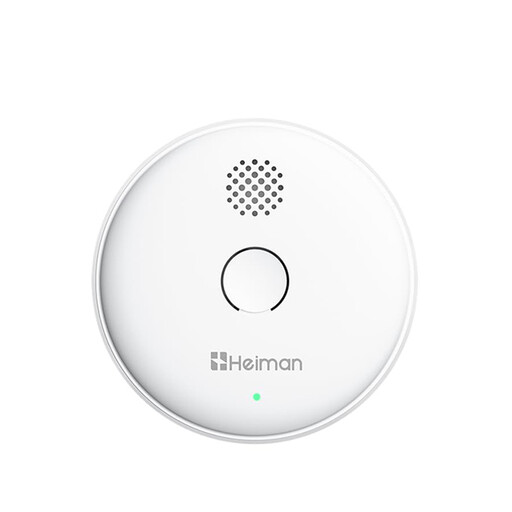
Why it stands out: The main strength of this model is its interconnectivity. Up to 40 of these wireless smoke detectors can be linked together to ensure a comprehensive, building-wide alert.
Advantages:
Who is it for? Ideal for owners of single-family homes, multi-storey apartments, or buildings with many separate areas. The interconnection ensures that a fire in a remote room is immediately noticed throughout the entire house.
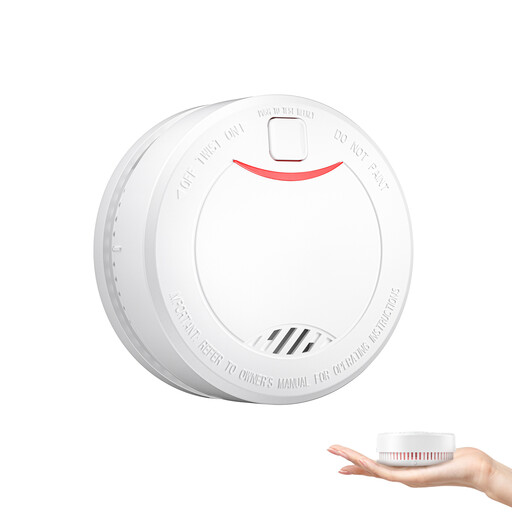
Why it stands out: This model focuses on the core function: reliable smoke detection. Its advanced photoelectric sensor is particularly responsive to slow-developing, smouldering fires, which often produce dense smoke before open flames are visible.
Advantages:
Who is it for? A solid choice for anyone looking for a reliable and straightforward standalone detector for living rooms, bedrooms, or basements, and who values precise detection technology.
The models presented here cover common use cases. However, if you are looking for other specific features or designs, you may find the right product in our broader selection.
Explore the entire smoke detector category here
Even a smoke detector with a 10-year battery requires minimal maintenance. It is recommended to check the detector's function once a month using the test button. Additionally, the housing should be regularly cleared of dust and cobwebs to keep the sensor slots free. A battery change is not necessary; after the 10 years have passed, the entire unit must be replaced.
The exact regulations vary by federal state (Bundesland), but in principle, the mandatory smoke detector law applies to bedrooms, children's rooms, and hallways that serve as escape routes. Installation is typically done on the ceiling, preferably in the middle of the room and with a minimum distance of 50 cm from walls or furnishings.
The EN 14604 standard is a European quality benchmark for smoke alarm devices. A certified device has been tested for essential safety features. These include the reliability of smoke detection, an alarm volume of at least 85 decibels at a distance of 3 meters, a functioning test facility, and resistance to corrosion and vibration. Purchasing a detector certified to EN 14604 is therefore a fundamental prerequisite for ensuring safety.