
Lieferung heute & morgen

Qualitätsgarantie

Willkommens-Angebote freischalten: KOSTENLOSE Lieferung | Bis zu 80 % RABATT | Kostenlose 30-Tage-JoyPlus-Testphase
App herunterladen
A smoothie blender should reliably blend fruit, liquid and, where needed, frozen ingredients. In practice, however, wattage and brand name alone won’t help you choose the right model. The key factors are the design, jug, operating time and ease of cleaning, as well as whether you’ll mainly use it at home or on the go.
Motor power is a useful indicator, but it isn’t the only measure of quality. A compact personal blender with 650 watts may be suitable for single servings, while a jug blender with a larger capacity is designed for different needs. Blade shape, speed, pulse function and the order in which you add the ingredients can all affect the results.
When choosing a blender with a travel cup, check whether the container actually comes with a separate drinking lid, a seal and a secure closure. A blending jug with a blade attachment isn’t necessarily suitable for carrying around. If you commute, it’s also worth checking whether the cup fits in your bag or a drinks holder.
Blades, seals and attachments can make a real difference to everyday use. Removable, dishwasher-safe parts make cleaning easier. Many appliances also have a limited operating time, such as a maximum of 60 seconds or one minute followed by a cooling break. Follow these instructions to help prevent overheating.
A jug blender blends ingredients in a securely closed jug and is often suitable for making several servings. A hand blender can be used directly in a suitable container and is especially handy for soups, sauces and purées. If you want a smoothie blender for single servings, personal blenders and mini blenders are worth considering, as the cup often doubles as a drinking vessel.
A portable smoothie maker or battery-powered blender gives you more freedom to blend wherever you are, but needs regular charging. That’s why battery capacity, charging port, container volume and weight matter more for portable models than for corded ones.
Consider the stated specifications together:
If you want to blend frozen fruit or ice cubes, check that the smoothie blender you’re considering is specifically designed to handle them. Hard foods such as bones, very hard spices and unsuitable objects should never go in the appliance.
A capacity of around 500 to 700 millilitres is often ideal for a single serving. If you’re making drinks for several people or larger quantities, a jug of around 900 millilitres may be more suitable. Don’t exceed the maximum fill line.
Here are some practical points to check:
Only blend hot liquids if the instruction manual explicitly says it’s safe to do so. Steam can cause pressure to build up inside a closed container.
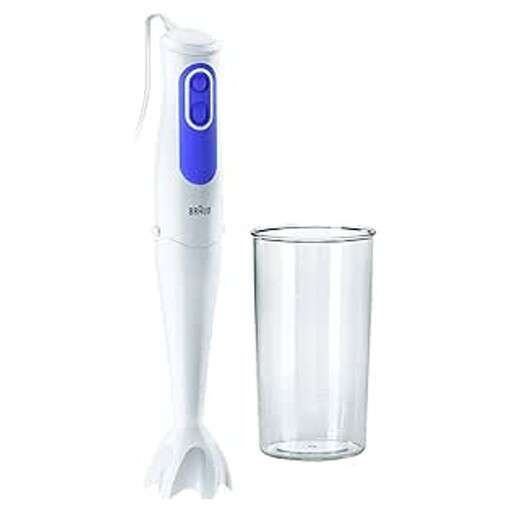
Why it’s a good fit: This corded hand blender has a 700-watt motor and comes with a 600-ml measuring beaker. It’s suitable for making smoothies, soups and sauces without the need for a large jug blender.
According to the product information, the removable blending unit is dishwasher-safe. Two speed settings and a splash guard help you blend with greater control.
700 watts, 600-ml beaker, EasyClick system and removable components.
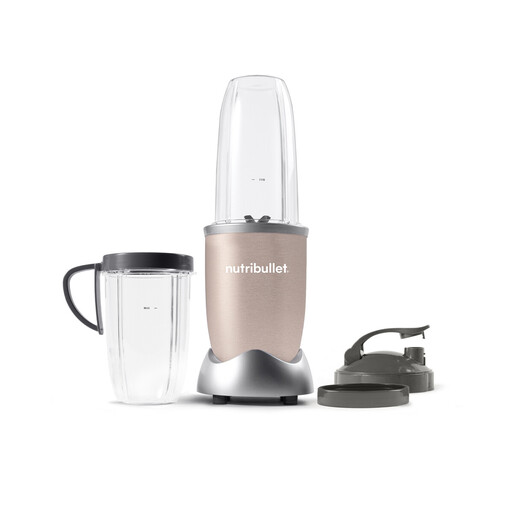
Why it’s a good fit: This personal blender has a 900-watt motor and a six-blade stainless steel blade. It comes with two BPA-free cups with capacities of 925 and 700 millilitres.
The two containers let you make single servings or larger quantities. According to the product description, the cups, lids and blades are dishwasher-safe.
900 watts, two cups, pulse function and one-touch operation.
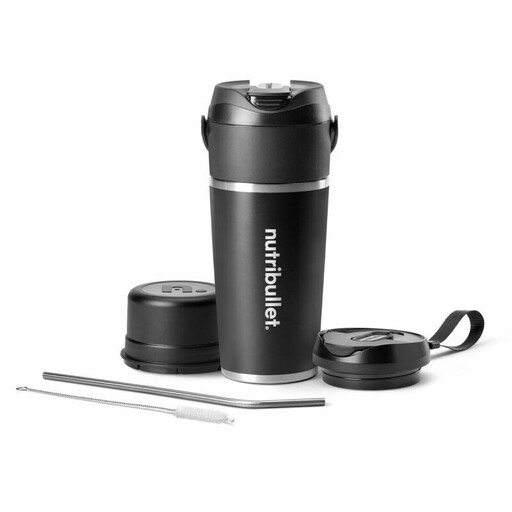
Why it’s a good fit: This battery-powered blender comes with a 590-ml insulated cup, USB-C charging and a carry handle. It’s designed for use on the go, away from the kitchen.
The drinking lid is separate from the blade attachment. The manufacturer states that a full charge provides more than 14 blending cycles, with each cycle lasting 30 seconds.
11.1-volt battery, USB-C, 590-ml insulated cup and carry handle.
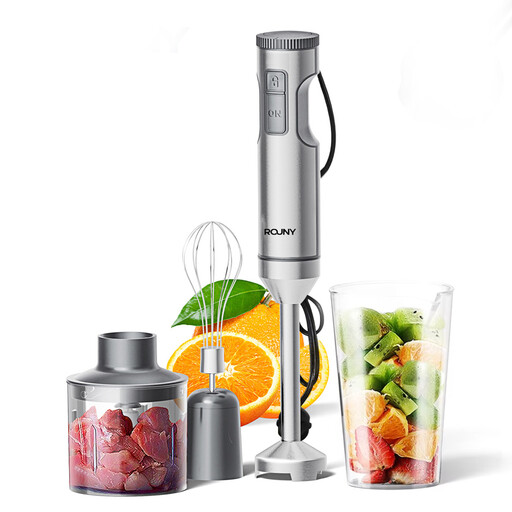
Why it’s a good fit: This set includes a hand blender, whisk, 500-ml chopper and 700-ml blending beaker. It’s a good choice for households that make soups, sauces and chopped ingredients as well as smoothies.
The variable speed control lets you adjust the blending to suit different ingredients. The product information specifies overheating protection and a maximum operating time of one minute.
Up to 1,200 watts, 15,000 revolutions per minute, four attachments and dishwasher-safe accessories up to 60 °C.
We’ve put together a complete, regularly updated list of products that meet these strict selection criteria and the safety regulations in force across the EU.
For an even blend, add the liquid and soft ingredients to the container first. Add frozen ingredients or ice in small amounts. Cut fruit and vegetables to size if you’re using a small container. Leave the maximum fill line clear so the ingredients have room to move.
Rinse the cups and blades as soon as possible after use. Never immerse the motor base, cable or charging port in water. Stop using the appliance if it makes unusual noises, emits smoke, has a damaged cable or has a swollen battery.
A personal blender, mini blender or smoothie blender with a drinking cup is usually a good choice for single servings. A container with a capacity of around 500 to 700 millilitres is often enough. If you also want to make soups, sauces or larger quantities, you could choose a hand blender or a model with several containers.
Its lifespan depends on how often you use it, how you clean it, the ingredients you blend and whether you follow the operating limits. Hard or unsuitable foods, overfilling and running the blender for too long can put strain on the motor and seals. Always follow the instruction manual, and check whether replacement parts and accessories are available.
Running costs depend on the blender’s power, how long you use it and your electricity tariff. A 900-watt appliance running for one minute uses 0.015 kilowatt hours, based on a calculation. A battery-powered blender also uses energy when charging, including charging losses, but doesn’t need to be plugged in while blending. In everyday use, the actual running time matters more than the rated power alone.